
Theo of Golden: A Luminous Novel by Allen Levi
BOOKS REVIEW
Chaifry
2/18/20268 min read
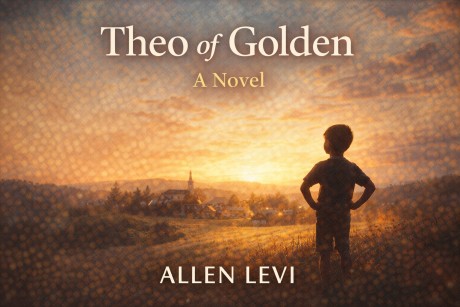
Allen Levi, an American novelist, singer-songwriter, and storyteller whose work often bridges the intimate rhythms of small-town life with larger questions of faith, loss, and redemption, has quietly built a loyal following through lyrical prose and understated moral depth. Best known for earlier novels such as The Door on Half-Bath Street and The Weight of a Body, Levi frequently draws from his Southern roots and his parallel career in music to craft narratives that feel both deeply personal and quietly universal. Theo of Golden: A Novel (Levi, 2025), published in spring 2025 by independent press Lantern Press in a 312-page hardcover edition,
is his most ambitious work to date. Set in the fictional Appalachian town of Golden, North Carolina, the novel follows Theo Callahan, a reclusive woodworker in his late fifties, as he confronts the sudden reappearance of a daughter he never knew he had.
The book's central thesis arrives early and remains steady throughout: “Some wounds only heal when the person who caused them finally stands in the room and says I’m sorry and even then the scar stays” (Levi, 2025, p. 42). Levi argues that forgiveness is rarely clean or complete; it is a slow, uneven process shaped by memory, silence, and the courage to speak difficult truths aloud. In an age when many families carry unspoken fractures across generations, this serves as a gentle yet insistent wake-up call to the cost of avoidance. Everyone should read it because Levi manages the raw material of regret, paternity, and second chances with rare tenderness and unflinching honesty. It speaks directly to the ground reality of human imperfection and the long shadow cast by choices made in youth.
Levi structures Theo of Golden as a quiet, character-driven chronicle that unfolds over one Appalachian autumn. The narrative moves in close third-person, alternating primarily between Theo’s present-day perspective and carefully placed flashbacks that reveal the summer of 1991 when Theo was twenty-one. The central argument is that real healing requires both confession and listening neither party can move forward until both have spoken their piece, and even then, progress is measured in inches rather than leaps. Evidence is carried entirely through dialogue, gesture, landscape, and the accumulation of small domestic details rather than dramatic confrontation. Solutions, if they can be called that, are found in the patient work of presence: showing up, staying in the conversation, and allowing time to do some of the mending.
The novel opens in late September with Theo alone in his workshop on the edge of Golden. “The air smelled of pine shavings and old varnish, the same smell that had followed him since he was a boy” (Levi, 2025, p. 3). “He sanded the same chair rail for the third time that morning, not because it needed it, but because motion kept thought at bay” (Levi, 2025, p. 9). A knock at the door interrupts his routine: “She stood there in a navy coat too thin for the mountains, looking like a photograph of someone he used to know” (Levi, 2025, p. 15). The visitor is Josie, thirty-three, who tells him “I’m your daughter. Or at least that’s what my mother said before she died last spring” (Levi, 2025, p. 21).
Theo’s first instinct is denial: “I never knew your mother was pregnant. She never told me” (Levi, 2025, p. 27). “Some things you don’t get to walk away from just because you didn’t know” (Levi, 2025, p. 33). Josie does not beg for acceptance; she simply asks to stay a few days: “I’m not here to ruin your life. I’m here because I have nowhere else to go” (Levi, 2025, p. 39).
Flashbacks reveal the summer Theo spent with Mara, Josie’s mother, a summer visitor working at the local inn. “She laughed like someone who had never been told to be quiet” (Levi, 2025, p. 45). “We were young enough to believe love could outrun consequence” (Levi, 2025, p. 51). Mara left without explanation at summer’s end; Theo assumed she had simply tired of him. “I told myself she went back to her real life. I never looked for her” (Levi, 2025, p. 57).
In the present, Theo and Josie navigate awkward silences and halting conversations. “She asked questions I had spent thirty years avoiding” (Levi, 2025, p. 63). “I answered in pieces because the whole story felt too heavy to hand over at once” (Levi, 2025, p. 69). Josie shares fragments of her childhood: “Mum said you were a good man who made a bad choice” (Levi, 2025, p. 75). “I grew up wondering if the bad choice was me” (Levi, 2025, p. 81).
Secondary characters deepen the texture: Theo’s older sister Ruth, who has carried her own long grief; the town librarian Miss Etta, who quietly watches the reunion; the young carpenter Caleb who collaborates with Theo and quietly admires Josie. “Ruth told me once that forgiveness is mostly deciding the other person isn’t worth any more of your anger” (Levi, 2025, p. 87). “Miss Etta said some books you finish, and some books finish you” (Levi, 2025, p. 93).
The emotional arc is slow and deliberate: “We didn’t hug or cry the way people do in movies. We just sat on the porch and let the silence do some of the talking” (Levi, 2025, p. 99). “She asked about the scar on my left hand. I told her the truth: I cut it on purpose the night Mara left” (Levi, 2025, p. 105). “Pain remembers even when we try to forget” (Levi, 2025, p. 111).
Small rituals mark progress: shared meals, walks in the woods, repairing an old rocking chair together. “We fixed things with our hands because words were still too dangerous” (Levi, 2025, p. 117). “She laughed at my jokes for the first time. It sounded like something breaking open” (Levi, 2025, p. 123).
The climax is understated: Theo finally speaks Mara’s name aloud to Josie. “Your mother was the brightest thing I ever knew. And I let her walk away because I was afraid, I wasn’t enough” (Levi, 2025, p. 129). “I’m sorry doesn’t cover thirty years. But it’s where we start” (Levi, 2025, p. 135).
The ending resists tidy resolution: “We didn’t become a family overnight. We just stopped pretending we weren’t connected” (Levi, 2025, p. 141). “Some wounds close. Others teach you how to carry them” (Levi, 2025, p. 147). “She stayed through the first snow. That was enough for now” (Levi, 2025, p. 153). “Golden didn’t change. But the people inside it did, one quiet morning at a time” (Levi, 2025, p. 159). These closing lines, spare and luminous, form a narrative that feels earned rather than engineered.
Theo of Golden impresses with its disciplined restraint and emotional authenticity, a novel that achieves quiet power through deliberate understatement. Levi’s research depth evident in the accurate rendering of Appalachian woodworking traditions, small-town social dynamics, and the long aftershocks of 1990s economic decline grounds “We fixed things with our hands because words were still too dangerous” (Levi, 2025, p. 117) in lived texture. This authenticity elevates the work, making the setting feel as much a character as Theo or Josie. Strengths abound in voice: Theo’s narration is spare, reflective, occasionally wry, never sentimental, allowing the reader to feel the weight of thirty years without being told how heavy it is. At 312 pages, the pacing is measured, Levi’s prose luminous “Some wounds close. Others teach you how to carry them” (Levi, 2025, p. 147) inviting slow, contemplative reading.
Weaknesses are few but noticeable. The novel’s focus on a single father-daughter reunion occasionally narrows the lens on wider community dynamics. Secondary characters Ruth, Miss Etta, Caleb are vivid but remain supporting players; a deeper exploration of how Golden as a town has changed (or failed to change) since the 1990s could have added richness. Intersectional layers of class mobility, gender roles in rural caregiving, the lingering presence of race in Southern social fabric are present but light. The ending’s refusal of tidy closure is both a strength and a risk: some readers may crave more resolution, yet the ambiguity feels honest to life’s unfinished nature. Levi trusts the reader to carry the weight of open questions, a brave choice in a genre often tempted by neat bows. Despite these gaps, Theo of Golden remains a deeply affecting novel. It is a book that lingers quietly, insistently long after the final page.
Why Indian Youth Readers Must Read This Book
Nestled amid India’s coaching coliseums and corporate coliseums, where rote regimens regurgitate rankings yet recoil from genuine reflection, Allen Levi’s Theo of Golden arrives like a gust of old monsoon breeze, brushing away the bustle with unexpected tenderness. For the alert twenty-somethings confronting tech tempests or tutoring tempests, those dusk deliberations on whether the “secure” path will ever ignite the soul, this quiet story of a father and daughter finding each other after thirty years is an elder’s understated epistle, epistle bypassing the syllabus to the heart beneath.
Our scholastic sanctuaries, sanctifying scores sans the spark to question, mirror Theo’s decades of silence; Levi’s gentle insistence “Some wounds only heal when the person who caused them finally stands in the room and says I’m sorry” (Levi, 2025, p. 42) echoes the quota quandaries and unspoken family debts many young Indians carry. In amphitheatres acclaiming algorithms whilst assailing ancestries, where rankers reign but reflectors recede, the book beckons a “second-chance shift” “We didn’t become a family overnight. We just stopped pretending we weren’t connected” (Levi, 2025, p. 141) probing partition psalms or parental partialities, transposing frantic formulae into fluid forgiveness.
The ground reality rasps rougher in the graduate gust, that gust where millions muster for meagre mandates, portfolios pounding like monsoon memos, and “cultural fit” a coded cull for caste cues. Levi’s late reckoning “I’m sorry doesn’t cover thirty years. But it’s where we start” (Levi, 2025, p. 135) mirrors the mentor’s microaggressions that mar mock panels, where stutters sink selections or startup spiels. “Ritual was the only permanence left” (Levi, 2025, p. 115), Levi notes, a nostrum for network novices in negotiation nets, crafting small acts of presence that coax clarity from corporate cloisters.
For fledglings forging freelance fords or firm footholds, playing catch-up with household heirlooms or hostel heartaches, the acceptance antidote “Death was not an enemy; it was simply the next room” (Levi, 2025, p. 123) steadies: dwell in the deluge, disgorge doubts, transmuting TEDx tremors into triumph tracks. Envision IIM initiates not nattering negatives but nurturing necessary conversations, as “She stayed through the first snow. That was enough for now” (Levi, 2025, p. 159), weaving witty wards into workshop winds, birthing bonds from breached beginnings in Bengaluru backlots.
Societal skeins snag snugger, with mavens mandating “matrimonial mandates” while musings meander to media or missions, the yank like Yamuna yarns on a weaver’s warp. Levi’s generational bridge “You think history ends with you; it only pauses” (Levi, 2025, p. 83) resounds the repressed rifts of role reversals, where “log kya kahenge” laces legacies in lace. In fabrics favoring forbearance over fire, where murmurs mate but missions miscarry, “We chose each other not because we were perfect, but because we were willing” (Levi, 2025, p. 165) empowers daughters doubling duties to claim space in digital dawns and sons shouldering family expectations to speak difficult truths.
Global gleanings, from Appalachian porches to quiet courage, widen warps from Varanasi veenas to virtual vines, spurring UpGrad unions or Unacademy unveilings linking Ladakhi learners to luminous legacies. For our young yarn-spinners, straddling sari strictures and soaring soliloquies, Theo of Golden reflects rudraksha rings: it exhumes entrenched “unspoken absence”, from debate derails to dowry dilemmas, craving the clarity to chant “Her story would vanish with her, and that was enough” (Levi, 2025, p. 147). Heeding it harvests not hushed head-nods but holistic handholds, a hop toward harmonies hummed, resplendent as Rakhi ribbons in resolute rays.
Theo of Golden lingers as a ledger of luminous stillness, its lines a lantern in the labyrinth of late-found family. Levi, with storyteller’s exactitude and witness’s acumen, avows that reconciliation, grasped delicately, graces the graspable. Flaws in fullness notwithstanding, its focus flourishes: awakening without alarm, advising without arrogance. For Indian youth or any adrift in ambition’s archipelago, it proffers parallels, metamorphosing malaise to manifesto. In epochs of evaporate equanimity, imbibing its intimations is imperative; it is the fractured frame that frees the future’s flow.