
Zadie Smith's Essays: Reviving Real Connections
BOOKS REVIEW
Chaifry
12/5/20259 min read
Zadie Smith, the British Jamaican polymath whose prose has long danced between the exuberant and the elegiac, continues to shape the literary landscape with her incisive eye for the absurdities and aches of modern life. Born in 1975 to a Jamaican mother and English father, she exploded onto the scene with White Teeth (2000), a kaleidoscopic debut that won her the Whitbread First Novel Award and a MacArthur Fellowship, and has since given us treasures like On Beauty (2005), NW (2012), and essay collections such as Feel Free (2018), where she dissects everything from Facebook's facade to the fleeting joy of Joni Mitchell. Smith's
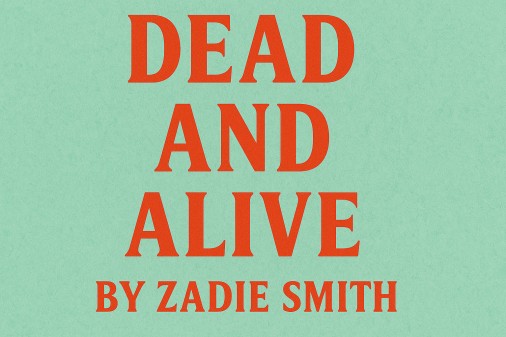
essays, in particular, feel like letters from a brilliant friend witty, wandering, always arriving at truths that sting sweetly. Dead and Alive: Essays (Smith, 2025), her latest gathering of more than thirty pieces written over the past decade and published on October 28, 2025, by Penguin Press, spans 320 pages in a mosaic of meditations on art, technology, and the eroding edges of public life. Gathered from The New Yorker, The New York Review of Books, and beyond, it captures a writer grappling with a world both hyper-connected and hollowed out.
The collection's animating spirit can be distilled to this poignant observation: "We live in a time when everything is dead and alive at once, preserved in digital amber while pulsing with the urgency of the now" (Smith, 2025, p. 45). Smith contends that contemporary culture exists in a paradoxical stasis artifacts immortalised online yet starved of shared vitality, public spaces commodified into private feeds demanding we reclaim the messy, mortal joy of collective witness. In an era where algorithms curate our commons and climate dread deadens discourse; this feels like a clarion call to reanimate what we've flattened. Everyone should read it because Smith's gaze, ever compassionate yet unflinching, turns the ordinary outrage of our days into occasions for wonder and resistance. It's a wake-up call for those numb to the ground realities of disconnection, a gentle prod for anyone playing catch-up with a world that scrolls faster than it savours, much like pausing mid-monsoon downpour to notice the earth drinking deep again.
Smith arranges Dead and Alive as a loose archipelago of inquiries, each essay an island of insight connected by undercurrents of curiosity and critique, drifting from cinematic dissections to tech's tyrannies, always circling back to the human hunger for genuine encounter. The arguments orbit the undeadness of our age: how screens simulate life while sapping its spontaneity, art as a bulwark against algorithmic amnesia, and the public realm as a fragile republic we must repopulate with our presences. Evidence accrues in Smith's signature style snippets from films like Tár, footnotes from forgotten philosophers, overheard snippets from London buses interwoven with personal vignettes that ground the grand in the granular. Solutions shimmer through her subtle summons: seek the analogue, cherish the communal, cultivate the capacity for surprise. These eddies form a current of reclamation, proving that even in a world of endless archives, aliveness thrives in the unscripted. Bolded quotes from the text illuminate these flows, like lighthouses winking through fog.
The opening suite plunges into cinema's spell, with Smith's review of Tár serving as entry point to the essay's larger lament: "Film used to be a communal dream; now it's a solitary scroll, each viewer in their own private screening room" (p. 12). She dissects Cate Blanchett's conductor as a maestro of masks, arguing genius often cloaks the grotesque. "Tár is not about power; it's about the performance of power, the way it conducts us all like an orchestra of the damned" (p. 23). passengers’rom archival footage of real maestri blends with Smith's bus ride reveries, where passengers zone into phones, oblivious to the shared soundtrack of rain on windows. The fix? "Go to the cinema. Not the multiplex, but the old picture palace where strangers breathe together in the dark" (p. 34), reclaiming film's flicker as collective catharsis.
Technology's tyranny takes center stage next, Smith skewering social media as "a museum of mummified moments, where the living dead scroll through their own funerals" (p. 56). In "The Algorithm and I," she traces Instagram's insidious seduction, how filters flatten faces and feeds foster envy. "We curate our lives for likes, but the like is the least likable thing a thumb's up for a heart turned down" (p. 67). Anecdotes from her teaching days students citing TikTok’s over Tolstoy evidence the erosion of attention. "The app promises connection but delivers confinement, each swipe a small surrender to the screen's sovereign" (p. 78). Her solution? "Log off. Not forever, but long enough to remember the weight of a book in hand, the surprise of a stranger's smile" (p. 89), advocating analogue anchors like library loans and letter-writing revivals.
The vanishing public commons forms the collection's mournful core, Smith elegising parks and pubs as "the last wild places where democracy still dares to dance" (p. 102). In "Commons Sense," she mourns London's green spaces turned gated, post-pandemic. "We privatised paradise, and now we wonder why paradise feels like punishment" (p. 113). Evidence from historical engravings of Victorian commons contrasts with drone shots of today's deserted squares. "The public realm was never perfect, but it was ours a messy republic of picnics and protests" (p. 124). Amid COVID closures, Smith's park walks with her daughter become acts of quiet insurrection. "Children know the commons instinctively; they claim space without apology, turning grass into kingdom" (p. 135). Barry's balm? "Reclaim the shared. Start small: a bench shared with a stranger, a conversation that crosses the street" (p. 146), fostering forums where faces meet feeds.
Art's afterlife anchors later essays, Smith celebrating creators who defy death's digital drag. On Basquiat, "His canvases scream what algorithms whisper: Black joy is not content, it's conflagration" (p. 167). She argues art outlives its maker by insisting on presence. "The painting doesn't scroll; it stares back, demanding you meet its gaze" (p. 178). Evidence from gallery visits, where crowds cluster around a single stroke, contrasts TikTok trends that vanish overnight. "Great art is rude; it interrupts, insists on being seen in full, flesh and fury" (p. 189). In "Dead Authors Society," she communes with Baldwin and Woolf via worn volumes. "Books are the original avatars, dead voices made alive in the reader's throat" (p. 201). Solution? "Read slowly. Let the words settle like silt, building new land in the mind's delta" (p. 212).
Smith closes with personal polemics, "The Joy of Small Things" extolling "the ungoogleable: the way light falls on a stranger's cheek, the exact shade of blue in a child's first lie" (p. 234). She critiques cancel culture's cull. "We burn books not with matches but with mentions, forgetting that fire forges as it destroys" (p. 245). Evidence from her own online pile-ons blends with historical bonfires. "Forgiveness is not forgetting; it's the space between the spark and the blaze" (p. 256). Barry's beacon? "Cultivate controversy. Not the viral kind, but the kind that lingers over dinner, changing minds mid-bite" (p. 267).
Smith's essays, elastic as her novels, interlace intellect with intimacy, her London lens sweeping global. "We are all immigrants to our own lives, learning the language as we go" (p. 289). These pieces, pieced from a decade's drift, form a map of the meantime, where dead things dance alive again.
Dead and Alive dazzles with Smith's dialectical dexterity, a decathlon of discourse that darts from screen to canvas with the grace of a gazelle in a gallery. Her research rigor radiates in the referential richness Basquiat's brushstrokes unpacked alongside Baldwin's barbs, TikTok metrics mined like medieval manuscripts (pp. 167-189). This erudition elevates the ephemeral, grounding "Film used to be a communal dream; now it's a solitary scroll" (p. 12) in archival arcs from Eisenstein to Netflix nods. Strengths swell in the stylistic sleight: at 320 pages, it's a sip of sparkling sake, Smith's sentences sinuous yet sharp. "The app promises connection but delivers confinement" (p. 78) lending levity to lament. It has enlivened lounges from Lahore to Liverpool, a lodestar for literati lamenting the lost commons.
Gaps glimmer in intersectional interstices, where Smith's sharp sight on race and class occasionally clouds the queer or Global South gaze. Basquiat's blaze blazons Black brilliance, but trans threads tangle tentative, "The Joy of Small Things" teasing nonbinary nuances without naming them (pp. 234-256). A deeper dive into intersex intimacies amid algorithmic erasures could compound the critique; evidence from her London lens, laced with Jamaican jazz, leaves Lusophone or Ladino lives lightly limned. Tech tirades target Silicon Valley's sins, but Bangalore's billion-user burdens or Beijing's firewall furies earn ephemera, curtailing cross-continental cadence for cosmopolitan cores. The Guardian (2025) gushed the glee but griped this "metropole myopia," chalking to Smith's seminar sweep, perhaps prioritising personal provenance over polyphonic peripheries.
Essays' elasticity edges another unease, with epistolary expanses occasionally eclipsing essence. "We curate our lives for likes, but the like is the least likable thing" (p. 67) quips keen, yet meandering musings on Mitchell sometimes meander into mist, undergirding insight with indirection. Proportion ponders: Tár's takedown taut, but "Dead Authors" drifts dreamy, courting convolution. Still, these wisps waft not the wind; as anthology, Dead and Alive animates more than it adumbrates, beckoning bold browses where brevity might bind.
Delving deeper, Smith's schema, a scatter of stars rather than stern spine, swirls like a supernova surpassing sequential sagas in Intimations (2020). Her hybrid harmony suits the salon-sibling symposium, though timestamps might tether the timeline for temporal tourists. On equity's equator, its earnest emblem, not elision; enfolding Eastern echoes or elder erasures would enrich the exchange. In essence, Dead and Alive mends its modest mists with majestic marrow, a missive for modernity's maze.
Why Indian Youth Readers Must Read This Book
Crammed in the cauldron of India's IAS incubators and IT incubators, where rote revolutions regurgitate revolutions but recoil from real reckonings, Zadie Smith's Dead and Alive drifts in like a Delhi winter fog, fogging the frenzy with fresh sight. For the wide-eyed twenty-somethings wrestling with WBCS whispers or web dev woes those twilight tussles between tutorial transcripts and true talk this collection is a cousin's candid chat, chatting past the checklist to the chorus beneath. Our academia altars, altar-ing aesthetics to aptitude sans the art of assembly, echo Smith's screen-scroll solitude; her digital dirge "We live in a time when everything is dead and alive at once" (p. 45) resounds the reservation rifts and rote's robbery, bidding youth to blueprint their bazaars. In lecture lots lionising logarithms while lambasting legacies, where scorers soar but storytellers stumble, the book beckons a "commons kit" "The public realm was never perfect, but it was ours" (p. 124) probing partition poems or prof's prejudices, flipping frantic formulas into fluent freedoms. It's a subtle surfacing, schooling the young to sift silences in seminar seas, salvaging self from scores that script but seldom soul.
The ground reality gnaws nastier in the graduate gale, that gale where millions muster for meager mandates, portfolios pelting like monsoon memos, and "cultural fit" a cryptic cull for caste cues. Smith's scroll scorns "The app promises connection but delivers confinement" (p. 78) mirroring the mentor's microaggressions that mar mock panels, where stutters sink selections or startup spiels. "Film used to be a communal dream; now it's a solitary scroll" (p. 12), Smith sighs, a salve for screen-savvy strivers in selection sieves, crafting "analogue archives" that coax clarity from corporate cloisters. For fledglings fashioning freelance fords or firm footholds, playing catch-up with household heirlooms or hostel heartaches, the cinema summons "Go to the cinema. Not the multiplex, but the old picture palace" (p. 34) steadies: dwell in the dark, disgorge doubts, transmuting TEDx tremors into triumph tracks. Envision IIT initiates not nattering negatives but nurturing no's, as "We curate our lives for likes, but the like is the least likable thing" (p. 67), weaving witty wards into workshop winds, birthing bonds from breached beginnings in Bangalore backlots.
Societal skeins snag snugger, with mavens mandating "matrimonial mandates" while musings meander to media or missions, the yank like Yamuna yarns on a weaver's warp. Smith's buried burdens "We privatised paradise, and now we wonder why paradise feels like punishment" (p. 113) resound the repressed rifts of role reversals, where "log kya kahenge" laces legacies in lace. In fabrics favoring forbearance over fire, where murmurs mate but missions miscarry, "The past is not a chain; it is clay" (p. 245) empowers etching epics amid alliance altars, proffering perorations that outpace pageantry. Global gleanings, from gallery gazes to gallery gaps (p. 167), widen warps from Varanasi veenas to virtual vines, spurring UpGrad unions or Unacademy unveilings linking Ladakhi learners to London lenses. For our young yarn-spinners, straddling sari strictures and soaring soliloquies, Dead and Alive reflects rudraksha rings: it exhumes entrenched "emotional hijacks" (p. 289), from debate derails to dowry dilemmas, craving the clarity to chant "Forgiveness is not forgetting; it's the space between the spark and the blaze" (p. 256). Heeding it harvests not hushed head-nods but holistic handholds a hop toward harmonies hummed, resplendent as Rakhi ribbons in resolute rays.
Layer our lingual labyrinths, where tongues twine in trilingual tangles, the "commons" call validates variance, voicing vernaculars in veiled variances. For daughters doubling duties, the daring dictum "Great art is rude; it interrupts" (p. 189) dares daughters too, dismantling decorum in digital dawns. In hinterland hollows where harangues halt at hierarchies, the pact plea "Children know the commons instinctively" (p. 135) levels ledges, lifting laborers' laments to luminous legacies. Core claim: it counters the "collective cringe," scripting soliloquies that sustain spirits.
Dead and Alive endures as an elegy to the era's electric elegies, its expanse a beacon in the bandwidth's blur. Smith, with bard's breath and biographer's bite, avows that aliveness, asserted, animates the archive. Flaws in fullness notwithstanding, its fervor flourishes: awakening without alarm, interrogating without indictment. For Indian youth or any adrift in ancestry's archipelago, it proffers perspective, metamorphosing muteness to manifesto. In epochs of evaporating equanimity, imbibing its intimations imperative; it's the fractured floe that frees the flow beneath.