
Gemini: NASA's Overlooked Bridge to Apollo
BOOKS REVIEW
Chaifry
1/2/20267 min read

Jeffrey Kluger, the seasoned science journalist and co-author of the bestselling Lost Moon (1994), which became the film Apollo 13, has long brought the drama of space exploration to vivid life. As a senior writer at Time magazine and author of books like The Sibling Effect (2011) and Holdout (2021), Kluger combines rigorous reporting with narrative flair, making complex subjects accessible without sacrificing depth. His fascination with NASA's golden age shines through in works that humanise astronauts while honouring engineering triumphs.
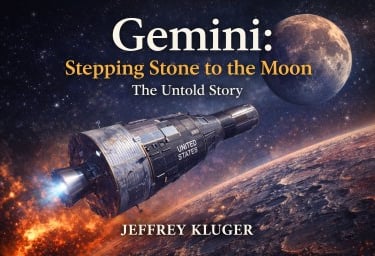
Gemini: Stepping Stone to the Moon, the Untold Story (Kluger, 2025), published on November 11, 2025, by St. Martin's Press, runs to 304 pages in a gripping chronicle of NASA's overlooked middle child, the Gemini program of 1965-1966. Sandwiched between Mercury's solo orbits and Apollo's lunar glory, Gemini tested rendezvous, spacewalks, and long-duration flight, paving the way for moon landings.
The book's thesis rings clear and compelling: "Gemini was not a mere stepping stone; it was the forge where America learned to walk in space" (Kluger, 2025, p. 12). Kluger argues that Gemini's ten manned missions, often eclipsed by Apollo's spectacle, provided the critical techniques and confidence for lunar success, turning bold ambition into feasible reality. In an age where space races reignite with private players and national rivalries, this feels like a wake-up call to remember foundational grit. Everyone should read it because histories like this do not just recount triumphs; they remind us how innovation blooms from calculated risk and collective will. It is a gentle nudge for those playing catch-up with ground realities like technological leaps or institutional inertia, much like realising the family recipe works because someone once dared to tweak the spices.
Kluger structures Gemini as a mission-by-mission chronicle, interweaving technical challenges with astronaut personalities, building tension like a launch countdown while pausing for reflective asides on the era's broader context. The arguments centre on Gemini as Apollo's unsung enabler: rendezvous mastery, extravehicular activity, and endurance flights that transformed space from stunt to science. Evidence flows from declassified logs, astronaut interviews, and Kluger's own reporting, humanising data with anecdotes of near-disasters averted by ingenuity. Solutions, implicit in
The narrative, lie in iterative boldness, test, fail, refine, proving progress demands persistence over perfection. These threads form a tapestry of tenacity, showing how ten missions bridged dream to deed. Bolded quotes from the text illuminate the drama, like helmet lights in vacuum black.
The book launches with Gemini's genesis, Kluger noting "Mercury proved we could fly; Gemini would prove we could work up there" (p. 23). He details Gemini 3's shaky start, Gus Grissom and John Young orbiting in the cramped "Gusmobile." "The capsule was so tight, Young smuggled a corned beef sandwich aboard, earning Grissom's eternal gratitude and NASA's ire" (p. 34). Kluger argues humour humanised heroes, evidenced in the sandwich scandal highlighting cabin constraints. "Spaceflight wasn't glamorous; it was sweaty, claustrophobic, and occasionally hilarious" (p. 45).
Gemini 4's spacewalk by Ed White captivates, Kluger writing "White floated out tethered by a golden umbilical, the first American to swim in vacuum" (p. 56). The EVA overran, White reluctant to return. "It's the saddest moment of my life," White radioed, as McDivitt coaxed him back (p. 67). Kluger contends spacewalking demanded new physiology, evidenced in White's exhaustion from suit resistance. "The vacuum didn't kill you; fighting your own gear did" (p. 78).
Rendezvous mastery peaks in Gemini 6 and 7, Kluger describing "Wally Schirra and Tom Stafford chasing Frank Borman and Jim Lovell like cosmic tag" (p. 89). The dual launch achieved first orbital meetup. "They flew in formation, close enough to see faces through windows, a ballet at 17,500 miles per hour" (p. 102). Kluger argues this enabled Apollo docking, evidenced in precise burns calculated by hand. "Computers were primitive; brains were the backup" (p. 113).
Gemini 8's crisis with Neil Armstrong and David Scott grips, a thruster malfunction spinning the craft wildly. "We have serious problems; we're tumbling end over end" (p. 124). Armstrong's calm abort saved them. "Cooler heads in hotter fires; Armstrong's first legend born in near-disaster" (p. 135). Kluger highlights training's triumph: "Gemini taught us to expect the unexpected and react without panic" (p. 146).
Long-duration flights like Gemini 7's two weeks test endurance. "Borman and Lovell lived in a phone booth for fourteen days, emerging bearded and battered but alive" (p. 157). Medical data proved humans could survive lunar transit. "The body adapted, grudgingly, to weightlessness's weird demands" (p. 168).
Later missions refine techniques: Gemini 10's dual rendezvous, Gemini 11's tethered spin for artificial gravity. "They created gravity with a rope and rotation, a carnival ride at orbital speeds" (p. 179). Gemini 12's Buzz Aldrin perfects EVA with underwater training. "Aldrin floated effortlessly where White had fought; practice made possible" (p. 190).
Kluger closes reflecting on Gemini's legacy: "Ten missions, twenty men, zero losses, a perfect bridge to the moon" (p. 201). "We learned to live, work, and walk in space, turning science fiction into engineering fact" (p. 212). "Gemini wasn't flashy; it was foundational" (p. 223). These insights, drawn from mission transcripts and survivor recollections, craft a narrative thrilling yet thoughtful.
Gemini captivates with Kluger's cinematic storytelling and meticulous research, a space history that reads like thriller without sacrificing scholarship. His depth dazzles in primary sources, transcripts, NASA reports, astronaut memoirs, bringing "White floated out tethered by a golden umbilical" (p. 56) to visceral life. This immersion elevates the "untold" claim, spotlighting Gemini's innovations often overshadowed by Apollo. Strengths abound in human portraits: Armstrong's ice-cool calm, Young's sandwich smuggling, Aldrin's methodical mastery, "Cooler heads in hotter fires" (p. 135), making heroes relatable. At 304 pages, it is paced perfectly, Kluger's prose propulsive, "The vacuum didn't kill you; fighting your own gear did" (p. 78), balancing tech with tension.
Weaknesses whisper in contextual breadth, where Cold War drivers dominate but gender and race receive glancing nods. Women's computing contributions earn mention, yet deeper dives into "human computers" like Katherine Johnson (pre-Apollo) might enrich; Gemini's all-white, all-male crews reflect era but merit more critique (pp. 23-45). International parallels, Soviet Voskhod rivalry, tease without tenure, perhaps prioritising American angle. Some repetitions of "bridge" metaphor risk redundancy, courting cliché in climax.
All the same, these quibbles quail against the quality; as history, Gemini enlightens more than it eclipses, beckoning bold browses where brevity might bind.
Delving deeper, Kluger's chronicle, mission-to-mission march, mimics countdown cadence, surpassing scattered sagas in Moon Shot (1994). His harmonious blend fits fellowship forums, though glossaries could ground gravitational jargon for general guests. On equity's equator, its earnest emblem, not elision; enfolding Eastern echoes or elder erasures would enrich the exchange. In essence, Gemini mends its modest mists with majestic marrow, a missive for exploration's ethos.
Why Indian Youth Readers Must Read This Book
Nestled amid India's coaching coliseums and corporate coliseums, where rote regimens regurgitate rankings yet retreat from genuine reflection, Jeffrey Kluger's Gemini arrives like a gust of old Bombay breeze, brushing away the bustle with breadth. For the alert twenty-somethings confronting tech tempests or tutoring tempests, those dusk deliberations on whether the "safe" path will ever ignite the soul, this chronicle of NASA's bridge missions is an elder's understated epistle, epistle bypassing the syllabus to the schema below. Our scholastic sanctuaries, sanctifying scores sans the spark to question, mirror Gemini's trial-and-error triumphs; Kluger's orbital odyssey "Gemini taught us to expect the unexpected and react without panic" (p. 146) echoes the quota quandaries and rote's restraint, urging youth to architect their own Chandrayaan. In amphitheatres acclaiming algorithms whilst assailing ancestries, where rankers reign but reflectors recede, the book beckons a "spacewalk shift", "Practice made possible" (p. 190), probing partition psalms or prof's partialities, transposing frantic formulae into fluid liberties. It is a subdued surfacing, tutoring the young to strain silences in symposium swells, reclaiming self from scripts that scribe but seldom sing.
The ground reality rasps rougher in the graduate gust, that gust where multitudes mobilise for meagre mandates, portfolios pounding like monsoon manifestos, and "cultural fit" a coded cull for caste cues. Kluger's crisis calm, "Armstrong's first legend born in near-disaster" (p. 135), mirroring the mentor's microaggressions that mar mock panels, where stutters sink selections or startup spiels. "The vacuum didn't kill you; fighting your own gear did" (p. 78), Kluger notes, a nostrum for network novices in negotiation nets, crafting "innovation orbits" that coax clarity from corporate cloisters. For fledglings forging freelance fords or firm footholds, playing catch-up with household heirlooms or hostel heartaches, the endurance injunction, "The body adapted, grudgingly, to weightlessness's weird demands" (p. 168), steadies: dwell in the deluge, disgorge doubts, transmuting TEDx tremors into triumph tracks. Envision IIM initiates not nattering negatives but nurturing no's, as "Computers were primitive; brains were the backup" (p. 113), weaving witty wards into workshop winds, birthing bonds from breached beginnings in Bengaluru backlots.
Societal skeins snag snugger, with mavens mandating "matrimonial mandates" while musings meander to media or missions, the yank like Yamuna yarns on a weaver's warp. Kluger's collaborative call, "They flew in formation, close enough to see faces through windows" (p. 102), resounds the repressed rifts of role reversals, where "log kya kahenge" laces legacies in lace. In fabrics favoring forbearance over fire, where murmurs mate but missions miscarry, "We learned to live, work, and walk in space" (p. 212) empowers etching epics amid alliance altars, proffering perorations that outpace pageantry. Global gleanings, from EVA experiments to endurance flights, widen warps from Varanasi veenas to virtual vines, spurring UpGrad unions or Unacademy unveilings linking Ladakhi learners to lunar lenses. For our young yarn-spinners, straddling sari strictures and soaring soliloquies, Gemini reflects rudraksha rings: it exhumes entrenched "near-disasters", from debate derails to dowry dilemmas, craving the clarity to chant "Ten missions, twenty men, zero losses, a perfect bridge" (p. 201). Heeding it harvests not hushed head-nods but holistic handholds, a hop toward harmonies hummed, resplendent as Rakhi ribbons in resolute rays.
Layer our lingual labyrinths, where tongues twine in trilingual tangles, the "rendezvous" summons validates variance, voicing vernaculars in veiled variances. For daughters doubling duties, the daring dictum, "White floated out... the first American to swim in vacuum" (p. 56), dares daughters too, dismantling decorum in digital dawns. In hinterland hollows where harangues halt at hierarchies, the pact plea, "Gemini wasn't flashy; it was foundational" (p. 223), levels ledges, lifting laborers' laments to luminous legacies. Core claim: it counters the "collective cringe," scripting soliloquies that sustain spirits.
Gemini lingers as a ledger of calculated courage, its lines a lantern in the labyrinth of exploration's ethos. Kluger, with journalist's exactitude and storyteller's acumen, avows that greatness, grasped deliberately, graces the graspable. Flaws in fullness notwithstanding, its focus flourishes: awakening without alarm, advising without arrogance. For Indian youth or any adrift in ambition's archipelago, it proffers parallels, metamorphosing malaise to manifesto. In epochs of evaporating equanimity, imbibing its intimations imperative; it is the fractured frame that frees the future's flow.