
Gender in Contemporary Education Research: A Critical Review
BOOKS REVIEWEDUCATION
Chaifry
2/19/20268 min read
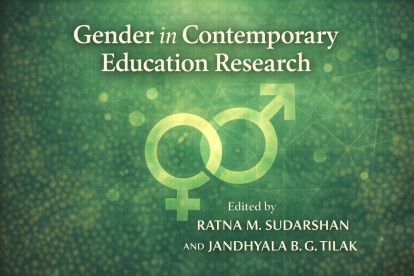
Ratna M. Sudarshan and Jandhyala B. G. Tilak, two of India’s most respected scholars in the domains of gender equity and educational planning, have brought together a timely and substantial collection of research papers. Sudarshan, long associated with feminist economics and social policy through her work at the Institute of Social Studies Trust and the National Institute of Advanced Studies, brings a sharp eye to the lived realities of gender disadvantage. Tilak, a leading authority on education economics and former Vice-Chancellor of the National Institute of Educational Planning and Administration (NIEPA),
contributes decades of rigorous analysis on equity, financing, and policy outcomes in Indian education. Gender in Contemporary Education Research (Sudarshan & Tilak, 2018), published by Gyan Publishing House in association with NIEPA in a 436-page hardcover edition, assembles contributions from economists, sociologists, educationists, and gender scholars to assess how far contemporary research in India has advanced, or stalled, on gender equality in education.
The volume’s central thesis is both diagnostic and prescriptive: “Gender equality in education remains elusive not because the problem is unknown, but because research and policy remain trapped in narrow metrics of enrolment and parity, paying insufficient attention to processes, cultural norms, and structural inequalities that shape real outcomes” (Sudarshan & Tilak, 2018, p. 17). The editors and contributors collectively argue that true gender justice requires moving beyond surface-level statistics to examine classroom dynamics, teacher attitudes, curriculum biases, family decision-making, and the intersection of gender with caste, class, and region. Everyone should read this book because education remains the single most powerful instrument for long-term gender transformation in India, yet the country continues to witness stubborn gaps in completion rates, learning outcomes, subject choices, and post-school transitions. This collection offers a comprehensive, evidence-rich map of where the research stands today and where it urgently needs to travel, a quiet but insistent wake-up call for educators, policymakers, parents, and young people alike.
The volume opens with a substantial editorial introduction that frames the key debates and traces the evolution of gender concerns in Indian education research. Sudarshan and Tilak note that “gender equality has been largely understood in terms of numerical parity in enrolment, while deeper questions of pedagogy, classroom climate, curriculum content, and societal norms have received far less systematic attention” (Sudarshan & Tilak, 2018, p. 19). They highlight that “gross enrolment ratios have risen significantly, but gender gaps in completion, transition to secondary and higher education, and learning outcomes persist” (Sudarshan & Tilak, 2018, p. 21).
Part I traces historical progress and persistent challenges. One-chapter reviews post-independence policy shifts: “From the 1950s to the 1980s, girls’ education was treated largely as a welfare issue; only later did it become framed as a development imperative” (Chapter 2, p. 45). Dropout analysis follows: “Girls leave school not merely because of poverty or distance, but because of early marriage, domestic responsibilities, safety concerns, and low perceived returns to female education” (Gurminder Singh, 2018, pp. 59–73). Large-scale survey data reinforce the point: “Safety fears, lack of functional toilets, and gender-insensitive teaching practices contribute significantly to absenteeism and early exit” (Chapter 4, p. 102).
Classroom-level dynamics receive careful attention. One contributor observes: “Teachers frequently hold unconscious gender biases that lower expectations for girls in mathematics, science, and leadership roles” (Chapter 5, p. 129). “Single-sex schools, often promoted as protective, can inadvertently reinforce traditional stereotypes rather than challenge them” (Chapter 6, p. 156). Vocational streams show similar patterns: “Girls are disproportionately channelled into ‘feminine’ trades such as tailoring, beauty culture, and home science, narrowing future economic pathways” (Chapter 7, p. 183).
Part II shifts to emerging and under-researched areas. Higher education receives scrutiny: “Women’s enrolment in colleges has increased substantially, yet they remain severely underrepresented in STEM disciplines and in academic leadership positions” (Chapter 8, p. 210). Gender-based violence in educational spaces is addressed candidly: “Sexual harassment, bullying, and everyday sexism remain pervasive, yet institutional mechanisms for reporting and redress are weak or poorly implemented” (Chapter 9, p. 237). Intersectionality appears strongly in discussions of caste and gender: “Dalit and Adivasi girls face multiple layers of exclusion, gender norms compound caste-based discrimination in access, retention, and treatment within schools” (Chapter 10, p. 264).
Gurminder Singh’s chapter “Elementary Education for Girls in India” (pp. 59–73) provides a detailed historical and contemporary overview. Singh notes: “The post-independence period saw a shift from welfare to development approaches, yet gender remained a marginal concern until the 1980s” (Singh, 2018, p. 61). “Despite constitutional commitments and policy initiatives, girls’ participation in elementary education continues to lag behind boys, particularly in rural areas” (Singh, 2018, p. 63). “Social norms around early marriage and domestic work remain major barriers” (Singh, 2018, p. 65). “Parental perception of low economic returns to girls’ education perpetuates dropout” (Singh, 2018, p. 67). “Safety concerns and lack of sanitation facilities disproportionately affect girls’ attendance” (Singh, 2018, p. 69). “Curriculum and textbook content often reinforce gender stereotypes” (Singh, 2018, p. 71). Singh concludes: “Achieving gender parity requires not only access but transformation of the entire educational ecosystem” (Singh, 2018, p. 73).
Policy critiques run throughout. One chapter evaluates flagship interventions: “Schemes providing free uniforms, textbooks, and bicycles have boosted initial enrolment, but they have not significantly improved retention or learning outcomes for girls” (Chapter 11, p. 291). Teacher training is flagged as inadequate: “Most pre-service and in-service programmes include little or no sustained gender-sensitisation content” (Chapter 12, p. 318). Contributors repeatedly call for methodological broadening: “Quantitative indicators tell us how many girls enrol and complete; qualitative research reveals why they stay, why they leave, and what they experience while they are there” (Chapter 13, p. 345).
The volume concludes with a forward-looking synthesis: “Future research must prioritise lived experiences inside classrooms, the hidden curriculum of gender norms, and the intersectional nature of disadvantage” (Chapter 14, p. 372). “Policy must move decisively from numerical parity to substantive equality of opportunity and outcome” (Sudarshan & Tilak, 2018, p. 389). “Education can become genuinely transformative only when it actively challenges rather than reproduces existing gender hierarchies” (Sudarshan & Tilak, 2018, p. 401). “The journey toward gender equality in Indian education is far from complete” (Sudarshan & Tilak, 2018, p. 413). “Research must continue to ask difficult, uncomfortable questions” (Sudarshan & Tilak, 2018, p. 425).
Gender in Contemporary Education Research succeeds in a timely and thorough stocktaking of a vital field. The volume’s greatest strength is its breadth: it brings together economists, sociologists, educationists, and gender scholars to offer a multi-dimensional view rarely found in single-authored works. The empirical grounding is robust, contributors draw on NSSO data, ASER reports, NFHS surveys, UDISE statistics, and rich qualitative field studies, making claims credible and policy relevant.
Gurminder Singh’s chapter “Elementary Education for Girls in India” (pp. 59–73) stands out for its balanced historical overview and contemporary critique. Singh effectively traces policy shifts from welfare to development framing, while highlighting persistent barriers: “Social norms around early marriage and domestic work remain major barriers” (Singh, 2018, p. 65) and “Parental perception of low economic returns to girls’ education perpetuates dropout” (Singh, 2018, p. 67). This chapter complements the volume’s broader argument that access alone is insufficient without addressing cultural and economic drivers.
Several other chapters are particularly strong. The analysis of how single-sex schools can inadvertently reinforce rather than challenge gender stereotypes is nuanced and evidence-based. The attention to intersectionality, especially caste and gender in dropout patterns and STEM exclusion, adds depth often missing in macro-level discussions. The repeated critique of policy interventions (free inputs increase numbers but rarely change deeper norms or outcomes) is sobering and well-supported.
Weaknesses are modest but real. The volume remains heavily focused on India, with extremely limited comparative references to other developing countries or even South Asian neighbors. While intersectionality is addressed (caste, class, tribal status), disability, religious minority status, and rural-urban gradients receive only passing mention. Gender is treated as a binary; transgender and non-binary experiences in educational spaces are absent. The language and presentation lean toward academic and policy audiences, dense tables, technical references, and long sentences may limit accessibility for teachers, activists, or general readers. Finally, while research gaps are clearly identified, the contributors stop short of offering a prioritized, actionable research agenda for the next decade.
Despite these limitations, the collection remains indispensable. It refuses to celebrate partial progress and instead insists on deeper, more honest inquiry, a quality that makes it both uncomfortable and urgently necessary.
Why Indian Youth Readers Must Read This Book
Nestled amid India’s coaching coliseums and corporate coliseums, where rote regimens regurgitate rankings yet recoil from genuine reflection, Gender in Contemporary Education Research edited by Ratna M. Sudarshan and Jandhyala B. G. Tilak arrives like a gust of old monsoon breeze, brushing away the bustle with unflinching clarity. For the alert twenty-somethings confronting tech tempests or tutoring tempests, those dusk deliberations on whether the “secure” path will ever ignite the soul, this collection of essays is an elder’s understated epistle, epistle bypassing the syllabus to the structural beneath.
Our scholastic sanctuaries, sanctifying scores sans the spark to question, mirror the very gaps the book exposes: “Gender equality in education remains elusive not because the problem is unknown, but because research and policy continue to address it in fragmented, often superficial ways” (Sudarshan & Tilak, 2018, p. 17). The relentless focus on marks and ranks echoes the volume’s critique that “quantitative data tells us how many girls enroll and complete; qualitative studies reveal why they stay or leave” (Chapter 13, p. 345). For youths raised in systems that still quietly steer girls away from STEM or undervalue their ambitions, the book is a wake-up call to the hidden curriculum operating in classrooms and homes alike.
Gurminder Singh’s chapter “Elementary Education for Girls in India” (pp. 59–73) speaks directly to today’s realities: “Girls drop out not only because of poverty or distance, but because of early marriage, household responsibilities, and perceived low returns to female education” (Singh, 2018, pp. 59–73). “Social norms around early marriage and domestic work remain major barriers” (Singh, 2018, p. 65). “Parental perception of low economic returns to girls’ education perpetuates dropout” (Singh, 2018, p. 67). “Safety concerns and lack of sanitation facilities disproportionately affect girls’ attendance” (Singh, 2018, p. 69). “Curriculum and textbook content often reinforce gender stereotypes” (Singh, 2018, p. 71). “Achieving gender parity requires not only access but transformation of the entire educational ecosystem” (Singh, 2018, p. 73). These observations resonate strongly with young women navigating family expectations alongside academic and career pressures.
The ground reality rasps rougher in the graduate gust: millions competing for meagre mandates, portfolios pounding like monsoon memos, “cultural fit” often a coded cull for caste cues or gender norms. The essays’ reminder that “teachers often hold unconscious biases that lower expectations for girls in mathematics and science” (Chapter 5, p. 129) mirrors the subtle discouragement many face even in elite institutions.
Societal skeins snag snugger: mavens mandating “matrimonial mandates” while musings meander to media or missions, the yank like Yamuna yarns on a weaver’s warp. The book’s insistence that “education can be transformative only if it challenges rather than reproduces gender norms” (Sudarshan & Tilak, 2018, p. 401) challenges the quiet acceptance of unequal futures. “Single-sex schools sometimes reinforce stereotypes rather than challenge them” (Chapter 6, p. 156) speaks to the many who studied in segregated settings yet still encountered rigid roles.
For fledglings forging freelance fords or firm footholds, playing catch-up with household heirlooms or hostel heartaches, the volume’s call for “more nuanced, context-specific research” (Sudarshan & Tilak, 2018, p. 372) becomes a quiet invitation to question, not just comply. Envision IIM initiates not nattering negatives but nurturing new questions, as “policy must shift from parity to substantive equality” (Sudarshan & Tilak, 2018, p. 389), weaving thoughtful wards into workshop winds, birthing bonds from breached beginnings in Bengaluru backlots.
Global gleanings from the volume, from dropout studies to STEM under-representation, widening warps from Varanasi veenas to virtual vines, spurring UpGrad unions or Unacademy unveilings linking Ladakhi learners to larger legacies. For our young yarn-spinners, straddling sari strictures and soaring soliloquies, Gender in Contemporary Education Research reflects rudraksha rings: it exhumes entrenched “gender gaps”, from debate derails to dowry dilemmas, craving the clarity to chant “The journey toward gender equality in education is far from complete” (Sudarshan & Tilak, 2018, p. 413). Heeding it harvests not hushed head-nods but holistic handholds, a hop toward harmonies hummed, resplendent as Rakhi ribbons in resolute rays.
Gender in Contemporary Education Research lingers as a ledger of unflinching clarity, its pages a lantern in the labyrinth of India’s education landscape. Sudarshan and Tilak, with scholarly exactitude and policy acumen, avow that true equity, grasped deliberately, graces the graspable. Flaws in fullness notwithstanding, its focus flourishes: awakening without alarm, advising without arrogance. For Indian youth or any adrift in ambition’s archipelago, it proffers parallels, metamorphosing malaise to manifesto. In epochs of evaporate equanimity, imbibing its intimations is imperative; it is the fractured frame that frees the future’s flow.