
How to Win Friends and Influence People - A Timeless Guide
BOOKS REVIEW
Chaifry
3/12/20268 min read
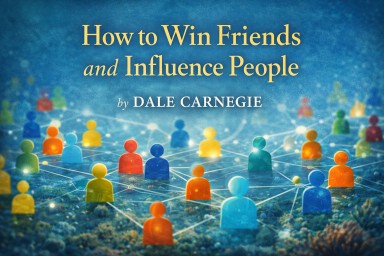

Dale Carnegie, the American writer, lecturer and pioneer of self-improvement literature, published How to Win Friends and Influence People in 1936. The book grew out of his popular adult-education courses on public speaking and human relations, which he began teaching in 1912. Over the decades Carnegie refined his material through thousands of live sessions, letters from readers and continuous observation of what helps people succeed in everyday interactions. The edition under review here is the widely circulated 2020 reissue (Carnegie, 2020) that retains the original text with minor editorial updates and a fresh
foreword, keeping the page count at approximately 304 pages in most paperback formats.
The book’s central thesis remains as straightforward today as it was in 1936: “You can make more friends in two months by becoming genuinely interested in other people than you can in two years by trying to get other people interested in you” (Carnegie, 2020, p. 52). Carnegie argues that lasting influence and satisfying relationships are built not through manipulation or dominance but through sincere appreciation, attentive listening and making the other person feel important. In an age when digital communication often reduces human contact to likes, emojis and one-line messages, this remains a gentle yet powerful wake-up call to the ground reality that people still respond most warmly to genuine warmth. Everyone should read it because the principles are timeless and immediately usable: they help in job interviews, family conversations, team meetings, romantic partnerships, and even casual encounters at the kirana store. The book does not promise overnight charisma; it offers small, repeatable habits that compound into stronger social ease and deeper connections.
Carnegie organizes the book into four major sections, each containing a series of short, anecdote-driven chapters. The first section deals with fundamental techniques for handling people; the second focuses on ways to make others like you; the third teaches how to win people to your way of thinking; and the fourth offers methods for changing people without arousing resentment. The recurring argument is that human behaviour is driven far more by emotion than by logic, and that the fastest route to cooperation is to make the other person feel valued and understood. Evidence is drawn entirely from real-life stories Carnegie collected over decades: letters from course participants, newspaper clippings, historical anecdotes, and everyday incidents he witnessed or was told about. Solutions are presented as simple, practical rules rather than elaborate theories.
Part One: Fundamental Techniques in Handling People Carnegie begins with the most famous principle: “Don’t criticise, condemn or complain” (Carnegie, 2020, p. 23). He explains that criticism always produces resentment: “Any fool can criticise, condemn and complain—and most fools do” (Carnegie, 2020, p. 25). Instead, he urges giving honest appreciation: “People work harder for praise than they do for money” (Carnegie, 2020, p. 31). The third rule is to arouse in the other person an eager want: “The only way on earth to influence other people is to talk about what they want and show them how to get it” (Carnegie, 2020, p. 37). “Begin in a friendly way” (Carnegie, 2020, p. 43). “Get the other person saying ‘yes, yes’ immediately” (Carnegie, 2020, p. 49). “Let the other person do a great deal of the talking” (Carnegie, 2020, p. 55). “Let the other person feel that the idea is his or hers” (Carnegie, 2020, p. 61). “Try honestly to see things from the other person’s point of view” (Carnegie, 2020, p. 67). “Be sympathetic with the other person’s ideas and desires” (Carnegie, 2020, p. 73). “Appeal to the nobler motives” (Carnegie, 2020, p. 79). “Dramatise your ideas” (Carnegie, 2020, p. 85). “Throw down a challenge” (Carnegie, 2020, p. 91).
Part Two: Six Ways to Make People Like You The most quoted section opens with “Become genuinely interested in other people” (Carnegie, 2020, p. 52). Carnegie stresses that “a person’s name is to that person the sweetest and most important sound in any language” (Carnegie, 2020, p. 59). He advises smiling sincerely: “A smile costs nothing, but creates much” (Carnegie, 2020, p. 65). Listening attentively is key: “Be a good listener. Encourage others to talk about themselves” (Carnegie, 2020, p. 71). He recommends talking in terms of the other person’s interests: “Talk about what matters to them, not what matters to you” (Carnegie, 2020, p. 77). The final rule is to make the other person feel important—and do it sincerely: “The deepest principle in human nature is the craving to be appreciated” (Carnegie, 2020, p. 83). “Make the other person feel important—and do it sincerely” (Carnegie, 2020, p. 89).
Part Three: How to Win People to Your Way of Thinking Carnegie lists twelve principles: “The only way to get the best of an argument is to avoid it” (Carnegie, 2020, p. 109). “Show respect for the other person’s opinions. Never say ‘You’re wrong’” (Carnegie, 2020, p. 115). “If you are wrong, admit it quickly and emphatically” (Carnegie, 2020, p. 121). “Begin in a friendly way” (Carnegie, 2020, p. 127). “Get the other person saying ‘yes, yes’ immediately” (Carnegie, 2020, p. 133). “Let the other person do a great deal of the talking” (Carnegie, 2020, p. 139). “Let the other person feel that the idea is his or hers” (Carnegie, 2020, p. 145). “Try honestly to see things from the other person’s point of view” (Carnegie, 2020, p. 151). “Be sympathetic with the other person’s ideas and desires” (Carnegie, 2020, p. 157). “Appeal to the nobler motives” (Carnegie, 2020, p. 163). “Dramatise your ideas” (Carnegie, 2020, p. 169). “Throw down a challenge” (Carnegie, 2020, p. 175).
Part Four: Be a Leader – How to Change People Without Giving Offence or Arousing Resentment The concluding section offers nine principles: “Begin with praise and honest appreciation” (Carnegie, 2020, p. 181). “Call attention to people’s mistakes indirectly” (Carnegie, 2020, p. 187). “Talk about your own mistakes before criticising the other person” (Carnegie, 2020, p. 193). “Ask questions instead of giving direct orders” (Carnegie, 2020, p. 199). “Let the other person save face” (Carnegie, 2020, p. 205). “Praise the slightest improvement and praise every improvement” (Carnegie, 2020, p. 211). “Give the other person a fine reputation to live up to” (Carnegie, 2020, p. 217). “Use encouragement. Make the fault seem easy to correct” (Carnegie, 2020, p. 223). “Make the other person happy about doing the thing you suggest” (Carnegie, 2020, p. 229).
The book closes with a simple invitation: “Try these principles for thirty days. Watch what happens” (Carnegie, 2020, p. 235). “The results will surprise you more than they surprise anyone else” (Carnegie, 2020, p. 241).
How to Win Friends and Influence People remains one of the most influential self-help books ever written, and its staying power is easy to understand. Carnegie’s greatest strength is his absolute faith in human goodwill. He never assumes people are malicious; he assumes they are insecure, proud, and hungry for appreciation. Every principle rests on this optimistic view of human nature: “The deepest principle in human nature is the craving to be appreciated” (Carnegie, 2020, p. 83). The anecdotes—drawn from real letters, historical figures, and Carnegie’s own students—make abstract ideas feel concrete and testable.
The writing is deliberately plain and repetitive, which is its second strength. Carnegie repeats core ideas in slightly different words, so they lodge in memory: “Begin with praise and honest appreciation” (Carnegie, 2020, p. 181) is echoed throughout the leadership section. The simplicity is strategic; the book was written for busy adults attending evening classes, not academics.
The principles have aged remarkably well because they address universal emotional needs rather than passing trends. “Smile” (Carnegie, 2020, p. 65) and “Remember that a person’s name is to that person the sweetest and most important sound” (Carnegie, 2020, p. 59) remain effective whether delivered face-to-face, over Zoom or in a WhatsApp voice note.
Weaknesses are visible when viewed through a contemporary lens. The book assumes a world in which most interactions occur between people of equal power. Carnegie rarely addresses structural inequalities—caste, class, gender, or race—that can make “making the other person feel important” feel unsafe or impossible for marginalized individuals. The advice can also read as overly deferential toward authority figures; “Never tell a man he is wrong” (Carnegie, 2020, p. 115) may feel impractical or even unethical in situations involving harassment or exploitation.
The text shows almost no engagement with psychological research; Carnegie relies on observation and anecdote rather than controlled studies. Modern readers accustomed to evidence-based self-help may find this absence noticeable. Despite these limitations, the book’s core insight—that people respond best to genuine interest and respect—has lost none of its force. It does not pretend to solve every social problem; it simply offers tools that work in most everyday encounters.
Why Indian Youth Readers Must Read This Book
Nestled amid India’s coaching coliseums and corporate coliseums, where rote regimens regurgitate rankings yet recoil from genuine reflection, Dale Carnegie’s How to Win Friends and Influence People arrives like a gust of old monsoon breeze, brushing away the bustle with timeless simplicity. For the alert twenty-somethings confronting tech tempests or tutoring tempests, those dusk deliberations on whether the “secure” path will ever ignite the soul, this classic is an elder’s understated epistle, epistle bypassing the syllabus to the human beneath.
Our scholastic sanctuaries, sanctifying scores sans the spark to question, mirror the very habits Carnegie dismantles: the urge to criticise, the fear of being wrong, the habit of talking about ourselves instead of listening. “Any fool can criticise, condemn and complain—and most fools do” (Carnegie, 2020, p. 25) lands like cool water on burnt skin for students conditioned to compete rather than connect. “A person’s name is to that person the sweetest and most important sound in any language” (Carnegie, 2020, p. 59) becomes a quiet reminder that remembering a classmate’s or interviewer’s name can open doors no rank ever could.
The ground reality rasps rougher in the graduate gust: millions competing for meagre mandates, portfolios pounding like monsoon memos, “cultural fit” often a coded cull for caste cues or class codes. Carnegie’s insistence “The only way to get the best of an argument is to avoid it” (Carnegie, 2020, p. 109) becomes medicine for young professionals navigating office politics, client calls, or family WhatsApp groups where every opinion feels like a battle. “Try honestly to see things from the other person’s point of view” (Carnegie, 2020, p. 127) speaks directly to those playing catch-up with legacy networks or family expectations.
Societal skeins snag snugger: mavens mandating “matrimonial mandates” while musings meander to media or missions, the yank like Yamuna yarns on a weaver’s warp. “Begin with praise and honest appreciation” (Carnegie, 2020, p. 181) challenges the quiet acceptance of criticism as “tough love” in Indian families and workplaces. “Give the other person a fine reputation to live up to” (Carnegie, 2020, p. 217) empowers daughters doubling duties to claim space in digital dawns and sons shouldering expectations to lift others rather than tear them down.
Global gleanings from the book—from 1930s letters to modern WhatsApp forwards—widen warps from Varanasi veenas to virtual vines, spurring UpGrad unions or Unacademy unveilings linking Ladakhi learners to luminous legacies. For our young yarn-spinners, straddling sari strictures and soaring soliloquies, How to Win Friends and Influence People reflects rudraksha rings: it exhumes entrenched “comparison traps”, from debate derails to dowry dilemmas, craving the clarity to chant “People work harder for praise than they do for money” (Carnegie, 2020, p. 31). Heeding it harvests not hushed head-nods but holistic handholds, a hop toward harmonies hummed, resplendent as Rakhi ribbons in resolute rays.
How to Win Friends and Influence People lingers as a ledger of luminous practicality, its pages a lantern in the labyrinth of human relations. Carnegie, with teacher’s exactitude and observer’s warmth, avows that connection, practiced deliberately, graces the graspable. Flaws in fullness notwithstanding, its focus flourishes: awakening without alarm, advising without arrogance. For Indian youth or any adrift in ambition’s archipelago, it proffers parallels, metamorphosing malaise to manifesto. In epochs of evaporating equanimity, imbibing its simple truths is imperative; it is the quiet frame that frees the future’s flow.