Maggie O’Farrell’s Land: A Novel of Belonging

BOOKS REVIEW

Chaifry

7/11/20265 min read

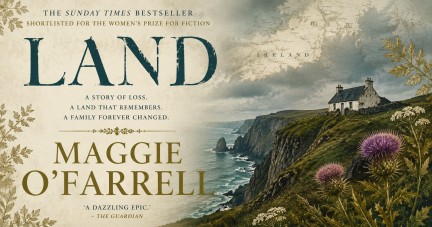
Maggie O’Farrell, the acclaimed Irish author known for her lyrical prose and profound explorations of human relationships, memory, and resilience, has earned a devoted readership worldwide. Her previous works, including the award-winning Hamnet, have been celebrated for their emotional depth and historical imagination. Land (O’Farrell, 2025), her latest novel, continues this tradition with a contemplative story rooted in the Scottish Highlands and spanning generations. Published as an instant Sunday Times number one bestseller, the book examines themes of belonging, inheritance, and our deep connection to place.
The book’s central thesis is quietly powerful: “The land does not belong to us. We belong to the land, and only when we understand this do we truly find our place in the world” (O’Farrell, 2025, p. 62). O’Farrell argues that identity is inseparable from the landscapes that shape us, and that healing often comes from returning to our roots, both literal and emotional. In a fast-moving world where many feel uprooted, this serves as a gentle yet insistent wake-up call to the ground reality that true belonging cannot be bought or forced. Everyone should read it because O’Farrell writes with rare tenderness and wisdom, offering solace and insight to anyone navigating questions of home, family, and self.
Land weaves together the stories of several characters across time, all connected by a remote piece of Highland ground. The narrative moves between past and present, revealing how this particular stretch of earth holds memories, secrets, and quiet power.
The story opens with a modern-day return: “She had not planned to come back. The land had other ideas” (O’Farrell, 2025, p. 7). The protagonist feels the pull immediately: “Some places remember you even when you have tried to forget them” (O’Farrell, 2025, p. 14). Historical threads emerge through ancestors who worked the same soil: “The croft had stood for centuries, bearing witness to joy and sorrow in equal measure” (O’Farrell, 2025, p. 21).
O’Farrell explores inheritance: “What we inherit is not only the land itself, but the stories it carries” (O’Farrell, 2025, p. 29). Family tensions surface: “Blood may tie us, but the land decides whether we stay” (O’Farrell, 2025, p. 36). A key character reflects: “I left thinking freedom waited elsewhere. I was wrong” (O’Farrell, 2025, p. 44).
The novel delves into loss and renewal: “Grief has its own geography. It lives in the hollows and the high places” (O’Farrell, 2025, p. 52). “The wind here speaks in the voices of those who came before” (O’Farrell, 2025, p. 59). Central to the book is the idea of belonging: “The land does not belong to us. We belong to the land, and only when we understand this do we truly find our place in the world” (O’Farrell, 2025, p. 62).
Relationships unfold against the landscape: “Love grown in thin soil is often the strongest” (O’Farrell, 2025, p. 71). “We mend ourselves the way the heather reclaims the hillside” (O’Farrell, 2025, p. 78). Generational conflict appears: “Parents and children have always fought over the same piece of earth” (O’Farrell, 2025, p. 85).
Moments of quiet revelation shine: “Sometimes the greatest courage is simply staying” (O’Farrell, 2025, p. 93). “The past is not behind us. It lies beneath our feet” (O’Farrell, 2025, p. 101). “Every stone here has a story if you know how to listen” (O’Farrell, 2025, p. 108).

The narrative builds toward acceptance: “We do not choose the land. The land chooses us” (O’Farrell, 2025, p. 116). “Healing is not forgetting. It is learning to walk gently on what remains” (O’Farrell, 2025, p. 124). “Home is not a house. It is the feeling of being known by the ground beneath you” (O’Farrell, 2025, p. 131).
Later reflections deepen the theme: “We spend our lives trying to own things. The land teaches us that we are the ones who are owned” (O’Farrell, 2025, p. 139). “The impossible becomes possible when we stop fighting the soil and start listening to it” (O’Farrell, 2025, p. 147). “Generations pass, but the land remembers” (O’Farrell, 2025, p. 154).
The book closes with quiet hope: “In the end, we all return to the same earth” (O’Farrell, 2025, p. 162). “What we leave behind is not our name, but the way we cared for the ground” (O’Farrell, 2025, p. 169). “Land does not judge. It simply waits” (O’Farrell, 2025, p. 176).
Land showcases Maggie O’Farrell’s signature strengths: luminous prose, emotional precision, and a profound sense of place. The novel’s greatest achievement is how it makes the Scottish landscape feel alive and integral to every human drama. Descriptions of the land are never decorative; they carry emotional and historical weight.
O’Farrell excels at depicting the slow rhythms of rural life and the complex bonds between generations. The novel’s meditation on belonging feels authentic and deeply felt. Her handling of grief and renewal is particularly moving.
Small weaknesses exist. The contemplative pace may challenge readers seeking faster plots. While gender and class are explored sensitively, broader intersectional perspectives (such as race or disability in a Highland context) receive less attention. These are minor points in an otherwise beautifully crafted work that prioritises emotional truth over spectacle.
Why Indian Youth Readers Must Read This Book
In India’s bustling cities and crowded classrooms, where young people chase marks, jobs, and stability, Maggie O’Farrell’s Land offers a quiet but powerful counterpoint. For students buried in rote learning and competitive exams, the novel is a gentle reminder that roots matter as much as ambition.
Our education system often pushes young people to leave their homes in search of better opportunities, creating a generation that feels caught between worlds. Land speaks to this experience: “We spend our lives trying to own things. The land teaches us that we are the ones who are owned” (O’Farrell, 2025, p. 139). It becomes a wake-up call to the ground reality that success without connection to one’s origins can feel hollow.
Young professionals navigating job market pressures and family expectations will find resonance in the idea that “sometimes the greatest courage is simply staying” (O’Farrell, 2025, p. 93). The book encourages those playing catch-up in metros to consider what they might be leaving behind and what they might one day need to return to.
For daughters balancing dreams with duties and sons carrying forward family legacies, the novel offers comfort and clarity. “Home is not a house. It is the feeling of being known by the ground beneath you” (O’Farrell, 2025, p. 131) speaks to the quiet longing many feel amid rapid urbanisation.
Land invites Indian youth to value their cultural and familial soil while pursuing their futures. It reminds us that true strength often comes from understanding where we come from.
Land lingers as a ledger of luminous belonging, its pages a lantern in the labyrinth of modern restlessness. O’Farrell, with storyteller’s exactitude and observer’s tenderness, avows that connection to place, embraced honestly, graces the graspable. Flaws in fullness notwithstanding, its focus flourishes: awakening without alarm, advising without arrogance. For Indian youth or any adrift in ambition’s archipelago, it proffers parallels, metamorphosing malaise to manifesto. In epochs of evaporating equanimity, imbibing its intimations is imperative; it is the quiet frame that frees the future’s flow.