
Mind Management: Redefining Productivity for Creators
BOOKS REVIEW
Chaifry
1/6/20266 min read
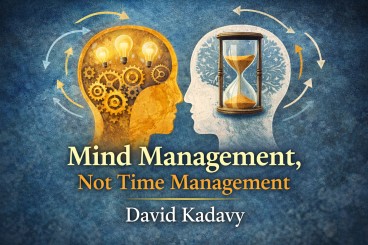
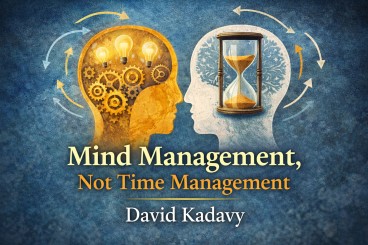
David Kadavy, the independent author and podcaster whose insights on creativity and productivity have resonated with a global audience of makers and thinkers, brings a fresh lens to the self-help genre. Known for The Heart to Start (2017), where he explored overcoming creative blocks, and his popular "Love Your Work" podcast, Kadavy draws from personal experiments in remote work and writing. His approach blends behavioral science with lived experience, appealing to those seeking sustainable output over hustle culture. Mind Management, Not Time Management: Productivity When Creativity Matters (Kadavy, 2020), a 248-
page paperback self-published through Kadavy, Inc., distills a decade of reflection into a counterintuitive guide for knowledge workers and creators. The book's thesis challenges conventional wisdom: "Productivity is less about time management than it is about mind management" (Kadavy, 2020, p. 12). Kadavy argues that for creative tasks, aligning work with mental energy states yields better results than rigid schedules, turning scattered efforts into focused flow. In an era of burnout and distraction, this feels like a wakeup call to work smarter with our brains. Everyone should read it because traditional productivity tools often fail creators, leaving them frustrated. Kadavy offers a humane alternative grounded in neuroscience and observation. It is a gentle nudge for those playing catch up with ground realities like endless to do lists or fleeting inspiration, much like realising the pressure cooker timer matters less than the flame's steady heat.
Kadavy structures Mind Management, Not Time Management as an accessible journey, blending personal anecdotes with scientific insights, progressing from diagnosis of time management's limits to practical mind management techniques. The arguments centre on mental energy cycles: generative for ideas, analytical for editing, administrative for routine work thrives when matched to state rather than clock. Evidence draws from Kadavy's experiments, studies on circadian rhythms, and creator testimonials. Solutions involve observing energy patterns, scheduling flexibly, and cultivating states through rituals. These elements form a framework for sustainable creativity, proving output improves with alignment over force. Bolded quotes from the text illuminate principles, like signposts on a winding creative path.
The book opens critiquing time management: "In the time management world, mental context doesn't exist. You're trying to get as many things done in as little time as possible" (p. 18). Kadavy contrasts this with creative reality. "Creative work doesn't happen in a vacuum; it happens in the context of your mental state" (p. 25). He introduces energy states: "There are times when your mind is generative, analytical, or administrative" (p. 32). Evidence from his writing: "I used to force writing in mornings; now I generate ideas then, edit afternoons" (p. 39).
Kadavy details generative state: "Generative energy is when ideas flow freely, like a river after rain" (p. 46). Capture without judgment. "Don't edit while generating; let the mind wander" (p. 53). Analytical follows: "Analytical energy sharpens ideas, like polishing rough gems" (p. 60). Administrative for routine: "Save emails and admin for low energy periods" (p. 67).
Observing cycles key: "Track your energy for a week; patterns emerge" (p. 74). Kadavy shares logs. "My generative peaks post coffee, analytical post lunch" (p. 81). Rituals cultivate states: "Walks spark generation; music focuses analysis" (p. 88).
On flow: "Flow happens when challenge matches skill in right state" (p. 95). Avoid forcing: "Pushing against energy drains; flowing with it multiplies" (p. 102). Compounding creativity: "Consistent state aligned work builds momentum" (p. 109).
Kadavy addresses blocks: "Blocks signal mismatched state or fear" (p. 116). Switch tasks. "Stuck generating? Switch to admin to recharge" (p. 123). Long term: "Mind management compounds like interest" (p. 130).
Later chapters apply to careers: "Knowledge workers thrive on mind, not clock" (p. 137). Remote work benefits: "No office hours mean freedom to follow energy" (p. 144). Team caveats: "Align individual energies for collective flow" (p. 151).
Kadavy closes optimistically: "Manage mind, time manages itself" (p. 158). "Creativity isn't scarce; misalignment is" (p. 165). "Your best work awaits right state" (p. 172). "Productivity when creativity matters demands mind first" (p. 179). "Energy, not hours, measures true output" (p. 186). These insights, practical yet profound, form a guide liberating and logical.
Mind Management, Not Time Management impresses with its paradigm shift and practical empathy, a productivity book that prioritises human rhythms over rigid grids. Kadavy's research depth draws from cognitive science and personal trials, grounding "Generative energy is when ideas flow freely" (p. 46) in relatable patterns. This accessibility elevates work, making neuroscience feel intuitive. Strengths shine in applicability: creators find validation in "Don't edit while generating" (p. 53), fostering flow sans guilt. Concise yet comprehensive, Kadavy's prose conversational “Track your energy for a week" (p. 74) inviting experimentation.
Gaps glimmer in broader applicability, where creative focus occasionally sidelines routine workers or structured environments. Office bound readers might struggle with flexible scheduling (pp. 144 151). Intersectional layers gender, class, cultural pressures on time receive lighter touch; energy cycles assume autonomy many lack. Optimism inspires but risks overlooking burnout from mismatched demands.
All the same, these limit not the core message; as guide, it empowers more than it excludes, beckoning alignment where rigidity repels.
Delving deeper, Kadavy's progression, state to strategy, flows like energy itself surpassing checklist tomes. His blend suits symposiums, though exercises could corral experimentation. On equity's equator, it is earnest, enfolding diverse creators would enrich. Ultimately, Mind Management, Not Time Management ameliorates minor mists with monumental marrow, a memorandum for mindful making.
Why Indian Youth Readers Must Read This Book
Packed in the pressure pots of India's coaching crucibles and corporate coliseums, where rote regimens regurgitate rankings yet recoil from genuine reflection, David Kadavy's Mind Management, Not Time Management wafts in like a waft of old Bombay breeze, brushing away the bustle with breadth. For the wide awake twenty somethings tackling tech tempests or tutoring tempests, those dusk deliberations on whether the "secure" slot will ever ignite the soul, this guide to energy aligned work is an elder's understated epistle, epistle bypassing the syllabus to the spirit beneath. Our scholastic sanctuaries, sanctifying scores sans the spark to question, mirror time management's tyranny; Kadavy's mind mantra "Productivity is less about time management than it is about mind management" ( p. 12) echoes the quota quandaries and rote's restraint, urging youth to architect their own azadi from clocks. In amphitheatres acclaiming algorithms whilst assailing ancestries, where rankers reign but reflectors recede, the book beckons an "energy switch" "Creative work doesn't happen in a vacuum; it happens in the context of your mental state" ( p. 25) probing partition psalms or prof's partialities, transposing frantic formulae into fluid freedoms. It is a subdued surfacing, tutoring the young to strain silences in symposium swells, reclaiming self from scripts that scribe but seldom sing.
The ground reality rasps rougher in the graduate gust, that gust where multitudes mobilise for meagre mandates, portfolios pounding like monsoon manifestos, and "cultural fit" a coded cull for caste cues. Kadavy's cycle counsel "There are times when your mind is generative, analytical, or administrative" (p. 32) mirroring the mentor's microaggressions that mar mock panels, where stutters sink selections or startup spiels. "Don't edit while generating; let the mind wander" (p. 53), Kadavy notes, a nostrum for network novices in negotiation nets, crafting "flow frameworks" that coax clarity from corporate cloisters. For fledglings forging freelance fords or firm footholds, playing catch up with household heirlooms or hostel heartaches, the ritual remedy Walks spark generation; music focuses analysis" (p. 88) steadies: dwell in the deluge, disgorge doubts, transmuting TEDx tremors into triumph tracks. Envision IIM initiates not nattering negatives but nurturing neural states, as "Flow happens when challenge matches skill in right state" (p. 95), weaving witty wards into workshop winds, birthing bonds from breached beginnings in Bengaluru backlots.
Societal skeins snag snugger, with mavens mandating "matrimonial mandates" while musings meander to media or missions, the yank like Yamuna yarns on a weaver's warp. Kadavy's block balm Blocks signal mismatched state or fear" (p. 116) resounds the repressed rifts of role reversals, where "log kya kahenge" laces legacies in lace. In fabrics favoring forbearance over fire, where murmurs mate but missions miscarry, "Pushing against energy drains; flowing with it multiplies" (p. 102) empowers etching epics amid alliance altars, proffering perorations that outpace pageantry. Global gleanings, from remote reflections to rhythm rituals, widen warps from Varanasi veenas to virtual vines, spurring UpGrad unions or Unacademy unveilings linking Ladakhi learners to lunar like leaps. For our young yarn spinners, straddling sari strictures and soaring soliloquies, Mind Management, Not Time Management reflects rudraksha rings: it exhumes entrenched "time traps", from debate derails to dowry dilemmas, craving the clarity to chant "Manage mind, time manages itself" ( p. 158). Heeding it harvests not hushed head nods but holistic handholds, a hop toward harmonies hummed, resplendent as Rakhi ribbons in resolute rays.
Layer our lingual labyrinths, where tongues twine in trilingual tangles, the "energy" ethos validates variance, voicing vernaculars in veiled variances. For daughters doubling duties, the daring dictum, "Your best work awaits right state" (p. 172), dares daughters too, dismantling decorum in digital dawns. In hinterland hollows where harangues halt at hierarchies, the pact plea, "Creativity isn't scarce; misalignment is" (p. 165), levels ledges, lifting laborers' laments to luminous legacies. Core claim: it counters the "collective cringe," scripting soliloquies
Mind Management, Not Time Management lingers as a ledger of luminous insight, its lines a lantern in the labyrinth of creative labour. Kadavy, with observer's exactitude and practitioner's acumen, avows that productivity, grasped through mind, graces the graspable. Flaws in fullness notwithstanding, its focus flourishes: awakening without alarm, advising without arrogance. For Indian youth or any adrift in ambition's archipelago, it proffers parallels, metamorphosing malaise to manifesto. In epochs of evaporating equanimity, imbibing its intimations imperative; it is the fractured frame that frees the future's flow.