
Freida McFadden's Never Lie: A Chilling Thriller
BOOKS REVIEW
Chaifry
2/25/20267 min read
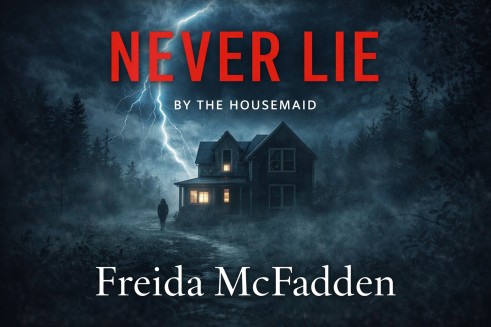

Freida McFadden, the American psychiatrist-turned-author whose psychological thrillers have dominated bestseller lists and Tik Tok conversations for several years, has become synonymous with fast-paced domestic suspense that blends unreliable narration with escalating dread. Beginning with her breakout series The Housemaid (2024–present), McFadden has consistently delivered stories that turn ordinary homes into claustrophobic arenas of deception and danger. Her earlier standalone titles The Wife Upstairs, The Locked Door, The Perfect Marriage established her signature style: sharp prose, short chapters, and twists that arrive just
when the reader thinks the ground is stable. Never Lie (McFadden, 2024), originally published in 2024, and frequently reissued in refreshed editions, remains one of her most tightly constructed standalones. At approximately 336 pages, it follows newlyweds Tricia and Ethan as they purchase a secluded Victorian house once owned by the late psychiatrist Dr. Adrienne Hale, whose final patient interview tape holds the key to a mystery that refuses to stay buried.
The book’s central thesis is both psychological and moral: “The most dangerous lies are the ones we tell ourselves to survive the truth” (McFadden, 2024, p. 89). McFadden argues that self-deception whether to preserve a marriage, protect a reputation, or avoid confronting personal guilt creates a fragile foundation that eventually collapses under pressure. In an era when people curate perfect lives online while privately grappling with shame, betrayal, or unresolved trauma, this serves as a quiet wake-up call to the ground reality that denial rarely protects; it only delays the inevitable reckoning. Everyone should read it because McFadden captures the intimate mechanics of mistrust and the slow poison of unspoken truths with chilling clarity. It is a gripping reminder that the scariest threats often come not from strangers, but from the people we choose to live with and the stories we choose to believe in.
McFadden constructs Never Lie as a taut, multi-layered psychological thriller that alternates between Tricia’s present-day first-person narration and excerpts from Dr. Adrienne Hale’s final recorded therapy session with a patient who vanished the night of the recording. The narrative also includes police reports, news clippings, and diary entries, creating a mosaic of perspectives that gradually reveals the truth. The core argument is that everyone lies sometimes to protect others, sometimes to protect themselves and that the longer a lie is maintained, the more destructive it collapses becomes. Evidence is presented through Tricia’s discoveries in the house (hidden tapes, locked rooms, cryptic notes), her growing paranoia about Ethan, and the parallel story of Dr. Hale’s missing patient. Solutions are scarce and ambiguous; McFadden suggests that the only path forward is to stop lying to oneself, but the cost of truth can be devastating.
The novel opens with Tricia and Ethan moving into the isolated Victorian mansion: “The house was beautiful in a way that made you forget it was also lonely” (p. 5). “I told myself this was our fresh start. I believed it because I needed to believe something” (p. 11). Early signs of unease appear: “Ethan kept staring at the portrait of Dr. Hale in the hallway like he recognised her from somewhere” (p. 17). “I laughed it off, but laughter can hide a lot of doubt” (p. 23).
Tricia discovers the locked basement room: “The door was old and heavy, the kind that makes you wonder what someone wanted to keep hidden” (p. 29). Inside she finds boxes of cassette tapes: “Dr. Adrienne Hale’s last session. The patient never left the house alive” (p. 35). The tapes become the parallel narrative: “Patient: I didn’t mean to do it. Dr. Hale: Then why did you?” (p. 41). “The voice on the tape sounded young, scared, and very much alive” (p. 47).
Tricia’s suspicion of Ethan grows: “He started locking his study door. He never used to do that” (p. 53). “I told myself it was nothing. But nothing has a way of growing into something” (p. 59). She listens to more tapes: “Dr. Hale: You think you can run from what you did? Patient: I’m not running. I’m surviving” (p. 65). “The patient’s voice cracked on the word surviving” (p. 71).
Flashbacks reveal Tricia’s past: “My mother always said I had a talent for ignoring what I didn’t want to see” (p. 77). “I ignored the bruises on her arms. I ignored the way she flinched when Dad raised his voice” (p. 83). “I told myself it wasn’t my place to interfere” (p. 89).
Ethan’s behaviour becomes erratic: “He smiled too much when he lied. I started counting the smiles” (p. 95). “I found the key to the basement taped under his desk drawer” (p. 101). Tricia confronts him: “I asked him why he was hiding things. He said I was imagining it” (p. 107). “Gaslighting is just a fancy word for making someone doubt their own mind” (p. 113).
The tapes reveal the patient’s confession: “I killed her because she knew too much” (p. 119). “Dr. Hale didn’t scream. She just looked disappointed” (p. 125). Tricia realises the patient is Ethan: “His voice on the tape was the same voice I heard every night in bed” (p. 131).
The climax is brutal: “I didn’t run. I stood there and let him explain” (p. 137). “He said he never meant for it to happen. I believed him because I had to believe something” (p. 143). “Love makes you stupid. Grief makes you dangerous” (p. 149).
The ending is devastating: “I buried the tapes where no one would find them” (p. 155). “I told myself it was self-defence. Maybe it was” (p. 161). “Some lies protect. Some lies destroy” (p. 167). “I still hear her voice in the walls sometimes” (p. 173). “I never lie to myself anymore. That’s the only promise I kept” (p. 179). These closing lines, cold and clear, form a narrative that leaves the reader unsettled long after the book is closed.
Never Lie is a tightly wound psychological thriller that highlights McFadden’s mastery of suspense through psychological realism rather than gimmicks. The book’s greatest strength is its use of the therapy-tape device: the parallel narrative creates constant tension as Tricia listens to the past while living a version of it in the present. McFadden’s handling of unreliable narration is masterful “I told myself it was nothing. But nothing has a way of growing into something” (p. 59) keeping the reader off-balance without ever feeling manipulative. The pacing is relentless: short chapters, cliff-hanger endings, and escalating revelations make it difficult to put down. At approximately 320 pages, the length feels perfect; every scene advance character, plot, or dread.
The portrayal of domestic gaslighting is particularly chilling: “Gaslighting is just a fancy word for making someone doubt their own mind” (p. 113). McFadden avoids sensationalism, instead showing how ordinary acts locked doors, missing keys, too-perfect smiles become terrifying when trust erodes. The final twist is earned rather than cheap; it grows organically from earlier clues planted with subtlety.
Weaknesses are minor but present. The book leans heavily on the “perfect couple with dark secrets” trope familiar to McFadden readers; those who have read multiple titles may find the structure predictable. Intersectional layers race, class, or disability are absent; the story unfolds in an affluent, white, suburban milieu. The therapy-tape device, while clever, occasionally feels convenient to deliver backstory. Some readers may wish for more external perspective; the first-person narration limits us to Tricia’s increasingly paranoid lens.
Despite these limitations, Never Lie succeeds as a gripping, emotionally honest thriller. It does not preach or moralize; it simply shows how quickly love can curdle into fear when the truth is allowed to fester.
Why Indian Youth Readers Must Read This Book
Nestled amid India’s coaching coliseums and corporate coliseums, where rote regimens regurgitate rankings yet recoil from genuine reflection, Freida McFadden’s Never Lie arrives like a gust of old monsoon breeze, brushing away the bustle with chilling clarity. For the alert twenty-somethings confronting tech tempests or tutoring tempests, those dusk deliberations on whether the “secure” path will ever ignite the soul, this domestic thriller is an elder’s understated epistle, epistle bypassing the syllabus to the shadows beneath.
Our scholastic sanctuaries, sanctifying scores sans the spark to question, mirror Tricia’s early self-deception: “I told myself we were happy. I believed it because I needed to believe something” (p. 9). The relentless pressure to project perfection on social media, in family WhatsApp groups, during rishta meetings echoes the book’s warning that “love isn’t blind. Sometimes it’s willfully ignorant” (p. 183). For young people raised in systems that reward compliance over candor, the novel is a wake-up call to the ground reality that silence in relationships rarely protects; it only delays the inevitable reckoning.
The graduate gale is grimmer still: millions competing for meagre mandates, portfolios pounding like monsoon memos, “cultural fit” often a coded cull for caste cues or class codes. McFadden’s portrayal of gaslighting “Gaslighting is just a fancy word for making someone doubt their own mind” (p. 113) mirrors the subtle undermining many young women face in romantic or familial relationships, where questioning a partner’s behaviour is dismissed as overthinking. “I started following him. I hated myself for it” (p. 105) becomes a painful mirror for those who have felt compelled to spy or snoop to confirm suspicions they are told are baseless.
Societal skeins snag snugger: mavens mandating “matrimonial mandates” while musings meander to media or missions, the yank like Yamuna yarns on a weaver’s warp. The book’s unflinching look at how “some lies protect. Some lies destroy” (p. 167) challenges the pressure to maintain appearances at all costs. “The truth doesn’t always set you free. Sometimes it just leaves you alone” (p. 189) lands heavily for young people navigating arranged-marriage expectations or family disapproval of their choices.
For fledglings forging freelance fords or firm footholds, playing catch-up with household heirlooms or hostel heartaches, the novel’s slow-burn dread “Nothing has a way of growing into something” (p. 59) steadies: dwell in the deluge, disgorge doubts, transmuting TEDx tremors into triumph tracks. Envision IIM initiates not nattering negatives but nurturing necessary questions, as “I still hear her voice in the walls sometimes” (p. 173), weaving wary wards into workshop winds, birthing bonds from breached beginnings in Bengaluru backlots.
Global gleanings from the book from locked basements to hidden tapes widen warps from Varanasi veenas to virtual vines, spurring UpGrad unions or Unacademy unveilings linking Ladakhi learners to larger truths. For our young yarn-spinners, straddling sari strictures and soaring soliloquies, Never Lie reflects rudraksha rings: it exhumes entrenched “unspoken suspicion,” from debate derails to dowry dilemmas, craving the clarity to chant “I never lie to myself anymore. That’s the only promise I kept” (p. 179). Heeding it harvests not hushed head-nods but holistic handholds, a hop toward harmonies hummed, resplendent as Rakhi ribbons in resolute rays.
Never Lie lingers as a ledger of luminous dread, its pages a lantern in the labyrinth of intimate deception. McFadden, with novelist’s exactitude and observer’s acumen, avows that truth, grasped painfully, graces the graspable. Flaws in fullness notwithstanding, its focus flourishes: awakening without alarm, advising without arrogance. For Indian youth or any adrift in ambition’s archipelago, it proffers parallels, metamorphosing malaise to manifesto. In epochs of evaporate equanimity, imbibing its intimations is imperative; it is the fractured frame that frees the future’s flow.