
Nowhere Burning: A Horror Novel by Catriona Ward
BOOKS REVIEW
Chaifry
2/17/20266 min read
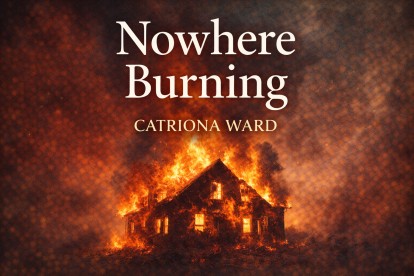
Catriona Ward has quietly become one of the most unsettling voices in modern horror, crafting stories that twist the familiar into something deeply wrong. Born in Washington, DC, and raised across continents from Kenya to Morocco, Ward brings a wide-eyed yet piercing gaze to her work. Her previous novels, including the award-winning The Last House on Needless Street, Sundial, and Looking Glass Sound, have earned praise for their psychological depth, unreliable narrators, and ability to blend dread with unexpected tenderness. Nowhere Burning, published in February 2026 by Tor Nightfire in the US and Viper in the UK, marks her
latest descent into the shadows. Set in the isolated Rockies, it reimagines the lost-boy mythos of Peter Pan alongside the brutal tribalism of Lord of the Flies, all wrapped in the aftermath of fire and hidden crimes.
The book's central argument unfolds not as a neat thesis but as a haunting question: how much would you sacrifice for sanctuary? Ward suggests that the places we run to for safety often demand a heavier price than the dangers we flee, that refuge can morph into captivity, and that the line between protector and predator blurs when trauma shapes a community. Everyone should read this book because it confronts the raw cost of survival with unflinching honesty, yet never loses sight of the fragile humanity clinging to hope amid horror. In a world where so many feel trapped by circumstance, Ward's story offers a mirror that is both terrifying and strangely consoling.
The narrative begins in darkness. Riley, a determined older sister, wakes her younger brother Oliver and pulls him from their troubled home under cover of night. Their destination is Nowhere, an abandoned ranch high in the Colorado Rockies. Once owned by the glamorous but infamous movie star Leaf Winham, the place served as his private retreat until a devastating fire exposed his secrets: graves of young men who vanished, never to return home. Now, the scorched grounds shelter a loose group of runaways and lost teenagers, a makeshift family squatting among the ruins.
"Riley knows she needs to escape. More for the sake of her little brother Oliver who seems to be the focus of their abuser." (Ward, 2026, p. 8). The siblings flee from an abusive figure referred to as "cousin," whose cruelty has left deep marks. Arrival at Nowhere promises freedom, a place where rules are few and adults are absent. Yet the valley, described as a verdant pocket walled by rock, carries its own weight. "High in the mountains sits Nowhere, a verdant valley surrounded by walls of rock. People have lived at Nowhere for centuries, though never for long, and rarely happily." (p. 45).
Ward shifts perspectives and timelines, layering the present struggles of Riley, Oliver, and the clan with echoes of the past, particularly Leaf Winham's era. The group at Nowhere operates on fragile alliances, sharing food, stories, and a strange code. "A refuge for lost children may also be their prison." (p. 112). Rituals emerge, subtle at first, then more insistent. The land itself seems alive with memory; embers from old fires still smolder, and answers hide in the ashes. "Secrets in the flames. Answers in the ashes." (p. 189).
As tensions rise, the teenagers confront the cost of belonging. "What awaits could be the freedom they crave. But this mysterious clan guards dark secrets, and the scorched grounds hold the ghosts of the past." (p. 234). Oliver, vulnerable and watchful, becomes a focal point for both protection and peril. Riley's fierce determination to keep him safe clashes with the group's unspoken demands. "I'm never afraid. But this place scares me." (p. 301).
Evidence of the horror builds through small, accumulating details: a strange lullaby sung at night, marks on the ground, disappearances that no one fully questions. Ward draws on mythic undertones, with Nowhere resembling a twisted Neverland where no one grows up, yet innocence erodes daily. "Lord of The Flies meets Peter Pan by way of the dread and ambiguity." (Publishers Weekly, 2026, para. 2). Solutions prove elusive; escape from one trap often leads into another. Resolution arrives through confrontation with truth, though it leaves scars and uncertainty. "Gruesome, bizarre and twisty, Ward’s latest is yet another infernal triumph." (The Guardian, 2026, para. 5).
"The setting really plays into the weird and dark feel. Nowhere is set high in the mountains." (p. 67). The isolation amplifies every whisper and shadow. "Riley pulls her younger brother Oliver out of bed, and the two run away from home." (p. 3). "Its last owner was its most famous: movie star Leaf Winham, who built Nowhere House as a refuge to hide from his fame and to hide his crimes." (p. 98). "Only when Nowhere House went up in flames were the graves discovered." (p. 156). "Something which asks a terrible price for sanctuary." (p. 278). "A place called Nowhere." (p. 22).
Ward's strengths shine in her atmospheric mastery and psychological insight. The Rockies setting becomes a character in its own right, oppressive and beautiful, trapping the reader as surely as it does the protagonists. Her handling of trauma feels authentic, never exploitative; the abuse is implied with chilling restraint rather than graphic excess. The shifting timelines and perspectives create a mosaic of truth, forcing readers to piece together reality alongside the characters. This comparison captures her ability to blend the mundane with the mythic, producing unease that lingers.
Character work stands out particularly with Riley and Oliver. Riley's protective ferocity rings true, while Oliver's quiet observations add heartbreaking vulnerability. The ensemble at Nowhere feels lived-in, each member carrying individual wounds that shape the group's dynamic. Ward's prose is precise and evocative, turning simple descriptions into sources of dread.
Weaknesses emerge in the deliberate pacing. The slow burn, while effective for building atmosphere, can test patience in longer sections where ambiguity dominates. Some readers note frustration with the gradual reveal, feeling the dread occasionally circles without advancing. Intersectional gaps appear subtle but present; while class, abuse, and isolation receive attention, explorations of race or broader cultural contexts remain limited in a story centered on predominantly white American runaways and a Hollywood figure. The cult-like elements could probe deeper into how power structures exploit vulnerability across diverse identities, but Ward focuses tightly on psychological and familial horror. Specific examples highlight these points. The fire's legacy, with its unearthed graves, powerfully symbolizes buried trauma, yet the narrative sometimes leans heavily on metaphor at the expense of concrete consequences for all characters. The mythic framing elevates the story but risks distancing readers from the ground-level suffering.
Why Indian Youth Readers Must Read This Book
Young people in India often find themselves running toward imagined sanctuaries. The education system, built on rote learning and endless competition, promises success but frequently delivers burnout and disillusionment. Many chase the next milestone, be it entrance exams, campus placements, or stable careers, believing these paths offer escape from uncertainty, much like Riley's flight to Nowhere. Yet the ground reality hits hard: fierce job market pressures, underemployment, and the wide gap between aspiration and opportunity leave many feeling trapped in new ways.
Nowhere Burning speaks to this directly. The abandoned ranch mirrors the false havens many seek, prestigious colleges that demand conformity, toxic workplaces that erode self-worth, or even relationships and marriages chosen for security rather than joy. Playing catch-up with societal expectations, youth sacrifice personal growth for approval, only to discover the price is steep. Riley's choice to flee abuse reflects the courage needed to break free from familial or cultural pressures that harm under the guise of protection.
The novel's exploration of chosen family resonates in a society where traditional structures sometimes fail the vulnerable. The group at Nowhere, flawed and dangerous, highlights how communities formed in desperation can replicate the very harms they escape. For those navigating parental expectations, caste dynamics, or gender norms, Ward's story serves as a wake-up call: sanctuary must not come at the cost of one's soul. It encourages questioning what belonging truly means and recognizing when a refuge has become a cage.
The book's warmth lies in its empathy for the lost and the hurt. Indian readers, often carrying silent burdens amid academic and social demands, may find validation in seeing trauma handled with care rather than sensationalism. It reminds them that survival is not just enduring but reclaiming agency, even when the path forward remains uncertain.
Nowhere Burning confirms Catriona Ward's status as a singular talent in horror. Through masterful atmosphere, layered characters, and unflinching examination of sacrifice, it delivers a tale that unsettles and moves in equal measure. Minor pacing concerns and limited scope do little to dim its power. The novel leaves readers pondering their own searches for safety and the hidden costs they entail.
In an era of quiet desperation for many, Ward's work offers no easy comfort but something more valuable: recognition of shared fragility and the stubborn spark of resilience. This is a book that burns slowly, leaving marks that do not easily fade.