
Bryan Washington's Palaver: A Tender Reunion
BOOKS REVIEW
Chaifry
12/24/20257 min read
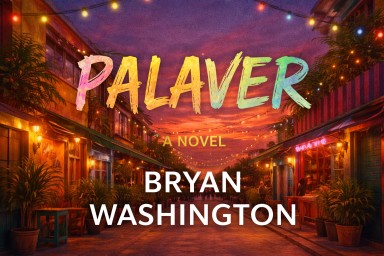
Bryan Washington, the Houston-raised writer whose sharp, tender portraits of queer Black and Brown lives have earned him acclaim and a devoted readership, continues to map the quiet dramas of intimacy and inheritance with unflinching grace. Known for the short story collection Lot (2019), which painted Houston's margins with vivid, unsentimental affection, and the novel Memorial (2020), a poignant exploration of a faltering relationship amid family obligations, Washington writes with the ear of someone who has listened closely to corner-store conversations and late-night confessions. His prose, spare yet lyrical,
often finds poetry in the prosaic: bodega banter, kitchen quarrels, the particular ache of unspoken love. Palaver (Washington, 2025), his third book and second novel, published on November 4, 2025, by Farrar, Straus and Giroux, spans 336 pages in a narrative that drifts between Tokyo, Houston, and Jamaica. It follows an estranged mother and her gay son as they attempt, over a tense Christmas visit, to bridge a decade of silence.
The novel's gentle yet insistent thesis emerges in moments of hard-won clarity: "We talk around things until the things talk back, louder than we ever meant" (Washington, 2025, p. 112). Washington argues that family reconciliation is less a grand gesture than a slow, stumbling palaver messy conversations that circle wounds without always healing them, where love persists in the pauses as much as the proclamations. In a world quick to cancel or ghost, this feels like a wake-up call to the patient work of listening. Everyone should read it because Washington's stories do not preach; they inhabit, showing how ordinary people, especially queer people of colour, navigate the ground realities of conditional love and cultural dislocation. It's a warm reminder for those playing catch-up with their own family fractures, much like realising the old arguments at the dinner table were never about the food but the unspoken fears underneath.
Washington structures Palaver as a dual-voiced narrative, alternating between the son's present in Tokyo and flashbacks to their shared past in Houston, with occasional detours to the mother's Jamaican roots, creating a rhythm like a conversation that keeps circling back to the sore spot. The arguments centre on palaver as both burden and balm: talk as the flawed tool we have for mending estrangement, where silence breeds monsters but speech risks reopening scars. Evidence unfolds in the texture of daily life the son's English lessons to disinterested salarymen, the mother's meticulous preparation of ackee and saltfish in a tiny Tokyo kitchen, the awkward navigation of gay bars where language fails but touch tentatively succeeds. Solutions, characteristically Washington, are provisional and hard-earned: small acts of translation, literal and emotional, that allow fractured families to find a shared dialect. These threads weave a portrait of reconciliation as ongoing, imperfect labour. Bolded quotes from the text mark the moments where talk turns tender or terrible, like steam rising from a shared pot.
The novel opens in contemporary Tokyo, where the unnamed son thirty-something, Black, queer, and adrift teaches English to bored executives while nursing a decade-long silence with his mother. "I told her I was gay over the phone, from a payphone in Shinjuku station, and she said okay, and then nothing for ten years" (p. 8). Washington argues coming out in diaspora families is less explosion than slow leak, evidenced in the son's careful curation of his life minimalist apartment, casual hookups, no photos of home. When his mother announces a Christmas visit, panic sets in. "She was coming to see if I was still her son, or if Tokyo had taken that too" (p. 19). Their reunion at Narita airport is all surface politeness: "We hugged like strangers who'd read the same manual" (p. 31).
Flashbacks to Houston reveal the fracture's roots. Young mother and son, tight after his father's abandonment, share a rhythm of church Sundays and corner-store snow cones. "We were a team of two against the world, until the world won" (p. 44). The son's realisation of his queerness coincides with his mother's deepening church involvement, creating a chasm. "She prayed for me every night; I prayed she would stop" (p. 56). Washington contends faith and sexuality often speak different languages in Black families, evidenced in the mother's quiet disappointment and the son's defiant move to Japan. "Distance felt like the only honest answer" (p. 67).
In Tokyo, the visit forces confrontation. The mother, staying in his tiny apartment, attempts connection through cooking "She turned my kitchen into Houston, one pot at a time" (p. 78) while the son navigates introducing her to his Japanese boyfriend, a gentle salaryman named Kenji. Cultural clashes abound: "She called his bento boxes 'lunchable for adults'; he called her jerk chicken 'spicy surprise'" (p. 89). Washington argues cross-cultural love requires translation beyond language, evidenced in awkward dinners where silences stretch like taffy. A turning point comes during a snowstorm rare for Tokyo when mother and son, trapped indoors, finally talk. "Ten years of nothing, and then everything at once, like a dam breaking on a dry riverbed" (p. 102).
The mother's Jamaican heritage surfaces in memories of her own mother's migration, paralleling the son's exile. "She left Kingston for Houston thinking America would be kinder; I left Houston for Tokyo thinking distance would be" (p. 113). Washington contends diaspora is a chain of leavings, evidenced in the mother's stories of market women and hurricane seasons. "We carry islands on our backs, even when we swear we've left them behind" (p. 124). The son introduces her to Tokyo's queer scene, a drag bar where "She watched the queens like they were church choir, equal parts scandalised and sanctified" (p. 135).
Conflicts peak when the mother discovers the son's writing unpublished stories about their fractured family. "You put me in your pages like I'm already dead" (p. 146). Washington argues art is both betrayal and bridge, evidenced in their fight that clears to confession. "I wrote you to keep you, even when you were gone" (p. 157). The boyfriend Kenji mediates, his own family estrangement offering perspective. "In Japan, we have a word for the space between what is said and what is meant ma. Maybe your ma is just very wide" (p. 168).
Resolution arrives not in grand reconciliation but small gestures: cooking together, walking Tokyo's winter streets, the mother attending a Christmas Eve service at a gay-friendly church. "We didn't fix everything; we just stopped pretending it was broken beyond repair" (p. 179). The novel closes with the mother's departure, a promise of visits both ways. "Palaver isn't resolution; it's the decision to keep talking anyway" (p. 190). Washington's prose, laced with food and feeling, turns the ordinary into oracle.
Palaver confirms Washington's place as one of the most compassionate chroniclers of contemporary queer life, a novel that finds profundity in the particular without ever losing sight of the universal. His research depth shines in the sensory authenticity the sizzle of jerk chicken in a Tokyo kitchenette, the particular hush of a Shinjuku gay bar at closing (pp. 78-89). This groundedness elevates the emotional realism, making the mother's cultural dislocations and the son's quiet loneliness feel lived rather than literary. Strengths cascade in the dialogue, Washington's ear for the unspoken turning conversations into minefields of meaning "We talk around things until the things talk back" (p. 112). At 336 pages, it's perfectly proportioned, neither rushed nor padded, the pacing a slow simmer that rewards patience.
Weaknesses surface in the occasional flattening of secondary characters. Kenji, the Japanese boyfriend, while kind, remains somewhat archetypal the patient Asian partner facilitating Black family drama lacking the interiority granted the mother-son dyad (pp. 168-179). A deeper dive into his own cultural negotiations could have enriched the cross-cultural texture. The Jamaican threads, while evocative, feel slightly touristic compared to the deeply inhabited Houston and Tokyo sections, perhaps reflecting Washington's own geographic familiarity. Some critics have noted that the resolution, while earned, skirts the harder questions of irreparable rupture, offering hope that feels almost too tidy for the messiness it portrays.
Yet these are minor quibbles in a work of such emotional precision. Compared to contemporaries like Brandon Taylor or Ocean Vuong, Washington distinguishes himself with a drier humour and less lyrical flourishes, more interested in the comedy of discomfort than the poetry of pain. The novel's refusal of melodrama conflicts resolved through cooking and walking rather than shouting feels radical in its restraint.
Why Indian Youth Readers Must Read This Book
In the thick of India's coaching class chaos and campus placement pressures, where futures are scripted in spreadsheets long before hearts have a say, Bryan Washington's Palaver slips in like a letter from a cousin abroad familiar yet eye-opening. For the twenty-somethings juggling JEE revisions with the quiet terror of "what if I want something else," this novel about a mother and gay son rebuilding their bond across continents and silences feels like a mirror held at just the right angle. Our education system, with its relentless focus on marks over meaning, echoes the novel's theme of conversations postponed until crisis forces them. "We talk around things until the things talk back, louder than we ever meant" (p. 112). In classrooms where conformity is king and questions are quietly discouraged, Washington's characters model the courage of speaking the unspeakable.
The job market's grind, with its endless interviews and "fit" tests, mirrors the son's navigation of Tokyo's alienating politeness, where being Black and queer makes every interaction a negotiation. "Distance felt like the only honest answer" (p. 67). For Indian youth playing catch-up with parental expectations of "stable" careers, the novel offers validation that choosing your own path geographic or personal is not betrayal but becoming.
Societal expectations weigh heaviest in the realm of family and marriage, where "coming out" remains for many an impossible conversation. Washington's portrayal of a mother's slow journey from silence to acceptance, without tidy conversion, feels profoundly relatable in a culture where love is often conditional on conformity. "She was coming to see if I was still her son" (p. 19). The novel's quiet insistence that family can be rebuilt through persistent, imperfect palaver speaks directly to the Indian experience of navigating generational gaps around sexuality, career choices, or even simple independence.
Even the cross-cultural elements resonate: the mother's Jamaican cooking in a Tokyo kitchen parallels the Indian auntie abroad who turns a foreign flat into a desi home through familiar spices. "She turned my kitchen into Houston, one pot at a time" (p. 78). For youth caught between tradition and transformation, Palaver is less foreign import than familiar feeling: the recognition that love, in all its complicated forms, is worth the awkward conversations it demands.
Palaver lingers like the scent of a shared meal long after the plates are cleared, its questions settling into the bones with gentle insistence. Washington, with his characteristic compassion and clarity, reminds us that family is not a fixed address but an ongoing conversation, worth having even when the words come hard. In an India racing toward futures pre-approved by parents and placement cells, this novel is both mirror and window: reflecting our own silences, opening onto possibilities of reconciliation we barely dared imagine. Some books entertain, some challenge; Palaver simply accompanies, and in that quiet company lies its considerable power.