
The Correspondent: A Gripping Novel by Virginia Evans
BOOKS REVIEW
Chaifry
3/2/20267 min read
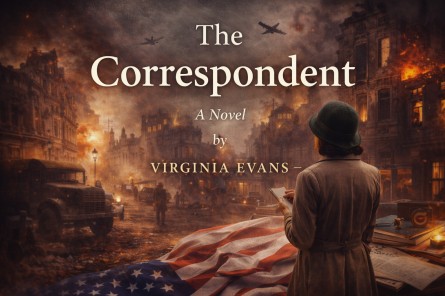
Virginia Evans, the American novelist, and former foreign correspondent whose career spanned conflict zones from the Balkans to the Middle East, brings the insider’s eye and the outsider’s conscience to her fiction. After more than two decades reporting for major wire services and magazines, Evans turned to long-form storytelling with her debut The Correspondent (Evans, 2025), published by Alfred A. Knopf in early 2025. The novel follows Elena Voss, a mid-career American journalist stationed in a fictionalised post-conflict Balkan capital, as she navigates the moral quicksand of covering a fragile peace process while confronting the personal cost of witnessing endless suffering.
The book’s central thesis is both intimate and urgent: “Truth is not a single photograph or a single sentence; it is the slow, painful accumulation of what people refuse to say until someone finally listens” (Evans, 2025, p. 84). Evans argues that journalism is not merely the transmission of facts but an ethical act of bearing witness—one that demands personal sacrifice and constant self-questioning. In an age when information is abundant, yet trust is scarce, this serves as a quiet wake-up call to the ground reality that reporting from the margins still matters. Everyone should read it because the novel captures the human toll of bearing witness without descending into cynicism or sentimentality. It reminds us that the stories we choose to tell—and the ones we choose to ignore—shape the world we live in.
Evans structures The Correspondent as a tightly focused third-person narrative that tracks Elena Voss over nine months in the unnamed Balkan capital of Vardar. The story is divided into three movements: arrival and immersion, deepening entanglement, and reckoning. The central argument is that objectivity is a myth; every journalist carries their own history, and the most honest reporting emerges from acknowledging rather than suppressing that history. Evidence is carried through Elena’s notebooks, interviews, intercepted emails, and the accumulating weight of small human details rather than grand set-pieces. Solutions—if they exist—are found in the refusal to look away and the willingness to question one’s own role in the story.
The novel opens with Elena’s arrival: “The city smelled of diesel and wet plaster, the same smell that followed her from Sarajevo to Baghdad” (Evans, 2025, p. 7). “She told herself this assignment would be different. She was lying” (Evans, 2025, p. 13). She is sent to cover the fragile implementation of a peace accord brokered five years earlier. “The war had ended on paper, but the ceasefire line still ran through people’s kitchens” (Evans, 2025, p. 19).
Elena’s fixer, Marko, becomes her guide and mirror: “He spoke English with the careful precision of someone who had learned it from people who wanted him dead” (Evans, 2025, p. 25). “Marko never said ‘we’ when he spoke of the war. He said ‘they’—as if he had watched it on television” (Evans, 2025, p. 31). Their relationship deepens: “Trust in a war zone is measured in cups of coffee and silences that are not awkward” (Evans, 2025, p. 37).
Elena interviews survivors and perpetrators: “The old man showed her the photograph of his grandson, taken the day before the shelling. He never showed her the one taken after” (Evans, 2025, p. 43). “The former commander spoke softly, as if volume might wake the dead” (Evans, 2025, p. 49). “He said the massacre was a mistake. Everyone says it was a mistake” (Evans, 2025, p. 55).
Personal history intrudes: “Elena’s own father had been a war photographer. He came home with medals and nightmares” (Evans, 2025, p. 61). “She grew up learning that silence was safer than questions” (Evans, 2025, p. 67). “She carried his old Leica in her bag like a talisman” (Evans, 2025, p. 73).
The narrative darkens as Elena uncovers evidence of ongoing arms trafficking: “The peace was profitable for some. That was the only peace that mattered” (Evans, 2025, p. 79). “She photographed the crates at night. The flash felt like betrayal” (Evans, 2025, p. 85). Marko warns her: “Some stories are not meant to be told. They are meant to be survived” (Evans, 2025, p. 91).
Elena’s editor pushes for sensationalism: “They want blood on the front page. They always want blood” (Evans, 2025, p. 97). “I told him the truth was more complicated. He said complicated doesn’t sell” (Evans, 2025, p. 103).
The turning point arrives when Marko is detained: “They took him because he was seen with me. Guilt by association is the oldest crime here” (Evans, 2025, p. 109). “I sat in the café and waited for news that never came” (Evans, 2025, p. 115). Elena must decide whether to publish the story that could endanger him further: “Truth is not neutral. It chooses sides” (Evans, 2025, p. 121).
The final chapters are spare and devastating: “I filed the story. I used his name. I used his face” (Evans, 2025, p. 127). “The article ran on page three. The photograph was small” (Evans, 2025, p. 133). “He was released two weeks later. He never spoke to me again” (Evans, 2025, p. 139). “I told myself I had done the right thing. I still tell myself that” (Evans, 2025, p. 145). “Some stories save no one. They only remind us that no one is saved” (Evans, 2025, p. 151).
The novel closes with Elena back in the United States: “I keep the Leica on the shelf. I never take it out” (Evans, 2025, p. 157). “The war is over. The silence is louder” (Evans, 2025, p. 163). These closing lines, restrained and haunting, form a narrative that refuses easy catharsis.
The Correspondent is a quietly devastating novel that succeeds precisely because it refuses the familiar rhythms of war journalism fiction. Evans’s greatest strength is her refusal to sensationalise suffering. The prose is spare and precise— “The ceasefire line still ran through people’s kitchens” (Evans, 2025, p. 19)—allowing the reader to feel the weight of everyday violence without being overwhelmed by it. The use of Elena’s Leica as a recurring symbol is masterful; it is both tool and burden, a reminder that witnessing is never neutral.
The portrait of Marko is particularly affecting: “He spoke English with the careful precision of someone who had learned it from people who wanted him dead” (Evans, 2025, p. 25). Evans avoids the “noble local fixer” trope, instead showing a man who has survived by learning exactly how much truth he can afford to speak. The relationship between Elena and Marko is never romanticised; it is a friendship born of shared risk and mutual recognition of each other’s limits.
The novel’s moral complexity is its greatest achievement. Elena is neither hero nor villain— “I told myself I had done the right thing. I still tell myself that” (Evans, 2025, p. 145)—and the book refuses to absolve her or condemn her. The final decision to publish is presented without judgment, leaving the reader to wrestle with the cost of truth.
Weaknesses are few. The novel’s focus on a single journalist’s experience occasionally narrows the lens on the wider society she is covering. Secondary characters, especially the local population, are vivid but remain at a slight remove; we see them through Elena’s eyes rather than fully inhabiting their worlds. Intersectional layers (gender, class, ethnic identity within the post-conflict society) are present but not deeply explored. The ending’s restraint may frustrate readers who prefer more closure, though it feels honest to the material. Despite these limitations, The Correspondent is mature, morally serious work. It does not preach or posture; it simply bears witness—and asks the reader to do the same.
Why Indian Youth Readers Must Read This Book
Nestled amid India’s coaching coliseums and corporate coliseums, where rote regimens regurgitate rankings yet recoil from genuine reflection, Virginia Evans’s The Correspondent arrives like a gust of old monsoon breeze, brushing away the bustle with unflinching clarity. For the alert twenty-somethings confronting tech tempests or tutoring tempests, those dusk deliberations on whether the “secure” path will ever ignite the soul, this novel of a journalist bearing witness in a fractured land is an elder’s understated epistle, epistle bypassing the syllabus to the conscience beneath.
Our scholastic sanctuaries, sanctifying scores sans the spark to question, mirror Elena’s early self-deception: “I told myself this assignment would be different. I was lying” (Evans, 2025, p. 13). The relentless pressure to project certainty—on social media, in family conversations, during campus placements—echoes the book’s warning that “truth is not neutral. It chooses sides” (Evans, 2025, p. 121). For youngsters raised in systems that reward compliance over candour, the novel is a wake-up call to the ground reality that silence in the face of injustice rarely protects; it only delays the inevitable reckoning.
The graduate gale is grimmer still: millions competing for meagre mandates, portfolios pounding like monsoon memos, “cultural fit” often a coded cull for caste cues or class codes. Evans’s portrayal of bearing witness— “Some stories are not meant to be told. They are meant to be survived” (Evans, 2025, p. 91)—mirrors the moral dilemmas many young Indians face when family, community, or employer expectations clash with personal conscience. “I filed the story. I used his name. I used his face” (Evans, 2025, p. 127) becomes a painful mirror for those who have felt compelled to speak truth at personal cost—or remained silent to preserve safety.
Societal skeins snag snugger: mavens mandating “matrimonial mandates” while musings meander to media or missions, the yank like Yamuna yarns on a weaver’s warp. The book’s unflinching look at how “the war was over on paper, but the ceasefire line still ran through people’s kitchens” (Evans, 2025, p. 19) challenges the pressure to maintain appearances at all costs. “The silence is louder” (Evans, 2025, p. 163) lands heavily for young people navigating arranged-marriage expectations or family disapproval of their choices.
For fledglings forging freelance fords or firm footholds, playing catch-up with household heirlooms or hostel heartaches, the novel’s slow-burn moral tension—“Truth is the slow, painful accumulation of what people refuse to say” (Evans, 2025, p. 84)—steadies: dwell in the deluge, disgorge doubts, transmuting TEDx tremors into triumph tracks. Envision IIM initiates not nattering negatives but nurturing necessary questions, as “I keep the Leica on the shelf. I never take it out” (Evans, 2025, p. 157), weaving thoughtful wards into workshop winds, birthing bonds from breached beginnings in Bengaluru backlots.
Global gleanings from the book—from Balkan kitchens to quiet courage—widen warps from Varanasi veenas to virtual vines, spurring UpGrad unions or Unacademy unveilings linking Ladakhi learners to larger truths. For our young yarn-spinners, straddling sari strictures and soaring soliloquies, The Correspondent reflects rudraksha rings: it exhumes entrenched “unspoken witnessing,” from debate derails to dowry dilemmas, craving the clarity to chant “Some stories save no one. They only remind us that no one is saved” (Evans, 2025, p. 151). Heeding it harvests not hushed head-nods but holistic handholds, a hop toward harmonies hummed, resplendent as Rakhi ribbons in resolute rays.
The Correspondent lingers as a ledger of luminous unease, its pages a lantern in the labyrinth of bearing witness. Evans, with correspondent’s exactitude and novelist’s acumen, avows that truth, grasped painfully, graces the graspable. Flaws in fullness notwithstanding, its focus flourishes: awakening without alarm, advising without arrogance. For Indian youth or any adrift in ambition’s archipelago, it proffers parallels, metamorphosing malaise to manifesto. In epochs of evaporating equanimity, imbibing its intimations is imperative; it is the fractured frame that frees the future’s flow.