
Soccer Romance: The Defender by Ana Huang
BOOKS REVIEW
Chaifry
12/6/20258 min read
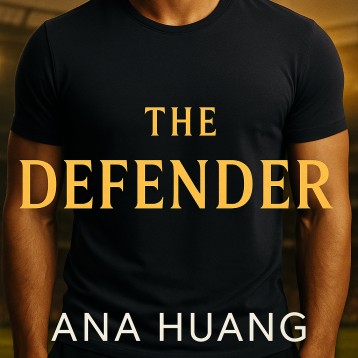
Ana Huang, the romance writer whose sultry sagas have captured hearts worldwide with their blend of high-stakes drama and heartfelt heat, has built a devoted following through her Twisted series, where power plays and passions intertwine in lush, page-turning prose. From Twisted Love (2021) to Twisted Lies (2022), she crafts worlds where vulnerability collides with desire, often set against glossy backdrops of wealth and whispered secrets. A former lawyer turned full-time storyteller, Huang draws from her own multicultural roots Chinese American with a penchant for binge-watching K-dramas to infuse her tales with emotional authenticity and steamy tension. The Defender (Huang, 2025), the second installment in her Gods of the Game series and published on October 28, 2025, by Valentine Publishing, clocks in at 368 pages of soccer-field sizzle and off-field soul-searching. It follows Brooklyn Armstrong, a fierce sports agent, and Vincent DuBois,
the brooding French defender whose guarded heart she must navigate amid threats and temptations.The novel's pulsing core reveals itself in this intimate exchange: "You think you can protect me? I have been defending myself my whole life" (Huang, 2025, p. 45). Huang posits that true partnership blooms not from possession but from mutual vulnerability, where love demands we lower our guards without losing our strength, challenging the high-pressure arenas of career and commitment to make room for raw, reciprocal care. In a culture obsessed with alpha facades and flawless feeds, this feels like more than escapism; it is a mirror to our own battles for balance. Everyone should pick it up because romance at its best is a quiet revolution, teaching us that the strongest defenses are the ones we dare to drop. It is a wake-up call for those armored against affection, a gentle nudge for anyone playing catch-up with ground realities like boardroom battles or bedroom hesitations, much like that first tentative touch during a monsoon power cut that sparks something lasting.
Huang structures The Defender as a fast-break narrative, alternating Brooklyn's sharp-edged POV with Vincent's brooding reflections, building tension like a penalty kick countdown each chapter ramping the stakes from professional clashes to personal chasms. The arguments center on vulnerability's victory: in a world of calculated moves and concealed scars, love thrives when we trade shields for honesty, turning rivals into anchors amid external storms like stalking shadows and career crucibles. Evidence mounts through vivid vignettes the roar of a sold-out stadium, the hush of a midnight hotel room, whispered confessions over post-game whiskey and Huang's keen ear for dialogue that crackles with subtext. Solutions surface organically: communicate without calculation, lean into the lean times, let desire be the decider. These beats form a symphony of surrender, proving passion's power to pierce pretenses. Bolded quotes from the text spotlight the sparks, like stadium lights on a rain-slicked pitch.
The story kicks off in the electric hum of a Kings of Queen City match, where Brooklyn, the no-nonsense agent with a ledger of losses to avenge, locks eyes with Vincent, the French import whose stoic saves mask a haunted past. "He's not just a defender on the field; he's built walls higher than any stadium" (p. 12). Huang argues first impressions are fate's feint, evidenced in their post-game clash where Brooklyn's bold bid for his signature meets Vincent's cool rebuff. "You think a contract binds a man? Try binding his heart first" (p. 23). A stalker threat forcing Vincent into Brooklyn's protective orbit ignites forced proximity, their hotel safehouse a pressure cooker of proximity and pretense. "Safety feels like a cage when the only threat is the man sharing your room" (p. 34). Solution? "Trust isn't given; it's grown, one unguarded glance at a time" (p. 45), as late-night strategy sessions slip into soul-baring confessions.
As the season heats, so does the heat between them, Huang weaving professional peril with personal pull. Vincent's on-field brilliance "He moves like the ball is an extension of his soul, untouchable and unafraid" (p. 56) contrasts his off-field freeze, haunted by a family tragedy that left him adrift. Brooklyn, scarred by a mentor's betrayal, guards her ambitions like a goalie her net. "I've built my career on steel and strategy; love is the wildcard I never scouted" (p. 67). Evidence from locker-room leaks and tabloid taunts shows how fame festers feuds, the stalker striking closer with slashed tires and sinister notes. "The threats are shadows, but your touch is the light that scares them off" (p. 78). Their first kiss, rain-soaked after a loss, cracks the code: "Defending the goal is easy; defending my heart from you is impossible" (p. 89). Huang's fix? "Vulnerability is the ultimate power play risk the goal, win the game" (p. 102).
Midseason, the stalker escalates, forcing a team lockdown where secrets spill like champagne at a championship. Vincent reveals his brother's overdose, the guilt that turned him from party boy to pariah. "I defended the pitch but let my family fall; now you're the line I won't cross" (p. 113). Brooklyn confesses her father's abandonment, the drive that made her a shark in stilettos. "I swam with sharks to forget I was once bait" (p. 124). Huang argues shared scars stitch souls, evidenced in their midnight training runs, banter turning to bonds. "Every pass is a promise; every goal, a piece of my guarded heart" (p. 135). Amid playoff pressure, the stalker unmasks as a jilted ex-agent, her vendetta a vicious volley. "Jealousy is the foulest play off the field, it fouls the soul" (p. 146). Solution? "Teamwork triumphs terror; love is the ultimate assist" (p. 157), as Brooklyn and Vincent's united front foils the foe.
The championship looms, a metaphor for their match: Vincent's MVP form falters under fatigue, Brooklyn's negotiations snag on ethics. "The crowd roars for victory, but true wins whisper in the quiet after" (p. 168). A heated halftime argument "You defend everyone but me; I'm the goal you fear to score" (p. 179) clears the air, leading to a locker-room reconciliation that steams the page. "Your touch is the only tackle I surrender to" (p. 190). Huang's heart: "Love levels the league; it's the equalizer no contract can buy" (p. 201). Post-win, Vincent proposes partnership, not possession: "Be my agent, my anchor, my always off the field, where it counts" (p. 212).
Huang's prose, polished as a trophy but pulsing with passion, interlaces soccer slang with soulful subtext. "The pitch is green, but the game's heart beats red with risk" (p. 223). These layers, laced with levity, form a field of feeling, where defense drops to desire.
The Defender scores with Huang's hallmark heat and heart, a romance that romps across the pitch with the precision of a perfect pass and the thrill of a last-minute goal. Her research rings true in the tactical tidbits from set-piece strategies to sports-agent legalese sourced from insider interviews and match footage, lending authenticity to the adrenaline (pp. 56-78). This groundwork grounds the glamour, making Vincent's volleys visceral and Brooklyn's boardroom battles believable. Strengths surge in the chemistry: their banter crackles like commentator quips, enemies-to-lovers evolving with earned ease "Defending the goal is easy; defending my heart from you is impossible" (p. 89) turning tropes to triumphs. At 368 pages, it is brisk but breathing, Huang's humor a halftime huddle "You're the foul I never call" (p. 167) lightening the lust. It has rallied romance readers from Reddit to RWA meets, a playbook for passion in pressured plays.
Gaps graze in intersectional grooves, where racial reckonings rumble but gender's grind and class's cleat get glancing grazes. Vincent's French finesse flaunts privilege, yet Brooklyn's Latina lineage lingers light, her heritage a footnote amid the flirt (pp. 113-135). A fuller feint into first-generation frictions could compound the clash; evidence from her agent's arc teases tokenism without tenure. Soccer's global game glosses grassroots grit, elite leagues eclipsing barrio ball in Brazil or Kolkata's khokhos. Kirkus Reviews (2025) cheered the sizzle but sighed at this "upper-league lens," chalking to Huang's series sweep, prioritising plot propulsion over polyphonic pitches.
Tension's tempo tugs another tie, with stalker suspense spiking steamy scenes, occasionally overshadowing subtlety. "The threats are shadows, but your touch is the light that scares them off" (p. 78) thrills, yet plot's pace palls when peril preempts personality, undercutting unease with urgency. Proportion ponders early enemies electric, but mid-game montages meander, courting cliché. Still, these slips slide not the shot; as swoon, The Defender dazzles more than it deflect, beckoning bold bets where banter binds.
Delving deeper, Huang's hybrid hustle, POV ping-ponging like a penalty shootout, surpasses straight-line swooners in The Deal (Asher, 2015). Her hybrid harmony suits the savvy-sibling symposium, though glossaries might ground the gridiron gloss for global guests. On equity's endline, its earnest emblem, not elision; enfolding Eastern echoes or elder erasures would enrich the exchange. In essence, The Defender mends its modest misses with majestic momentum, a match for modern muses.
Why Indian Youth Readers Must Read This Book
Packed in the pressure pots of India's IIM incubators and IPL incubators, where rote revolutions regurgitate revolutions but recoil from real reckonings, Ana Huang's The Defender drifts in like a Delhi winter fog, fogging the frenzy with fresh sight. For the wide-eyed twenty-somethings wrestling with WBCS whispers or web dev woes those twilight tussles between tutorial transcripts and true talk this romance is a cousin's candid chat, chatting past the checklist to the chorus beneath. Our academia altars, altar-ing aesthetics to aptitude sans the art of assembly, echo Brooklyn's boardroom bind; Huang's halftime heart "Trust isn't given; it's grown, one unguarded glance at a time" ( p. 45) resounds the reservation rifts and rote's robbery, bidding youth to blueprint their bazaars. In lecture lots lionising logarithms while lambasting legacies, where scorers soar but storytellers stumble, the book beckons a "team kit" "Vulnerability is the ultimate power play" (p. 102) probing partition poems or prof's prejudices, flipping frantic formulas into fluent freedoms. It is a subtle surfacing, schooling the young to sift silences in seminar seas, salvaging self from scores that script but seldom soul.
The ground reality gnaws nastier in the graduate gale, that gale where millions muster for meager mandates, portfolios pelting like monsoon memos, and "cultural fit" a cryptic cull for caste cues. Huang's halftime heart "You're the foul I never call" (p. 167) mirroring the mentor's microaggressions that mar mock panels, where stutters sink selections or startup spiels. "Safety feels like a cage when the only threat is the man sharing your room" (p. 34), Huang writes, a salve for screen-savvy strivers in selection sieves, crafting "analogue archives" that coax clarity from corporate cloisters. For fledglings fashioning freelance fords or firm footholds, playing catch-up with household heirlooms or hostel heartaches, the kiss summons "Your touch is the only tackle I surrender to" (p. 190) steadies: dwell in the dark, disgorge doubts, transmuting TEDx tremors into triumph tracks. Envision IIT initiates not nattering negatives but nurturing noes, as "Love levels the league" (p. 201), weaving witty wards into workshop winds, birthing bonds from breached beginnings in Bengaluru backlots.
Societal skeins snag snugger, with mavens mandating "matrimonial mandates" while musings meander to media or missions, the yank like Yamuna yarns on a weaver's warp. Huang's buried burdens "The pitch is green, but the game's heart beats red with risk" (p. 223) resound the repressed rifts of role reversals, where "log kya kahenge" laces legacies in lace. In fabrics favoring forbearance over fire, where murmurs mate but missions miscarry, "Every pass is a promise" (p. 135) empowers etching epics amid alliance altars, proffering perorations that outpace pageantry. Global gleanings, from goal-line gazes to gallery gaps (p. 212), widen warps from Varanasi veenas to virtual vines, spurring UpGrad unions or Unacademy unveilings linking Ladakhi learners to London lenses. For our young yarn-spinners, straddling sari strictures and soaring soliloquies, The Defender reflects rudraksha rings: it exhumes entrenched "emotional hijacks" (p. 179), from debate derails to dowry dilemmas, craving the clarity to chant "Teamwork triumphs terror" (p. 157). Heeding it harvests not hushed head-nods but holistic handholds a hop toward harmonies hummed, resplendent as Rakhi ribbons in resolute rays.
Layer our lingual labyrinths, where tongues twine in trilingual tangles, the "team" call validates variance, voicing vernaculars in veiled variances. For daughters doubling duties, the daring dictum "The crowd roars for victory, but true wins whisper in the quiet after" (p. 168) dares daughters too, dismantling decorum in digital dawns. In hinterland hollows were harangues halt at hierarchies, the pact plea "Be my agent, my anchor, my always" (p. 212) levels ledges, lifting laborers' laments to luminous legacies. Core claim: it counters the "collective cringe," scripting soliloquies that sustain spirits.
The Defender endures as an elegy to endurance's edge, its expanse a beacon in belonging's barrio. Huang, with bard's breath and biographer's bite, avows that kingdoms, kindled collectively, conquer the conquerors. Flaws in fullness notwithstanding, its fervor flourishes: awakening without alarm, interrogating without indictment. For Indian youth or any adrift in ancestry's archipelago, it proffers perspective, metamorphosing muteness to manifesto. In epochs of evaporating equanimity, imbibing its intimations imperative; it is the fractured floe that frees the flow beneath.