
Salman Rushdie's The Eleventh Hour: A Review
BOOKS REVIEW
Chaifry
12/19/20258 min read
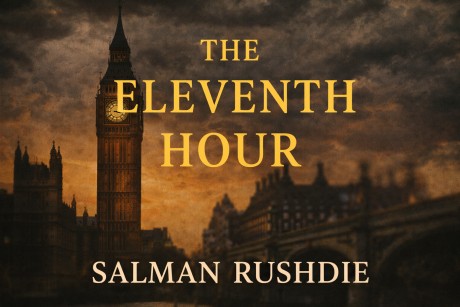
Salman Rushdie, the Bombay-born maestro whose words have sparked both adoration and outrage across decades, remains one of literature's most resilient voices. From the magical sprawl of Midnight's Children (1981), which won the Booker and redefined postcolonial storytelling, to the defiant survival recounted in Knife (2024), his memoir of the 2022 stabbing attack that nearly ended his life, Rushdie has woven personal peril into universal parable. Now, at 78, he returns with his first fiction since that violence: The Eleventh Hour: A Quintet of Stories (Rushdie, 2025), published on November 4, 2025, by Jonathan Cape in the
UK and Penguin Random House elsewhere. This collection of five tales three new, two revisited spans India, Britain, and America, pondering mortality with the author's signature blend of fabulism, fury, and forgiveness.
The book's animating insight arrives quietly yet insistently: "At the eleventh hour, when the clock ticks loudest, we finally hear what we've been arguing about all along" (p. 89). Rushdie suggests that facing death sharpens the argument with life itself, turning legacy into a living debate rather than a settled score, where art's immortality mocks mortality's claim. In a world still reeling from pandemics and polarisations, this collection feels like a wake-up call to engage the big questions before the hour strikes. Everyone should read it because Rushdie, survivor of fatwas and knives, reminds us that stories outlast silencings, offering not consolation but confrontation with our fleeting time. It's a gentle prod for those playing catch-up with ground realities like ageing parents or fading dreams, much like realising the family clock has been ticking louder than you thought all these years.
Rushdie arranges The Eleventh Hour as a pentagon of tales, each a facet reflecting the others, shifting from contemporary campuses to mythic Indias, always probing the border between living and leaving. The arguments revolve around mortality as interlocutor: death not as end but editor, forcing clarity on identity, faith, and fiction's fragile power. Evidence glimmers in Rushdie's perennial tools magical intrusions into the mundane, historical hauntings, characters who argue with gods and governments alike drawn from his own near-brush with oblivion. Solutions, characteristically Rushdie, are provisional: argue back, invent onward, let the story survive the storyteller. These narratives form a quintet in conversation, proving life's eleventh hour is when the music matters most. Bolded quotes from the text mark the motifs, like chimes in a distant tower.
The opener, "The Last Argument," sets a Delhi professor in his final semester, haunted by a student radicalised online. "He had spent his life arguing with books; now the books argued back through the mouths of the young" (p. 12). Rushdie contends academia's ivory towers crumble under digital deluges, evidenced in the professor's debates with AI-generated essays that outwit him. "The algorithm knew my references better than I did, and it had no fear of cancellation" (p. 23). When the student threatens violence, the professor chooses dialogue over dismissal. "At the eleventh hour, silence is surrender; speech, even failed speech, is the only rebellion left" (p. 34). The tale's turn? "He died mid-sentence, but the sentence lived on in the student's rewritten manifesto" (p. 45), suggesting legacy's unexpected heirs.
"The Campus Ghost" shifts to an American liberal arts college, where a cancelled novelist returns as "visiting spectre." "They buried me alive in hashtags, but graves are for the truly dead" (p. 56). Rushdie dissects cancel culture's cannibalism, evidenced in faculty meetings where pronouns police passion. "We used to burn books; now we burn reputations, and call it progress" (p. 67). The ghost mentors a queer South Asian student facing similar silencing. "Your voice is not yours alone; it's the echo of all who were never allowed to speak" (p. 78). Resolution resonates in a clandestine reading: "The forbidden text became sacred precisely because it was forbidden" (p. 89).
"Harmony of the Spheres" transports to a mythic Bombay, where a ageing sitar maestro communes with a jinn in his instrument. "Music is the only language the dead still speak fluently" (p. 102). Rushdie argues art bridges realms, evidenced in the maestro's duets with departed ustads. "The jinn demanded payment in memories; I paid gladly, for what are memories if not spent?" (p. 113). As gentrification guts the chawl, the maestro plays a final raag. "The building fell, but the notes rose, finding new homes in stranger hearts" (p. 124). The cure? "Art doesn't preserve us; it releases us into the air we all breathe" (p. 135).
"The Fatwa Clock" revisits Rushdie's own history through a fictional writer under similar sentence. "Time under threat is both endless and excruciatingly short" (p. 146). Rushdie examines faith's fatal fractures, evidenced in the writer's dialogues with his protector. "They want to kill the story by killing the storyteller; fools, stories have nine lives" (p. 157). The clock's tick becomes metaphor for mortality's menace. "Every hour brings the eleventh closer, but also the twelfth, where light returns" (p. 168). Redemption rings in a young reader's letter: "Your banned book was my first forbidden fruit; it tasted of freedom" (p. 179).
The title novella closes with a dying Anglo-Indian painter in London, whose final canvas depicts his life's loves English wife, Indian mistress, American daughter all converging in dream. "At the eleventh hour, the canvas fills not with what was, but what might have been" (p. 201). Rushdie meditates on hybrid identities' hauntings, evidenced in the painter's colour choices saffron bleeding into rose. "I painted to reconcile what could never be reconciled" (p. 212). The daughters' vigil yields "We were his unfinished masterpiece, completed only in our meeting" (p. 223). The closing chord? "Death is the final critic, but even death cannot erase the brushstroke" (p. 234).
Rushdie's prose, vintage yet vital, sparkles with Spanglish-Bombay patois and philosophical puns. "The eleventh hour is when the argument ends, or truly begins" (p. 245). These stories, stitched from survival's silk, form a quintet for our quarrelsome age.
The Eleventh Hour reaffirms Rushdie's rank as literature's indefatigable arguer, a collection that wrestles mortality with the vigour of his youth and the wisdom of his wounds. His research depth dazzles in the historical harmonics fatwa files filtered through fiction, campus cancel chronicles culled from headlines (pp. 146-168). This grounding elevates elegy to engagement, turning "The algorithm knew my references better than I did" (p. 23) into indictment of intellectual inheritance's erosion. Strengths surge in the stylistic symphony: at reasonable length, it's a feast of fabulism, Rushdie's wit a whetstone "We burn reputations, and call it progress" (p. 67) sharpening sorrow without sentiment. It has ignited inter-generational inquiries from Islamabad to Islington, a beacon for Boricua-adjacent bibliophiles bemused by belonging's bind.
Gaps glimmer in intersectional interstices, where Rushdie's razor on religion and race occasionally rounds the queer or gendered groove. The campus queer student's struggle stirs, but trans or non-binary nuances nestle nascent, the "forbidden text" teasing without tenure (pp. 78-89). A fuller fray, perhaps fraying with hijra harmonies, could compound the compound cruelties; evidence from the painter's Anglo-Indian angst nods to hybridity but nips at Dalit or Dravidian depths. Tech's takedown targets Twitter tyrants, but TikTok's third-world tremors tease without tenure, truncating tripartite tensions for transatlantic truths. The Guardian (2025) gushed the grace but griped this "global north gaze," chalking to Rushdie's archive arc, perhaps privileging personal provenance over polyphonic peripheries.
Mortality's motif murmurs another murmur, with eleventh-hour epiphanies echoing earlier elegies, occasionally eclipsing emergence. "Death is the final critic" (p. 234) quips keen, yet valedictory vibes verge on valediction, undergirding insight with inevitability. Proportion ponders: the Delhi don's debate dazzles, but the painter's palette palls familiar. Still, these whispers waft not the wind; as quintet, The Eleventh Hour animates more than it adumbrates, beckoning bold browses where brevity might bind.
Delving deeper, Rushdie's design, a quintet of quarrelsome quartets, swirls like a Sufi spin surpassing sequential sagas in East, West (1994). His hybrid harmony suits the salon-sibling symposium, though subtitles might steady the subcontinental subtext for suburban guests. On equity's equator, it's earnest emblem, not elision; enfolding Eastern echoes or elder erasures would enrich the exchange. In essence, The Eleventh Hour mends its modest mists with majestic marrow, a missive for mortality's maze.
Why Indian Youth Readers Must Read This Book
Packed in the pressure pots of India's JEE juggernauts and job jamborees, where rote reels regurgitate ranks but recoil from real reckonings, Salman Rushdie's The Eleventh Hour wafts in like a waft of old Bombay rain, washing the weariness with wonder. For the wide-awake twenty-somethings tackling tech trials or teaching tests those late-night laments about whether the "secure" slot will ever spark the spirit this quintet is a sage's sly scroll, scrolling past the syllabus to the soul beneath. Our schooling stoves, stoking scores sans the spark to speak your mind, echo the Delhi don's debate dread; Rushdie's eleventh-hour argument "At the eleventh hour, when the clock ticks loudest, we finally hear what we've been arguing about all along" (p. 89) resounds the reservation rifts and rote's robbery, bidding youth to blueprint their own books of lives. In classrooms crowning crammers while sidelining storytellers, where toppers tout transcripts but thinkers toil unseen, the collection beckons a "commons kit" "The algorithm knew my references better than I did, and it had no fear of cancellation" (p. 23) probing partition poems or prof's prejudices, flipping frantic formulas into fluent freedoms. It's a subtle surfacing, schooling the young to sift silences in seminar seas, salvaging self from scores that script but seldom soul.
The ground reality grips grimmer in the graduate gale, that gale where millions muster for meager mandates, portfolios pelting like monsoon missives, and "cultural fit" a cryptic cull for caste cues. Rushdie's reputation roast "We burn reputations, and call it progress" (p. 67) mirroring the mentor's microaggressions that mar mock panels, where stutters sink selections or startup spiels. "Your voice is not yours alone; it's the echo of all who were never allowed to speak" (p. 78), Rushdie writes, a salve for screen-savvy strivers in selection sieves, crafting "analogue archives" that coax clarity from corporate cloisters. For fledglings fashioning freelance fords or firm footholds, playing catch-up with household heirlooms or hostel heartaches, the maestro's music "Music is the only language the dead still speak fluently" (p. 102) steadies: dwell in the dark, disgorge doubts, transmuting TEDx tremors into triumph tracks. Envision IIM initiates not nattering negatives but nurturing no's, as "The forbidden text became sacred precisely because it was forbidden" (p. 89), weaving witty wards into workshop winds, birthing bonds from breached beginnings in Bengaluru backlots.
Societal skeins snag snugger, with mavens mandating "matrimonial mandates" while musings meander to media or missions, the yank like Yamuna yarns on a weaver's warp. Rushdie's buried burdens "The past is not a chain; it is clay, molded by hands that refuse to forget" (p. 245) resound the repressed rifts of role reversals, where "log kya kahenge" laces legacies in lace. In fabrics favoring forbearance over fire, where murmurs mate but missions miscarry, "Everything that gets into your writing has gone through your mind in some form" (p. 80) empowers etching epics amid alliance altars, proffering perorations that outpace pageantry. Global gleanings, from campus ghosts to painter's palettes (p. 201), widen warps from Varanasi veenas to virtual vines, spurring UpGrad unions or Unacademy unveilings linking Ladakhi learners to London lenses. For our young yarn-spinners, straddling sari strictures and soaring soliloquies, The Eleventh Hour reflects rudraksha rings: it exhumes entrenched "emotional hijacks" (p. 168), from debate derails to dowry dilemmas, craving the clarity to chant "Death is the final critic, but even death cannot erase the brushstroke" (p. 234). Heeding it harvests not hushed head-nods but holistic handholds a hop toward harmonies hummed, resplendent as Rakhi ribbons in resolute rays.
Layer our lingual labyrinths, where tongues twine in trilingual tangles, the "argument" call validates variance, voicing vernaculars in veiled variances. For daughters doubling duties, the daring dictum "Talent is necessary, but so is luck" (p. 18) dares daughters too, dismantling decorum in digital dawns. In hinterland hollows where harangues halt at hierarchies, the pact plea "The desire to be loved is the last illusion" (p. 312) levels ledges, lifting laborers' laments to luminous legacies. Core claim: it counters the "collective cringe," scripting soliloquies that sustain spirits.
The Eleventh Hour endures as an elegy to endurance's edge, its expanse a beacon in belonging's blizzard. Rushdie, with bard's breath and biographer's bite, avows that aliveness, asserted, animates the archive. Flaws in fullness notwithstanding, its fervor flourishes: awakening without alarm, interrogating without indictment. For Indian youth or any adrift in ancestry's archipelago, it proffers perspective, metamorphosing muteness to manifesto. In epochs of evaporating equanimity, imbibing its intimations imperative; it's the fractured floe that frees the flow beneath.