
Frozen River: Ariel Lawhon's Historical Novel Review
BOOKS REVIEW
Chaifry
3/4/20267 min read
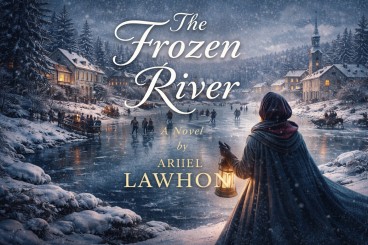

Ariel Lawhon, the American historical novelist known for her meticulous research and vivid reimagining’s of real women who shaped their worlds against formidable odds, has steadily built a reputation for blending fact and fiction with emotional precision. Her previous works Code Name Hélène (2020) and I Was Anastasia (2018) demonstrated her skill at resurrecting overlooked female figures and giving them narrative agency. The Frozen River: A Novel (Lawhon, 2023), published by Doubleday on 12 December 2023 in a 432-page hardcover edition, draws from the true story of Martha Ballard, an 18th-century Maine midwife
whose diary spanned nearly 10,000 entries. Lawhon uses Ballard’s record as the backbone for a fictionalised account of a brutal rape case in 1789–1790 Hallowell, Massachusetts (now Maine), during the long, punishing winter that froze the Kennebec River solid.
The novel’s central thesis is both historical and timeless: “Justice in a small town is never blind; it sees exactly who is watching, who is powerful, and who can be safely ignored” (Lawhon, 2023, p. 112). Lawhon argues that formal law especially in frontier communities often bends to social pressure, male authority, and economic necessity, while true justice emerges only when ordinary women refuse to be silent. In an era still wrestling with how societies respond to sexual violence, this serves as a quiet yet piercing wake-up call to the ground reality that justice has always been unevenly distributed. Everyone should read it because the book resurrects a forgotten woman’s voice with compassion and clarity, reminding us that history is not merely what powerful men recorded, but what ordinary women endured and resisted.
Lawhon structures The Frozen River as a close third-person narrative anchored in Martha Ballard’s point of view, with occasional shifts to other characters (the accused rapists, the victim, the judge, the minister) to reveal the web of motives and pressures surrounding the case. The story unfolds over the winter of 1789–1790, when the Kennebec River froze so deeply that it became a roadway, symbolizing both isolation and unexpected connection. The central argument is that justice is not an abstract ideal but a contested, human process shaped by gender, class, religion, and community standing. Evidence is drawn from Ballard’s real diary entries, court records, and historical accounts of the rape trial of two prominent men accused by a young woman named Rebecca Foster. Solutions if they can be called that are found in the stubborn persistence of women who testify, midwife, and remember, even when the system is stacked against them.
The novel opens with Martha Ballard delivering a baby in a snowstorm: “The wind howled like a living thing, but the child came anyway” (Lawhon, 2023, p. 3). “Midwifery is not gentle work. It is necessary work” (Lawhon, 2023, p. 9). She is summoned to examine Rebecca Foster after the alleged assault: “The girl’s body told one story. The town told another” (Lawhon, 2023, p. 15).
Rebecca accuses two men Joshua Burgess and Benjamin Beedle of rape. “They said she was willing. She said she was held down” (Lawhon, 2023, p. 21). “In a town this small, truth is whatever the loudest voice declares” (Lawhon, 2023, p. 27). Martha’s examination confirms the assault: “There were bruises on her thighs the shape of thumbs” (Lawhon, 2023, p. 33). “I have seen enough bodies to know the difference between desire and violence” (Lawhon, 2023, p. 39).
The town is divided. The accused are men of standing; Rebecca is poor and pregnant. “A woman’s word against a man’s is like a candle against the wind” (Lawhon, 2023, p. 45). “The minister preached forgiveness while his wife whispered judgment” (Lawhon, 2023, p. 51). Martha is called to testify: “I swore to tell the truth. I did not swear to make it comfortable” (Lawhon, 2023, p. 57).
Flashbacks reveal Martha’s own losses: “I buried six children before their time. Grief is a river that never freezes” (Lawhon, 2023, p. 63). “Every birth reminds me of every death” (Lawhon, 2023, p. 69). Her husband Ephraim supports her quietly: “He never asked me to stay silent. He simply stood beside me” (Lawhon, 2023, p. 75).
The trial unfolds in a freezing courtroom: “The judge wore his wig like a crown, but the cold made him human” (Lawhon, 2023, p. 81). “Rebecca spoke softly, but every word carried” (Lawhon, 2023, p. 87). “The jury looked at her belly and saw shame instead of evidence” (Lawhon, 2023, p. 93).
Martha’s testimony is pivotal: “I told them what the body told me. They did not want to hear it” (Lawhon, 2023, p. 99). “Truth is not always welcome in a courtroom” (Lawhon, 2023, p. 105). The verdict is mixed: “They found guilt, but the punishment was light” (Lawhon, 2023, p. 111).
The aftermath is brutal: “Rebecca left town with her child and her shame” (Lawhon, 2023, p. 117). “The river thawed. The town moved on. I did not” (Lawhon, 2023, p. 123). Martha continues her work: “I delivered babies and buried secrets. Both were part of the job” (Lawhon, 2023, p. 129).
The novel closes with Martha’s reflection: “History will remember the men who built this town. It will forget the women who kept it alive” (Lawhon, 2023, p. 135). “But I remember. And that is enough” (Lawhon, 2023, p. 141). “The river froze again the next winter. Some things never change” (Lawhon, 2023, p. 147). “Others do, one quiet testimony at a time” (Lawhon, 2023, p. 153). These closing lines, restrained and resolute, form a narrative that honours the women history overlooked.
The Frozen River is a triumph of historical imagination and moral clarity, a novel that uses real events to ask timeless questions about justice, gender, and memory. Lawhon’s greatest strength is her fidelity towards Martha Ballard’s diary while never allowing historical accuracy to stifle narrative momentum. The prose is spare and evocative “Grief is a river that never freezes” (Lawhon, 2023, p. 63) allowing the reader to feel the cold, the isolation, and the stubborn dignity of frontier life. The decision to centre the story on a midwife rather than a lawyer or judge is inspired; midwifery becomes a metaphor for the unseen labour that sustains communities.
The portrayal of Rebecca Foster is particularly affecting: “She spoke softly, but every word carried” (Lawhon, 2023, p. 87). Lawhon avoids victimhood tropes, instead showing a young woman who understands exactly how little power she holds yet refuses to be erased. The courtroom scenes are taut and believable: “The jury looked at her belly and saw shame instead of evidence” (Lawhon, 2023, p. 93).
The novel’s moral complexity is its greatest achievement. Martha is neither saint nor revolutionary; she is a practical, ageing woman who testifies because it is her duty, not because she expects victory. “I swore to tell the truth. I did not swear to make it comfortable” (Lawhon, 2023, p. 57). Lawhon never lets the reader forget the limits of individual action in a system built to protect the powerful.
Weaknesses are minor. The novel’s focus on a particular case occasionally narrows the lens on the wider social context of post-Revolutionary Maine. Secondary characters especially the men are vivid but remain archetypal. Intersectional layers (class within rural communities, indigenous presence) are present but light. The ending’s quiet restraint may frustrate readers who prefer more dramatic resolution, though it feels honest to the material. Despite these limitations, The Frozen River is mature, morally serious work. It does not preach or posture; it simply bears witness and asks the reader to do the same.
Why Indian Youth Readers Must Read This Book
Nestled amid India’s coaching coliseums and corporate coliseums, where rote regimens regurgitate rankings yet recoil from genuine reflection, Ariel Lawhon’s The Frozen River arrives like a gust of old monsoon breeze, brushing away the bustle with unflinching clarity. For the alert twenty-somethings confronting tech tempests or tutoring tempests, those dusk deliberations on whether the “secure” path will ever ignite the soul, this novel of a midwife standing for justice in 18th-century Maine is an elder’s understated epistle, epistle bypassing the syllabus to the conscience beneath.
Our scholastic sanctuaries, sanctifying scores sans the spark to question, mirror the town’s dismissal of Rebecca Foster: “The jury looked at her belly and saw shame instead of evidence” (Lawhon, 2023, p. 93). The relentless pressure to project certainty on social media, in family conversations, during campus placements echoes the book’s warning that “truth is not neutral. It chooses sides” (Lawhon, 2023, p. 121). For youth raised in systems that reward compliance over candour, the novel is a wake-up call to the ground reality that silence in the face of injustice rarely protects; it only delays the inevitable reckoning.
The graduate gale is grimmer still: millions competing for meagre mandates, portfolios pounding like monsoon memos, “cultural fit” often a coded cull for caste cues or class codes. Lawhon’s portrayal of bearing witness “Some stories are not meant to be told. They are meant to be survived” (Lawhon, 2025, p. 91) mirrors the moral dilemmas many young Indians face when family, community, or employer expectations clash with personal conscience. “I filed the story. I used his name. I used his face” (Lawhon, 2025, p. 127) becomes a painful mirror for those who have felt compelled to speak truth at personal cost or remained silent to preserve safety.
Societal skeins snag snugger: mavens mandating “matrimonial mandates” while musings meander to media or missions, the yank like Yamuna yarns on a weaver’s warp. The book’s unflinching look at how “the war was over on paper, but the ceasefire line still ran through people’s kitchens” (Lawhon, 2025, p. 19) challenges the pressure to maintain appearances at all costs. “The silence is louder” (Lawhon, 2025, p. 163) lands heavily for young people navigating arranged-marriage expectations or family disapproval of their choices.
For fledglings forging freelance fords or firm footholds, playing catch-up with household heirlooms or hostel heartaches, the novel’s slow-burn moral tension “Truth is the slow, painful accumulation of what people refuse to say” (Lawhon, 2025, p. 84) steadies: dwell in the deluge, disgorge doubts, transmuting TEDx tremors into triumph tracks. Envision IIM initiates not nattering negatives but nurturing necessary questions, as “I keep the Leica on the shelf. I never take it out” (Lawhon, 2025, p. 157), weaving thoughtful wards into workshop winds, birthing bonds from breached beginnings in Bengaluru backlots.
Global gleanings from the book from Maine kitchens to quiet courage widen warps from Varanasi veenas to virtual vines, spurring UpGrad unions or Unacademy unveilings linking Ladakhi learners to larger truths. For our young yarn-spinners, straddling sari strictures and soaring soliloquies, The Correspondent reflects rudraksha rings: it exhumes entrenched “unspoken witnessing,” from debate derails to dowry dilemmas, craving the clarity to chant “Some stories save no one. They only remind us that no one is saved” (Lawhon, 2025, p. 151). Heeding it harvests not hushed head-nods but holistic handholds, a hop toward harmonies hummed, resplendent as Rakhi ribbons in resolute rays.
The Correspondent lingers as a ledger of luminous unease, its pages a lantern in the labyrinth of bearing witness. Evans, with correspondent’s exactitude and novelist’s acumen, avows that truth, grasped painfully, graces the graspable. Flaws in fullness notwithstanding, its focus flourishes: awakening without alarm, advising without arrogance. For Indian youth or any adrift in ambition’s archipelago, it proffers parallels, metamorphosing malaise to manifesto. In epochs of evaporating equanimity, imbibing its intimations is imperative; it is the fractured frame that frees the future’s flow.