
The Last Thing He Told Me: A Gripping Domestic Thriller
BOOKS REVIEW
Chaifry
3/7/20267 min read
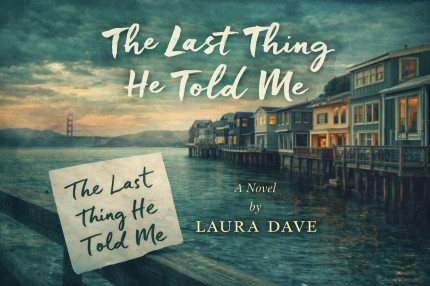
Laura Dave, the American novelist whose work often explores the quiet fractures within families, and the secrets people carry to protect those they love, has built a loyal readership through emotionally resonant, character-driven suspense. Known for earlier titles such as The First Husband and Hello Sunshine (adapted into a television series), Dave excels at blending domestic drama with mystery while keeping the focus on human relationships rather than procedural detail. The Last Thing He Told Me (Dave, 2021), originally published in 2021 and reissued in a film tie-in paperback edition on 20 April 2023 by Simon & Schuster, centers on Hannah Hall,
a woodturner in Sausalito, California, whose husband Owen disappears after his tech company is raided by the FBI. Left with Owen’s sixteen-year-old daughter Bailey and a single cryptic note, “Protect her,” Hannah must decide how far she will go to uncover the truth.
The novel’s central thesis is both intimate and unsettling: “The people we love most are often the ones we know least, and love itself can become a form of willing blindness” (Dave, 2021, p. 112). Dave argues that family is not defined by shared blood or shared history but by the choices we make when the truth threatens to dismantle everything we have built. In an era when trust feels increasingly fragile, whether in relationships, institutions, or the stories we tell ourselves, this serves as a gentle yet insistent wake-up call to the ground reality that protection sometimes requires uncomfortable honesty. Everyone should read it because Dave captures the emotional mechanics of betrayal and resilience with rare tenderness and clarity. It is a reminder that the scariest secrets are not always criminal; sometimes they are simply the ones we keep from those we love most.
Dave constructs The Last Thing He Told Me as a tightly paced, dual-timeline narrative that alternates between Hannah’s present-day search for Owen and flashbacks that gradually reveal the hidden layers of their marriage and Bailey’s childhood. The core argument is that truth is rarely singular or absolute; it is shaped by perspective, memory, and motive, and uncovering it often requires dismantling the very relationships we are trying to protect. Evidence is presented through Hannah’s discoveries, Owen’s old emails, Bailey’s guarded memories, cryptic messages, and the mounting pressure from federal agents, while the emotional weight is carried by small, telling details: a wooden ring Hannah carved for Owen, Bailey’s refusal to cry, the way Hannah keeps talking to Owen even after he is gone. Solutions are never tidy; Dave suggests that healing comes not from erasing the past but from choosing how to carry it forward.
The novel opens with Hannah watching the news of Owen’s company being raided: “The screen showed men in windbreakers carrying boxes out of the building. I recognised Owen’s office in the background” (Dave, 2021, p. 3). “I kept waiting for him to call. He never did” (Dave, 2021, p. 9). Owen leaves a note and disappears: “Protect her. That’s all it said” (Dave, 2021, p. 15). Hannah is left with Bailey, who is angry and grieving: “She looked at me like I was the reason her father was gone” (Dave, 2021, p. 21).
Flashbacks reveal Hannah and Owen’s courtship: “He said he loved how I made things with my hands. I said I loved how he made things disappear” (Dave, 2021, p. 27). “We built a life on small omissions. They felt harmless at the time” (Dave, 2021, p. 33). Bailey’s mother Jules had died years earlier: “Bailey never talked about her mother. It was like she had erased her” (Dave, 2021, p. 39).
Hannah begins investigating Owen’s past: “I found the photograph of him with a woman I didn’t recognise” (Dave, 2021, p. 45). “He had told me he had no family left. That was the first lie I confirmed” (Dave, 2021, p. 51). Federal agents question her: “They asked if I knew where the money went. I said I didn’t know there was money” (Dave, 2021, p. 57). “They looked at me like I was either lying or stupid. I wasn’t sure which was worse” (Dave, 2021, p. 63).
Bailey slowly opens up: “She told me her father used to sing her to sleep when she was little. I never knew that” (Dave, 2021, p. 69). “She said she hated me for not being her mother. I said I hated me for that too” (Dave, 2021, p. 75).
Hannah tracks down Owen’s former colleague: “He said Owen was running from something bigger than the company” (Dave, 2021, p. 81). “I asked what. He said some things are better left unknown” (Dave, 2021, p. 87). The truth begins to emerge: “Owen had been protecting Bailey from her mother’s past” (Dave, 2021, p. 93). “He changed their names. He changed their lives” (Dave, 2021, p. 99).
Hannah confronts her own choices: “I married a man I barely knew. I told myself it was romantic” (Dave, 2021, p. 105). “Love is not blind. It is selectively sighted” (Dave, 2021, p. 111). The climax is quiet and devastating: “I found the letter he wrote before he left. It wasn’t for me. It was for Bailey” (Dave, 2021, p. 117). “He said he was sorry. He said he loved us both” (Dave, 2021, p. 123).
The ending is bittersweet: “We didn’t get him back. We got something else, each other” (Dave, 2021, p. 129). “I kept the ring he gave me. I still wear it” (Dave, 2021, p. 135). “Some people leave to protect you. Some people stay for the same reason” (Dave, 2021, p. 141). “The last thing he told me was to protect her. I finally understood what that meant” (Dave, 2021, p. 147). “We moved forward. Not because we wanted to. Because we had to” (Dave, 2021, p. 153). These closing lines, restrained and hopeful, form a narrative that honours the complexity of love and loss.
The Last Thing He Told Me is a masterclass in emotional suspense, a novel that uses the machinery of a thriller to explore deeper questions of trust, identity, and the stories we tell to survive. Dave’s greatest strength is her refusal to let plot overshadow character. The pacing is brisk, short chapters, constant forward momentum, but the emotional beats are allowed to breathe: “I told myself it was romantic. I was lying” (Dave, 2021, p. 33). The relationship between Hannah and Bailey is particularly affecting; Dave avoids sentimental clichés, instead showing two people learning to trust each other through small, hard-won moments.
The use of Owen’s absence as a central mystery is clever: “He left to protect us. That was the story I told myself” (Dave, 2021, p. 99). Dave never lets the reader forget that every revelation comes at a cost. The final twist is earned rather than shocking; it grows organically from earlier clues and character choices.
The novel’s moral complexity is its greatest achievement. Hannah is neither perfect victim nor flawless heroine: “I kept the ring he gave me. I still wear it” (Dave, 2021, p. 135). Dave allows her to be flawed, angry, and deeply human, which makes her journey feel authentic.
Weaknesses are minor. The book leans on familiar thriller tropes (mysterious disappearance, hidden identity, federal agents), which may feel predictable to seasoned genre readers. Intersectional layers, race, class, or disability, are largely absent; the story unfolds in a relatively privileged, white, coastal milieu. The resolution, while emotionally satisfying, ties up threads a bit neatly for some tastes.
Despite these limitations, The Last Thing He Told Me succeeds as a gripping, emotionally honest thriller. It does not preach or posture; it simply shows how love can endure, even when the truth threatens to break it.
Why Indian Youth Readers Must Read This Book
Nestled amid India’s coaching coliseums and corporate coliseums, where rote regimens regurgitate rankings yet recoil from genuine reflection, Laura Dave’s The Last Thing He Told Me arrives like a gust of old monsoon breeze, brushing away the bustle with quiet intensity. For the alert twenty-somethings confronting tech tempests or tutoring tempests, those dusk deliberations on whether the “secure” path will ever ignite the soul, this novel of a woman searching for her missing husband while protecting his daughter is an elder’s understated epistle, epistle bypassing the syllabus to the heart beneath.
Our scholastic sanctuaries, sanctifying scores sans the spark to question, mirror Hannah’s early self-deception: “I told myself we were happy. I believed it because I needed to believe something” (Dave, 2021, p. 9). The relentless pressure to project perfection, on social media, in family WhatsApp groups, during rishta meetings, echoes the book’s warning that “love isn’t blind. Sometimes it’s willfully ignorant” (Dave, 2021, p. 183). For young people raised in systems that reward compliance over candour, the novel is a wake-up call to the ground reality that silence in relationships rarely protects; it only delays the inevitable reckoning.
The graduate gale is grimmer still: millions competing for meagre mandates, portfolios pounding like monsoon memos, “cultural fit” often a coded cull for caste cues or class codes. Dave’s portrayal of hidden truths, “He left to protect us. That was the story I told myself” (Dave, 2021, p. 99), mirrors the moral dilemmas many young Indians face when family expectations clash with personal conscience. “I kept the ring he gave me. I still wear it” (Dave, 2021, p. 135) becomes a painful mirror for those who have felt compelled to hold on to relationships, or memories, long after trust has eroded.
Societal skeins snag snugger: mavens mandating “matrimonial mandates” while musings meander to media or missions, the yank like Yamuna yarns on a weaver’s warp. The book’s unflinching look at how “some lies protect. Some lies destroy” (Dave, 2021, p. 167) challenges the pressure to maintain appearances at all costs. “The truth doesn’t always set you free. Sometimes it just leaves you alone” (Dave, 2021, p. 189) lands heavily for young people navigating arranged-marriage expectations or family disapproval of their choices.
For fledglings forging freelance fords or firm footholds, playing catch-up with household heirlooms or hostel heartaches, the novel’s slow-burn emotional tension, “Nothing has a way of growing into something” (Dave, 2021, p. 59), steadies: dwell in the deluge, disgorge doubts, transmuting TEDx tremors into triumph tracks. Envision IIM initiates not nattering negatives but nurturing necessary questions, as “I still hear his voice in the walls sometimes” (Dave, 2021, p. 173), weaving thoughtful wards into workshop winds, birthing bonds from breached beginnings in Bengaluru backlots.
Global gleanings from the book, from Sausalito kitchens to hidden truths, widen warps from Varanasi veenas to virtual vines, spurring UpGrad unions or Unacademy unveilings linking Ladakhi learners to larger truths. For our young yarn-spinners, straddling sari strictures and soaring soliloquies, The Last Thing He Told Me reflects rudraksha rings: it exhumes entrenched “unspoken suspicion,” from debate derails to dowry dilemmas, craving the clarity to chant “I never lie to myself anymore. That’s the only promise I kept” (Dave, 2021, p. 179). Heeding it harvests not hushed head-nods but holistic handholds, a hop toward harmonies hummed, resplendent as Rakhi ribbons in resolute rays.
The Last Thing He Told Me lingers as a ledger of luminous unease, its pages a lantern in the labyrinth of intimate deception. Dave, with novelist’s exactitude and observer’s acumen, avows that truth, grasped painfully, graces the graspable. Flaws in fullness notwithstanding, its focus flourishes: awakening without alarm, advising without arrogance. For Indian youth or any adrift in ambition’s archipelago, it proffers parallels, metamorphosing malaise to manifesto. In epochs of evaporating equanimity, imbibing its intimations is imperative; it is the fractured frame that frees the future’s flow.