
Let Them Theory: A Life-Changing Mindset Shift
BOOKS REVIEW
Chaifry
2/18/20268 min read
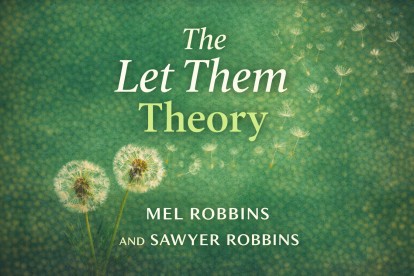
Mel Robbins, the American motivational speaker, podcast host, and bestselling author of The 5 Second Rule (2017) and The High 5 Habit (2021), has built a global following by translating behavioral science and personal experience into straightforward, actionable advice. Known for her no-nonsense delivery and ability to make psychological concepts feel immediately usable, Robbins frequently collaborates with her husband Sawyer Robbins, a business strategist and co-creator of many of her frameworks. The Let Them Theory: A Life-Changing Tool That Millions of People Can't Stop Talking About (Robbins & Robbins, 2024), published by
Hay House in a 256-page hardcover edition, distills years of audience questions, podcast episodes, and live coaching sessions into a single, powerful mental model.
The book’s core thesis is deceptively simple yet profoundly liberating: “Let them. Let them be who they are, do what they do, think what they think. Your only job is to decide what you will do in response” (Robbins & Robbins, 2024, p. 19). The authors argue that most stress, resentment, and wasted energy in life stem from trying to control people, outcomes, or opinions that are fundamentally outside our authority. By practicing “let them,” readers reclaim time, peace, and focus for their own choices. In an era of constant comparison, people-pleasing, and over-responsibility, this offers a clear wake-up call to stop carrying what was never ours to lift. Everyone should read it because the ground reality of adult life is full of situations we cannot fix or change, yet we exhaust ourselves trying. The Let Them Theory provides a practical, repeatable way to protect mental energy and act from clarity rather than reaction.
The book is organized into three main parts: understanding the problem (why we try to control others), mastering the Let Them mindset, and applying it across key life domains. Robbins and Robbins use a combination of personal anecdotes, listener stories from the podcast, basic neuroscience (amygdala hijack, cognitive load), and real-world examples to illustrate how letting go of control paradoxically increases influence and calm. The central argument is that energy spent attempting to manage other people’s behavior, beliefs, or emotions is energy stolen from our own growth and peace. Evidence is anecdotal and experiential rather than heavily academic stories from readers who applied the tool to toxic friendships, difficult parents, underperforming colleagues, or romantic breakups. Solutions are presented as daily micro-practices: noticing the urge to control, silently saying “let them,” and redirecting attention to one’s own next best action.
The opening chapter frames the problem: “We waste years trying to change people who have no intention of changing, and the only person who suffers is us” (Robbins & Robbins, 2024, p. 7). “Letting them doesn’t mean you agree with them. It means you stop fighting reality” (Robbins & Robbins, 2024, p. 14). “The moment you accept that you cannot control another adult’s choices, you get your power back” (Robbins & Robbins, 2024, p. 21).
Part I explores the psychology of control: “Your brain is wired to predict and protect. When people behave unpredictably, it feels like danger” (Robbins & Robbins, 2024, p. 28). “Trying to manage someone else’s opinion is like trying to hold water in your hands, it slips away and leaves you exhausted” (Robbins & Robbins, 2024, p. 35). The authors introduce the amygdala hijack: “That rush of heat in your chest when someone disappoints you? That’s your survival brain screaming ‘fix this now’” (Robbins & Robbins, 2024, p. 42).
Part II teaches the mechanics of “let them”: “Say it silently, out loud, or write it down. Let them ghost you. Let them judge you. Let them choose someone else” (Robbins & Robbins, 2024, p. 49). “The phrase isn’t passive resignation; it’s active redirection of your own energy” (Robbins & Robbins, 2024, p. 56). “Every time you let them, you give yourself permission to choose you instead” (Robbins & Robbins, 2024, p. 63).
Part III applies the tool to specific scenarios. On family: “Let your parents criticise your career. You don’t have to defend your choices anymore” (Robbins & Robbins, 2024, p. 70). “Let your sibling stay angry. Your peace is not their responsibility” (Robbins & Robbins, 2024, p. 77). On friendships: “Let them fade away if they only call when they need something” (Robbins & Robbins, 2024, p. 84). “Let them misunderstand you. The right people will understand without explanation” (Robbins & Robbins, 2024, p. 91).
Romantic relationships receive extended attention: “Let them leave. Let them cheat. Let them choose someone else. Your worth was never tied to their decision” (Robbins & Robbins, 2024, p. 98). “The fastest way to heal is to stop negotiating with someone who already walked away” (Robbins & Robbins, 2024, p. 105). Workplace examples: “Let your boss overlook you for the promotion. Use that energy to build skills they can’t ignore” (Robbins & Robbins, 2024, p. 112). “Let colleagues gossip. Your reputation is built by your actions, not their words” (Robbins & Robbins, 2024, p. 119).
The authors address common objections: “But if I let them, won’t they take advantage of me?” (Robbins & Robbins, 2024, p. 126). Response: “Letting them is not the same as letting them walk all over you. It’s deciding what you will and will not tolerate” (Robbins & Robbins, 2024, p. 133). Boundaries are emphasized: “Let them be who they are. And let yourself be someone who protects their own peace” (Robbins & Robbins, 2024, p. 140).
The final chapters focus on self-application: “The hardest person to let is yourself, let go of the version of you that needs everyone’s approval” (Robbins & Robbins, 2024, p. 147). “Let them have their opinion of you. You don’t have to agree” (Robbins & Robbins, 2024, p. 154). “Freedom begins the moment you stop performing for an audience that’s already left the theatre” (Robbins & Robbins, 2024, p. 161).
The book closes with a simple mantra: “Let them. And then do the next right thing for you” (Robbins & Robbins, 2024, p. 168). “Your life gets bigger the moment you stop trying to shrink other people into your version of reality” (Robbins & Robbins, 2024, p. 175). “Peace is not the absence of conflict. It’s the presence of boundaries” (Robbins & Robbins, 2024, p. 182). These insights, delivered with warmth and clarity, form a practical philosophy that feels both revolutionary and immediately usable.
The Let Them Theory shines as a deceptively simple yet deeply empowering mental model, one that distills complex interpersonal dynamics into a single, repeatable phrase. The book’s greatest strength is its accessibility: Robbins and Robbins take ideas from cognitive behavioral therapy, attachment theory, and Stoic philosophy and repackage them into language anyone can use in the heat of the moment. The podcast anecdotes and reader stories provide relatable evidence, “She let her mother criticise her wedding choices and suddenly the argument lost all its power” (Robbins & Robbins, 2024, p. 84), showing the tool working in real relationships. The writing is conversational without being simplistic; “Letting them is not passive resignation; it’s active redirection of your own energy” (Robbins & Robbins, 2024, p. 56) captures the nuance perfectly.
The authors are also honest about the discomfort: “You will feel guilty the first few times you let them. That guilt is just old conditioning trying to pull you back” (Robbins & Robbins, 2024, p. 98). This acknowledgment prevents the book from feeling like toxic-positivity preaching. The emphasis on boundaries, “Let them be who they are. And let yourself be someone who protects their own peace” (Robbins & Robbins, 2024, p. 140), grounds the concept in healthy differentiation rather than indifference.
Weaknesses are minor but worth nothing. The book leans heavily on individual agency and mindset change, with less attention to structural barriers, systemic inequality, financial dependence, cultural obligations, that can make “letting them” feel impossible for many readers. Intersectional considerations (gendered expectations around caretaking, caste or class pressures in collectivist societies, racial dynamics in workplaces) are implied but not deeply explored. The examples skew toward middle-class American experiences; readers in more interdependent family structures or resource-constrained environments may need to adapt the tool more creatively.
The absence of rigorous scientific citations is another limitation. While the authors reference basic neuroscience (amygdala hijack, cognitive load), the book prioritises storytelling over footnotes. This makes it more approachable but less authoritative for readers who prefer data-heavy arguments.
Despite these gaps, The Let Them Theory succeeds where many self-help books fail it offers a tool that is simultaneously simple to remember and profound in application. It does not ask readers to become different people; it simply asks them to stop spending energy on what was never theirs to control.
Why Indian Youth Readers Must Read This Book
Nestled amid India’s coaching coliseums and corporate coliseums, where rote regimens regurgitate rankings yet recoil from genuine reflection, Mel Robbins and Sawyer Robbins’ The Let Them Theory arrives like a gust of old monsoon breeze, brushing away the bustle with liberating clarity. For the alert twenty-somethings confronting tech tempests or tutoring tempests, those dusk deliberations on whether the “secure” path will ever ignite the soul, this single mental model is an elder’s understated epistle, epistle bypassing the syllabus to the sanity beneath.
Our scholastic sanctuaries, sanctifying scores sans the spark to question, mirror the exhausting habit of trying to control everyone’s opinion, parents, teachers, peers, future in-laws. The Let Them mantra “Let them. Let them be who they are, do what they do, think what they think. Your only job is to decide what you will do in response” (Robbins & Robbins, 2024, p. 19) lands like cool water on burnt skin. It directly addresses the quota quandaries, the “log kya kahenge” pressure, and the silent weight of unspoken expectations that so many Indian youths carry.
The ground reality rasps rougher in the graduate gust: millions competing for meagre mandates, portfolios pounding like monsoon memos, “cultural fit” often a coded cull for caste cues or class codes. Robbins’ reminder “The moment you accept that you cannot control another adult’s choices, you get your power back” (Robbins & Robbins, 2024, p. 21) becomes a lifeline for first-generation graduates playing catch-up with legacy networks or family obligations. “Let your parents criticise your career. You don’t have to defend your choices anymore” (Robbins & Robbins, 2024, p. 70) speaks directly to the young professional still negotiating autonomy with parental approval.
Societal skeins snag snugger: mavens mandating “matrimonial mandates” while musings meander to media or missions, the yank like Yamuna yarns on a weaver’s warp. “Let them misunderstand you. The right people will understand without explanation” (Robbins & Robbins, 2024, p. 91) offers quiet permission to daughters doubling duties and sons shouldering family expectations to stop performing for an audience that may never applaud. “Let them ghost you. Let them judge you. Let them choose someone else. Your worth was never tied to their decision” (Robbins & Robbins, 2024, p. 98) becomes medicine for heartbreak in a culture where romantic rejection can feel like public failure.
Global gleanings, from podcast stories to reader transformations, widen warps from Varanasi veenas to virtual vines, spurring UpGrad unions or Unacademy unveilings linking Ladakhi learners to leadership lenses. For our young yarn-spinners, straddling sari strictures and soaring soliloquies, The Let Them Theory reflects rudraksha rings: it exhumes entrenched “people-pleasing”, from debate derails to dowry dilemmas, craving the clarity to chant “Your life gets bigger the moment you stop trying to shrink other people into your version of reality” (Robbins & Robbins, 2024, p. 175). Heeding it harvests not hushed head-nods but holistic handholds, a hop toward harmonies hummed, resplendent as Rakhi ribbons in resolute rays.
The Let Them Theory lingers as a slim, potent manifesto of mental freedom, its pages a lantern in the labyrinth of over-responsibility. Robbins and Robbins, with speaker’s directness and strategist’s clarity, avow that peace, grasped deliberately, graces the graspable. Flaws in fullness notwithstanding, its focus flourishes: awakening without apology, advising without illusion. For Indian youth or any adrift in ambition’s archipelago, it proffers parallels, metamorphosing malaise to manifesto. In epochs of evaporating equanimity, imbibing its single tool is imperative; it is the quiet permission that finally lets the future breathe.