
UGC 2026 Equity Regulations: NEP 2020 Insights
EDUCATION POLICY
Chaifry
1/28/20264 min read
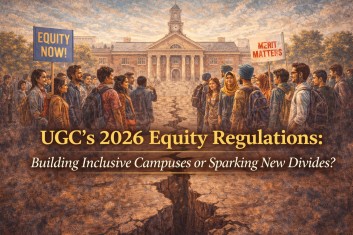
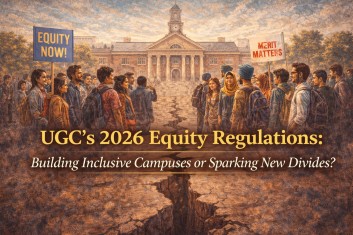
The University Grants Commission (UGC) notified the University Grants Commission (Promotion of Equity in Higher Education Institutions) Regulations, 2026 (UIN:1/2026) on January 13, 2026, published in the Gazette of India (CG-DL-E-13012026-269317). These binding rules supersede the advisory 2012 framework, applying to all higher education institutions (HEIs) in India (Regulation 1(b)).
Rooted in the National Education Policy (NEP) 2020's emphasis on "full equity and inclusion" as education's cornerstone (Preamble), the regulations aim to eradicate discrimination, especially caste-based, on grounds of religion,
race, caste, gender, place of birth, or disability (Regulation 2; Regulation 3(e)). They prioritize marginalized groups including Scheduled Castes (SCs), Scheduled Tribes (STs), Other Backward Classes (OBCs), Economically Weaker Sections (EWS), Persons with Disabilities (PwD), and women, while seeking thriving environments for all stakeholders: students, faculty, staff, and managing committee members (Regulation 3(q); Regulation 3(r)).
Born from Supreme Court directives in cases involving Rohith Vemula and Payal Tadvi, where mothers sought stronger anti-discrimination mechanisms, these rules respond to rising campus complaints (a reported 118% increase in caste-based cases from 2019–2024 per UGC data) and persistent barriers beyond mere access.
From Access to Thriving: The Core Shift
Past policies focused on entry via reservations, yet substantive exclusion, higher dropouts, subtle bias, and hostile climates, lingered. The 2026 regulations impose proactive duties: HEIs must eliminate discrimination, promote equity, and enact protective/preventive measures without prejudice to caste, creed, religion, language, ethnicity, gender, or disability (Regulation 4(1)).
No HEI may permit or condone discrimination (Regulation 4(2)), with the Head of Institution (Vice-Chancellor/Principal) personally accountable (Regulation 4(3)).
Key Mechanisms Transforming Campuses
1. Mandatory Equal Opportunity Centres (EOCs) – Regulation 5
Every HEI establishes an EOC to monitor disadvantaged group policies, offer academic/financial/social counseling, and boost diversity (Regulation 5(1)). Smaller colleges (<5 faculty) use affiliating university facilities.
EOCs coordinate with civil society, media, police, NGOs, and legal authorities (Regulation 5(2)–(3)). A senior faculty Coordinator focuses on disadvantaged welfare (Regulation 5(4)).
An Equity Committee (ex-officio chaired by the Head) comprises three senior faculty, one non-teaching staff, two civil society reps, two merit-based student invitees, and the Coordinator as Member-Secretary (Regulation 5(6)). It requires OBC, PwD, SC, ST, and women representation (Regulation 5(7)). Terms: 2 years (members), 1 year (invitees); meets biannually (quorum 4, excluding invitees) to review actions (Regulation 5(8)–(9)).
Functions: Foster inclusion, sensitize stakeholders, protect reporters from retaliation, disseminate schemes, prepare inclusive admissions, mobilize resources, maintain online portals, and more (Regulation 5(10)).
Innovations include mobile Equity Squads for monitoring vulnerable spots (Regulation 5(11)) and Equity Ambassadors (one per unit/department/hostel/etc.) as torchbearers/nodal officers (Regulation 5(12)).
Bi-annual reports (January/July) on demographics, dropouts, grievances, and status publish on HEI websites (Regulation 5(13)).
2. 24/7 Equity Helpline – Regulation 6
Round-the-clock access for discrimination-related distress; affiliating university backup if needed (Regulation 6(1)–(2)). Confidentiality on request (Regulation 6(3)).
3. Promotion Measures – Regulation 7
Anti-discrimination undertakings at admission/renewal (7(a)).
Prominent website display of rules/helpline (7(b)).
Annual orientation meetings (video online) with stakeholders (7(c)).
Transparent, non-discriminatory allocations (hostels, classrooms, etc.) (7(d)).
Posters, workshops, professional counseling (7(e)–(f)).
UGC guideline implementation (e.g., SEDGs) (7(g)).
Reporting encouragement with protection (7(h)).
4. Grievance Procedure – Regulation 8
Report via portal, writing, email, or helpline (confidentiality option) (8(a)–(b)). Equity Committee meets within 24 hours, may refer elsewhere, reports in 15 working days (copy to aggrieved) (8(c)–(d)). Head acts in 7 days; police if criminal (8(e)). Head complaints chaired by Coordinator, reported upward (8(f)).
5. Appeals and Monitoring – Regulations 9–10
Appeal to Ombudsperson (per 2023 Grievance Regulations) within 30 days; targeted 30-day disposal; possible amicus curiae (Regulation 9).
UGC monitoring via info requests/visits; National Monitoring Committee (professional councils, civil society) meets biannually (Regulation 10(1)–(2)). Annual EOC reports to UGC, councils, state dept., affiliating university by January (Regulation 10(3)).
6. Non-Compliance Consequences – Regulation 11
Enquiry; penalties: debarment from UGC schemes/funding, degree programs, ODL/online modes, removal from UGC list (Sections 2(f)/12B); additional case-specific actions.
Benefits for Institutions and the System
Diverse campuses foster innovation, align with NEP 2020's multidisciplinary vision, improve retention, enhance funding eligibility, prevent crises, and boost global rankings via inclusion metrics.
Student Experience and Role
Holistic support, swift redressal, anti-retaliation safeguards, inclusive admissions, and cultural belonging shifts.
Students should contest committee roles, utilize mechanisms, engage in orientations, form advocacy groups, and provide feedback.
Challenges, Controversy, and Broader Future
Resource strains in rural/smaller HEIs, capacity gaps, and potential minimal compliance pose hurdles.
Since notification, protests erupted nationwide, especially from general category groups, alleging "reverse discrimination," exclusion from caste-based protections (Regulation 3(c)), vague definitions risking misuse, and lack of general category representation in committees. Social media campaigns (#UGCRollback, #ShameOnUGC), resignations (e.g., BJP workers, Bareilly magistrate), and demonstrations (e.g., Savarna Sena at UGC HQ) followed. Multiple Supreme Court petitions challenge Regulation 3(c) as unconstitutional, violating Article 14 equality by limiting caste-discrimination definitions to SC/ST/OBC, potentially denying general category grievance redressal.
Union Education Minister Dharmendra Pradhan assured no misuse, no discrimination against anyone, and constitutional compliance, with government hints at clarifications or additions for general category complaints.
As of late January 2026, implementation varies amid debates; some view it as essential for marginalized thriving, others as divisive.
Looking ahead: Integrate with digital/hybrid education, intersectionality, evidence-based tweaks, global benchmarking. Amid NEP 2020 goals (50% GER, flexibility, collaborations), these rules could fortify inclusive excellence, or, if unaddressed, widen divides.
Conclusion: Seizing the Opportunity, or Navigating the Tensions?
These enforceable regulations institutionalize equity, potentially transforming campuses into diversity-driven excellence hubs. Yet the backlash underscores implementation's complexity: balancing targeted protections with universal fairness.
Reference: