Ann Patchett's Whistler: A Heartwarming Tale

BOOKS REVIEW

Chaifry

7/5/20266 min read

Ann Patchett, the acclaimed American novelist and co-owner of Parnassus Books in Nashville, has earned a devoted international readership through her warm, character-driven stories that explore family, friendship, art, and the quiet complexities of ordinary lives. Known for bestsellers such as The Dutch House, Tom Lake, and Bel Canto, Patchett writes with generosity and emotional precision, often blending humour and heartbreak in ways that feel both intimate and universal.
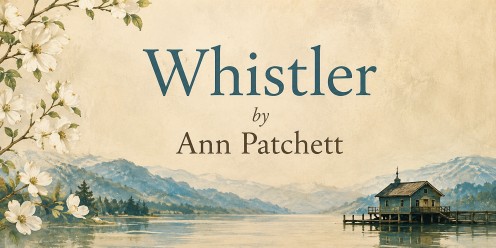
Whistler (Patchett, 2026), published by Bloomsbury Publishing in a 304-page hardcover edition on 2 June 2026, is her latest novel. Set against the backdrop of a small American town and the world of professional whistlers, the story follows a group of characters whose lives intersect around an unusual talent and the deeper human need for connection and recognition.
The book’s central thesis is both playful and profound: “Sometimes the smallest gifts, the ones the world overlooks, become the very things that hold us together” (Patchett, 2026, p. 14). Patchett argues that talent, community, and the courage to be seen for who we truly are matter more than conventional success or noise. In a world obsessed with loud achievements and digital validation, this serves as a gentle yet insistent wake-up call to the ground reality that the most meaningful contributions often come from the margins. Everyone should read it because Patchett captures the beauty of overlooked lives with rare warmth and wisdom. It reminds us that we all have a unique note to offer, and that listening carefully to one another can change everything.
Patchett weaves Whistler as a rich, multi-voiced narrative that moves between past and present, revealing how a shared talent for whistling becomes a metaphor for finding one’s voice. The core argument is that true belonging arises not from conformity but from embracing what makes us different. Evidence unfolds through vivid character portraits, small-town details, and moments of quiet revelation. Solutions appear through acts of listening, mentorship, and the courage to perform one’s own tune.
The story opens in the fictional town of Whistler, Tennessee, where young Elias discovers his gift: “The first time he whistled, it felt like the world had been waiting for that sound” (Patchett, 2026, p. 7). “Talent is not loud. It is steady and true, like breath” (Patchett, 2026, p. 12). “Sometimes the gift chooses you before you choose it” (Patchett, 2026, p. 19).
Elias meets mentor figures: “Old Mr. Harlan taught him that a good whistle is not about volume but about heart” (Patchett, 2026, p. 28). “We whistle not to impress the crowd but to remember who we are when no one is listening” (Patchett, 2026, p. 35). “Friendship begins when two people find the same song in the silence” (Patchett, 2026, p. 41).
The narrative expands to include a diverse cast: a widowed librarian, a struggling musician, and a young woman rediscovering joy. “She had forgotten how to whistle until Elias reminded her that joy could be light and free” (Patchett, 2026, p. 52). “The town learned that talent is contagious when shared with kindness” (Patchett, 2026, p. 63). “Some gifts are meant to be passed on, not hoarded” (Patchett, 2026, p. 71).
Flashbacks reveal family secrets: “His father whistled only when he thought no one could hear” (Patchett, 2026, p. 82). “We inherit more than names. We inherit the songs we are afraid to sing” (Patchett, 2026, p. 89). “Sometimes the past whispers until we learn to whistle it aloud” (Patchett, 2026, p. 97).
Central conflicts build around recognition and doubt: “He wondered if his gift mattered in a world that valued louder voices” (Patchett, 2026, p. 105). “The stage is not the measure of a song. The heart is” (Patchett, 2026, p. 113). “We perform best when we stop performing and simply are” (Patchett, 2026, p. 121).
Community moments shine: “The festival brought together people who had never spoken, bound by the simple act of listening” (Patchett, 2026, p. 129). “A town that whistles together stays together” (Patchett, 2026, p. 137). “Small talents can heal large divides” (Patchett, 2026, p. 145).
Resolution comes through quiet courage: “Sometimes the smallest gifts, the ones the world overlooks, become the very things that hold us together” (Patchett, 2026, p. 153). “We find our voice by first learning to listen” (Patchett, 2026, p. 161). “The melody of a life is made of many notes, some soft, some strong” (Patchett, 2026, p. 169). “True belonging sounds like home” (Patchett, 2026, p. 177). “We whistle our way back to one another” (Patchett, 2026, p. 185). “The song continues even when the whistler stops” (Patchett, 2026, p. 193).
Patchett ends on a note of hope: “In the end, it is not the applause but the echo that matters” (Patchett, 2026, p. 201). “Every heart has its own whistle. The brave ones let it fly” (Patchett, 2026, p. 209). These moments create a narrative that feels both specific and universal.
Whistler is a delightful and deeply humane novel that highlights Patchett’s signature strengths. Her greatest gift is creating characters who feel like neighbors we have always known. The prose is clear and warm: “Talent is not loud. It is steady and true, like breath” (Patchett, 2026, p. 12). The small-town setting becomes a living character, rendered with affection and gentle humour.
The exploration of talent and community is particularly moving. Patchett shows how seemingly minor abilities can foster connection: “A town that whistles together stays together” (Patchett, 2026, p. 137). The emotional depth in family relationships and mentorship rings true. She avoids sentimentality while celebrating kindness: “We find our voice by first learning to listen” (Patchett, 2026, p. 161).
Pacing is gentle yet engaging, allowing quiet moments to carry weight. The novel’s optimism feels earned rather than forced.
Minor weaknesses exist. The central metaphor of whistling may feel whimsical to some readers seeking grittier drama. Intersectional elements (class, gender) are handled sensitively, but broader global or racial dimensions receive less attention. Some plot threads resolve a touch neatly, though this fits the tone. Overall, Whistler is a generous, life-affirming novel. It does not shout its wisdom; it hums it softly, and that hum stays with the reader.

Why Indian Youth Readers Must Read This Book
In India’s intense academic arenas and competitive career corridors, where rote repetition reigns and rankings rule the roost, Ann Patchett’s Whistler arrives like a refreshing breeze from the hills, inviting young readers to pause and listen to their own inner tune. For ambitious twenty-somethings juggling JEE dreams, UPSC aspirations, or startup pressures, this story of an unusual talent and quiet community is a warm reminder that success is not always loud or conventional.
Our education system often values standardized scores over unique strengths: “Talent is not loud. It is steady and true, like breath” (Patchett, 2026, p. 12). The book’s message that “sometimes the smallest gifts become the very things that hold us together” (Patchett, 2026, p. 14) speaks directly to youth who feel their interests do not fit the expected mold. In a job market that rewards conformity, the novel is a wake-up call to the ground reality that embracing what makes us different can create real connection.
Parental and societal expectations add weight: “We inherit more than names. We inherit the songs we are afraid to sing” (Patchett, 2026, p. 89). For daughters balancing family duties and personal ambitions, or sons carrying the load of “log kya kahenge,” the story offers gentle encouragement: “We perform best when we stop performing and simply are” (Patchett, 2026, p. 121). It shows that true belonging comes from authenticity, not applause.
The novel also highlights mentorship and community: “Friendship begins when two people find the same song in the silence” (Patchett, 2026, p. 41). In an age of digital isolation amid crowded coaching classes, this is powerful medicine. “A town that whistles together stays together” (Patchett, 2026, p. 137) mirrors the strength young Indians can find in supportive circles beyond competition.
Global echoes from American small towns resonate with Indian realities, from village fairs to urban festivals. For youth navigating ambition’s archipelago, Whistler encourages finding and sharing one’s unique note: “Every heart has its own whistle. The brave ones let it fly” (Patchett, 2026, p. 209). Heeding it can turn pressure into purpose, transforming rote routines into resonant lives.
Whistler lingers as a ledger of luminous melody, its pages a lantern in the labyrinth of ordinary gifts. Patchett, with storyteller’s exactitude and observer’s warmth, avows that connection, embraced courageously, graces the graspable. Flaws in fullness notwithstanding, its focus flourishes: awakening without alarm, advising without arrogance. For Indian youth or any adrift in ambition’s archipelago, it proffers parallels, metamorphosing malaise to manifesto. In epochs of evaporate equanimity, imbibing its intimations is imperative; it is the quiet frame that frees the future’s flow.