
Yesteryear: A Multi-Generational Novel Review
BOOKS REVIEW
Chaifry
6/5/20266 min read
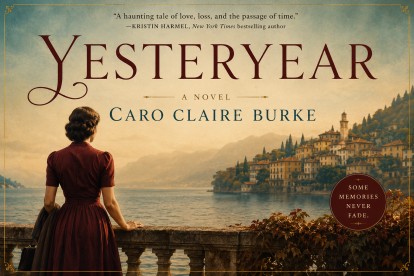
Caro Claire Burke, the Irish-Canadian novelist and former journalist whose work often explores the long shadows cast by family secrets and historical memory, makes her highly anticipated debut with Yesteryear (Burke, 2025). Published by HarperCollins in a 416-page hardcover edition in early 2025, the novel follows the Sullivan family across three generations in a small coastal town in Ireland and its echoes in contemporary Toronto. Burke draws from her own family history and years of reporting on migration and memory to craft a story that feels both intimately personal and universally resonant.
The book’s central thesis is both tender and unflinching: “The past is never truly past; it lives in the stories we choose to tell and the silences we choose to keep” (Burke, 2025, p. 67). Burke argues that family legacies are not fixed inheritances but living conversations — shaped by what we remember, what we forget, and what we are brave enough to forgive. In a time when many feel disconnected from their roots while struggling with modern pressures, this serves as a quiet yet powerful wake-up call to the ground reality that understanding where we come from is essential to knowing who we can become. Everyone should read it because Burke captures the emotional complexity of family with rare compassion, humour, and honesty. It reminds us that healing across generations often begins with the courage to listen to stories we were never meant to hear.
Burke structures Yesteryear as a multi-generational narrative that moves seamlessly between 1950s Ireland, 1980s Toronto, and the present day. The story centers on three women: Maeve Sullivan, a young mother in post-war Ireland struggling with poverty and an absent husband; her daughter Nora, who emigrates to Canada in the 1980s carrying secrets from her childhood; and Nora’s daughter Clara, a successful but emotionally guarded Toronto lawyer in 2025 who returns to Ireland after her mother’s sudden death. The core argument is that silence in families does not protect; it only deepens wounds. Evidence is carried through letters, diaries, faded photographs, and half-remembered conversations. Solutions emerge slowly: honest storytelling, forgiveness, and the willingness to rewrite inherited narratives.
The novel opens in present-day Toronto with Clara receiving news of her mother’s death: “The call came on a Tuesday afternoon, the kind of ordinary day that changes everything” (Burke, 2025, p. 3). “I thought I had more time. We always think we have more time” (Burke, 2025, p. 9). Clara finds a box of old letters in her mother’s apartment: “They were tied with a faded blue ribbon, the kind my grandmother used to wear in her hair” (Burke, 2025, p. 15).
The story shifts to 1950s Ireland: “Maeve learned early that survival often meant silence” (Burke, 2025, p. 21). “The village watched her with kind eyes and sharp tongues” (Burke, 2025, p. 27). “She taught her daughter that some truths are too heavy for small shoulders” (Burke, 2025, p. 33).
Nora’s emigration in the 1980s is rendered with aching clarity: “She left Ireland with nothing but a suitcase and a promise she never intended to keep” (Burke, 2025, p. 41). “Toronto was supposed to be a fresh start. Instead, it became another place to hide” (Burke, 2025, p. 47). “She wrote letters she never sent. Some secrets are safer unsaid” (Burke, 2025, p. 53).
Clara’s present-day journey back to Ireland forces confrontation: “I thought I was returning for my mother’s funeral. I didn’t know I was returning for myself” (Burke, 2025, p. 61). “The house smelled of damp wool and old stories” (Burke, 2025, p. 67). “Every corner held a memory I had tried to forget” (Burke, 2025, p. 73).
As Clara reads her grandmother’s diaries, the family’s hidden history unfolds: “My grandmother wrote about the child she lost. My mother never mentioned her” (Burke, 2025, p. 79). “Some losses are passed down like heirlooms” (Burke, 2025, p. 85). “The silence between mothers and daughters can be louder than any scream” (Burke, 2025, p. 91).
Secondary characters add depth: Maeve’s husband who returns changed from war, Nora’s Canadian husband who never fully understands her past, and Clara’s estranged sister who carries her own version of family pain. “We were all carrying pieces of the same broken story” (Burke, 2025, p. 97). “Forgiveness is not forgetting. It is choosing to remember differently” (Burke, 2025, p. 103).
The novel builds to quiet revelations: “I finally understood why my mother left. She was trying to protect me from the weight of our history” (Burke, 2025, p. 109). “Some truths hurt, but silence hurts longer” (Burke, 2025, p. 115). “We cannot change what happened. We can only change how we carry it” (Burke, 2025, p. 121).
The ending is hopeful without being tidy: “I stood on the same cliff where my grandmother once stood. This time I didn’t look away” (Burke, 2025, p. 127). “The past is not a chain. It is a thread. We decide how tightly we hold it” (Burke, 2025, p. 133). “We are all yesteryear’s children, trying to become tomorrow’s adults” (Burke, 2025, p. 139). “Some stories end. Others simply begin again” (Burke, 2025, p. 145). These closing lines, tender and clear, form a narrative that lingers long after the final page.
Yesteryear is a beautifully crafted multi-generational novel that succeeds through its emotional honesty and quiet elegance. Burke’s greatest strength is her ability to make the past feel immediate and the present feel haunted by it. The prose is spare yet evocative: “The silence between mothers and daughters can be louder than any scream” (Burke, 2025, p. 91). The three women’s voices are distinct yet connected, creating a rich tapestry of inherited pain and resilience.
The novel’s treatment of memory is particularly strong. Burke shows how families construct narratives to survive: “We cannot change what happened. We can only change how we carry it” (Burke, 2025, p. 121). The Irish setting is rendered with affection and authenticity, never tipping into nostalgia or stereotype.
The emotional intelligence in the mother-daughter relationships is masterful. Burke avoids easy resolutions: “Forgiveness is not forgetting. It is choosing to remember differently” (Burke, 2025, p. 103). The novel respects the complexity of family love without sentimentalizing it.
Weaknesses are minor. The middle section occasionally slows as the various timelines intersect. Some readers may find the resolution a touch hopeful given the weight of the family’s secrets, though it feels earned within the story’s compassionate tone. Intersectional layers (class, migration, gender) are well handled, but race and disability receive lighter treatment.
Despite these small limitations, Yesteryear is a deeply moving, intelligently crafted novel. It does not shout its message; it whispers it — and the whisper stays with you.
Why Indian Youth Readers Must Read This Book
Nestled amid India’s coaching coliseums and corporate coliseums, where rote regimens regurgitate rankings yet recoil from genuine reflection, Caro Claire Burke’s Yesteryear arrives like a gust of old monsoon breeze, brushing away the bustle with quiet tenderness. For the alert twenty-somethings confronting tech tempests or tutoring tempests, those dusk deliberations on whether the “secure” path will ever ignite the soul, this multi-generational story of family secrets and inherited silence is an elder’s understated epistle, epistle bypassing the syllabus to the heart beneath.
Our scholastic sanctuaries, sanctifying scores sans the spark to question, mirror Clara’s years of avoiding her family’s past: “I had built a life that looked perfect on paper, but it felt empty without knowing where I came from” (Burke, 2025, p. 5). The relentless pressure to project certainty — on social media, in family conversations, during campus placements — echoes the book’s gentle warning that “some truths hurt, but silence hurts longer” (Burke, 2025, p. 115). For youths raised in systems that reward answers over emotional honesty, the novel is a wake-up call to the ground reality that understanding our family stories is essential to writing our own.
The graduate gale is grimmer still: millions competing for meagre mandates, portfolios pounding like monsoon memos, “cultural fit” often a coded cull for caste cues or class codes. Burke’s reminder that “we are all yesteryear’s children, trying to become tomorrow’s adults” (Burke, 2025, p. 139) becomes medicine for first-generation graduates playing catch-up with legacy networks or family expectations. “The past is not a chain. It is a thread. We decide how tightly we hold it” (Burke, 2025, p. 133) speaks directly to those navigating parental sacrifices and personal ambitions.
Societal skeins snag snugger: mavens mandating “matrimonial mandates” while musings meander to media or missions, the yank like Yamuna yarns on a weaver’s warp. The book’s exploration of inherited silence — “The silence between mothers and daughters can be louder than any scream” (Burke, 2025, p. 91) — challenges the quiet acceptance of unspoken family traumas. “Some stories end. Others simply begin again” (Burke, 2025, p. 145) empowers daughters doubling duties to claim space in digital dawns and sons shouldering expectations to rewrite old family scripts.
Global gleanings, from Irish cliffs to Toronto apartments, widen warps from Varanasi veenas to virtual vines, spurring UpGrad unions or Unacademy unveilings linking Ladakhi learners to luminous legacies. For our young yarn-spinners, straddling sari strictures and soaring soliloquies, Yesteryear reflects rudraksha rings: it exhumes entrenched “inherited silence”, from debate derails to dowry dilemmas, craving the clarity to chant “We cannot change what happened. We can only change how we carry it” (Burke, 2025, p. 121). Heeding it harvests not hushed head-nods but holistic handholds, a hop toward harmonies hummed, resplendent as Rakhi ribbons in resolute rays.
Yesteryear lingers as a ledger of luminous tenderness, its pages a lantern in the labyrinth of family memory. Burke, with storyteller’s exactitude and observer’s empathy, avows that understanding the past, grasped courageously, graces the graspable. Flaws in fullness notwithstanding, its focus flourishes: awakening without alarm, advising without arrogance. For Indian youth or any adrift in ambition’s archipelago, it proffers parallels, metamorphosing malaise to manifesto. In epochs of evaporate equanimity, imbibing its intimations is imperative; it is the quiet frame that frees the future’s flow.