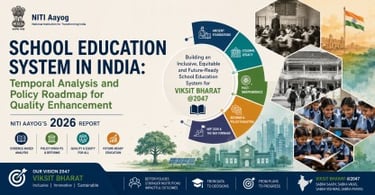
Impact on Indian Education System and Future of School Children
If implemented with seriousness, this roadmap can shift the system from an inputs-focused model to one centred on outcomes and equity. For millions of children, especially the first-generation learners from rural, tribal, or disadvantaged backgrounds, it could mean stronger foundational skills, better retention, and genuine preparation for higher education or livelihoods. A child who masters reading, basic math, and critical thinking by Grade 3 carries that confidence forward. Holistic development, including values, life skills, and mental well-being, can help build not just employable youth but responsible citizens.
Schools stand to benefit enormously. Consolidated structures with better resources, empowered leadership, functional libraries and labs, and continuous professional support for teachers can transform them into vibrant learning spaces rather than mere buildings. Technology, used judiciously through DIKSHA and other platforms, can bridge gaps in remote areas without replacing the human touch of a good teacher.
The long-term impact on India’s human capital cannot be overstated. As the report notes, the generation entering the workforce around 2047 is already in school today. Getting this right is central to Viksit Bharat, creating a workforce that is skilled, innovative, and rooted in values. It also advances social justice by giving every child, regardless of background, a fair shot.